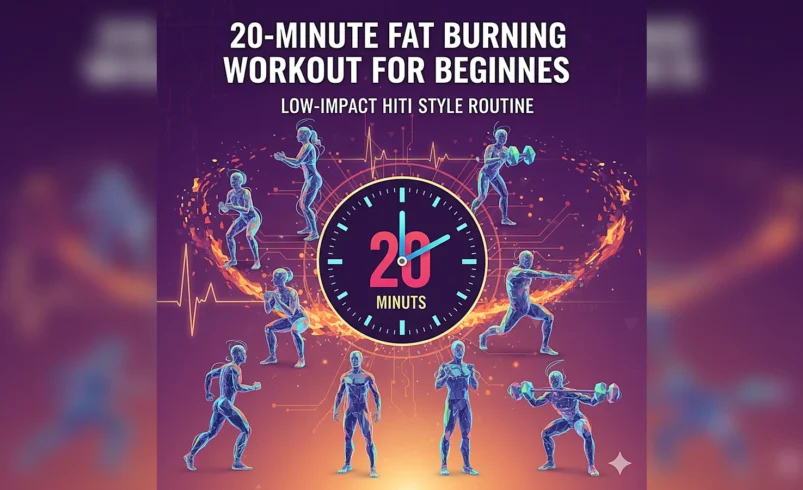
The idea that fat loss requires long workouts has been around for a long time. More time exercising means more calories burned, which means faster results. It sounds reasonable. It’s mostly wrong, at least when applied to how most beginners actually train.
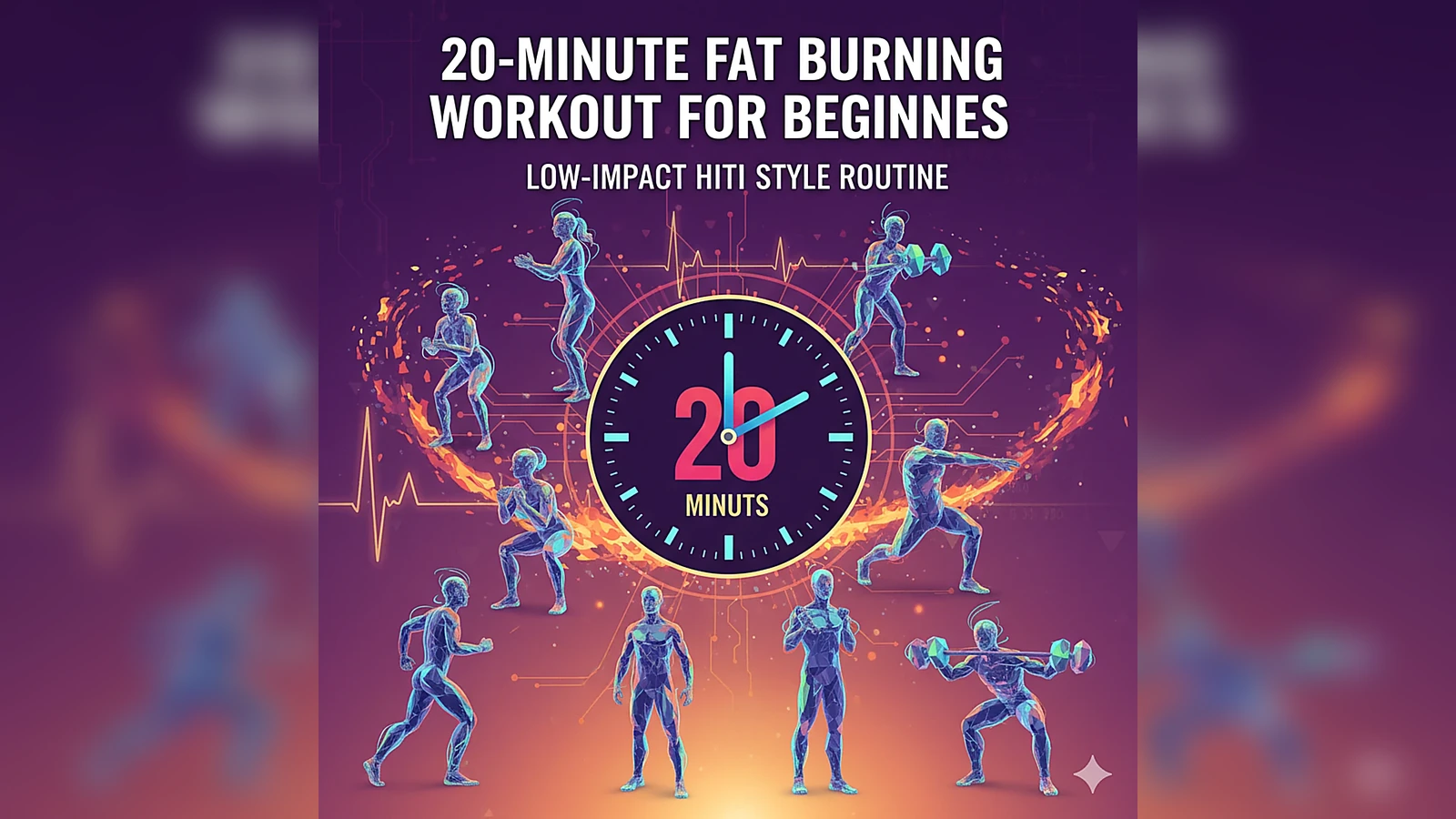
Twenty minutes of focused work, with a proper warm-up and cool-down, is enough to produce a meaningful cardiovascular and metabolic response. The key is structure. A disorganised 20-minute session won’t do much. A planned interval-based routine will. This one is built for beginners who want to work at a challenging but manageable pace, without jumping, without running, and without needing any equipment.
What Low-Impact HIIT Style Actually Means
Traditional HIIT involves explosive movements, jump squats, burpees, and sprints. These are effective but hard on the joints, and realistically, too intense for people who are just starting.
“Low-impact HIIT style” means applying the interval principle, alternating effort and recovery, but with controlled, grounded movements that protect your knees, hips, and lower back. This approach allows beginners to get the conditioning benefits of interval training without the injury risk that comes from doing plyometrics on unconditioned joints and muscles.
What You’ll Need
- A clear floor space of about 6 x 4 feet
- A mat or carpet — helpful but not essential
- A timer or stopwatch
- Water
Suitable footwear helps if you’re on hard floors. No weights, bands, or machines required.
The 20-Minute Routine
The session is divided into three phases: warm-up, main circuit, and cool-down. All three matter. Skipping the warm-up and cool-down is the most common mistake beginners make with short workouts, and it’s one of the most counterproductive habits to form.
Warm-Up — 3 Minutes
Slower, rhythmic movements to raise your heart rate gradually and prepare your joints. Don’t rush this.
- March in place — 30 seconds
- Arm circles, forward then backward — 30 seconds
- Standing hip rotations — 30 seconds (15 each side)
- Slow bodyweight squats — 45 seconds
- Torso twists — 30 seconds
- Lateral step-touches — 45 seconds
Main Circuit — 14 Minutes
Seven rounds of two minutes each. Each round = 40 seconds of work, 20 seconds of rest. Take a full 30-second rest break at the end of rounds 3 and 6.
Rotate through these four exercises in each round:
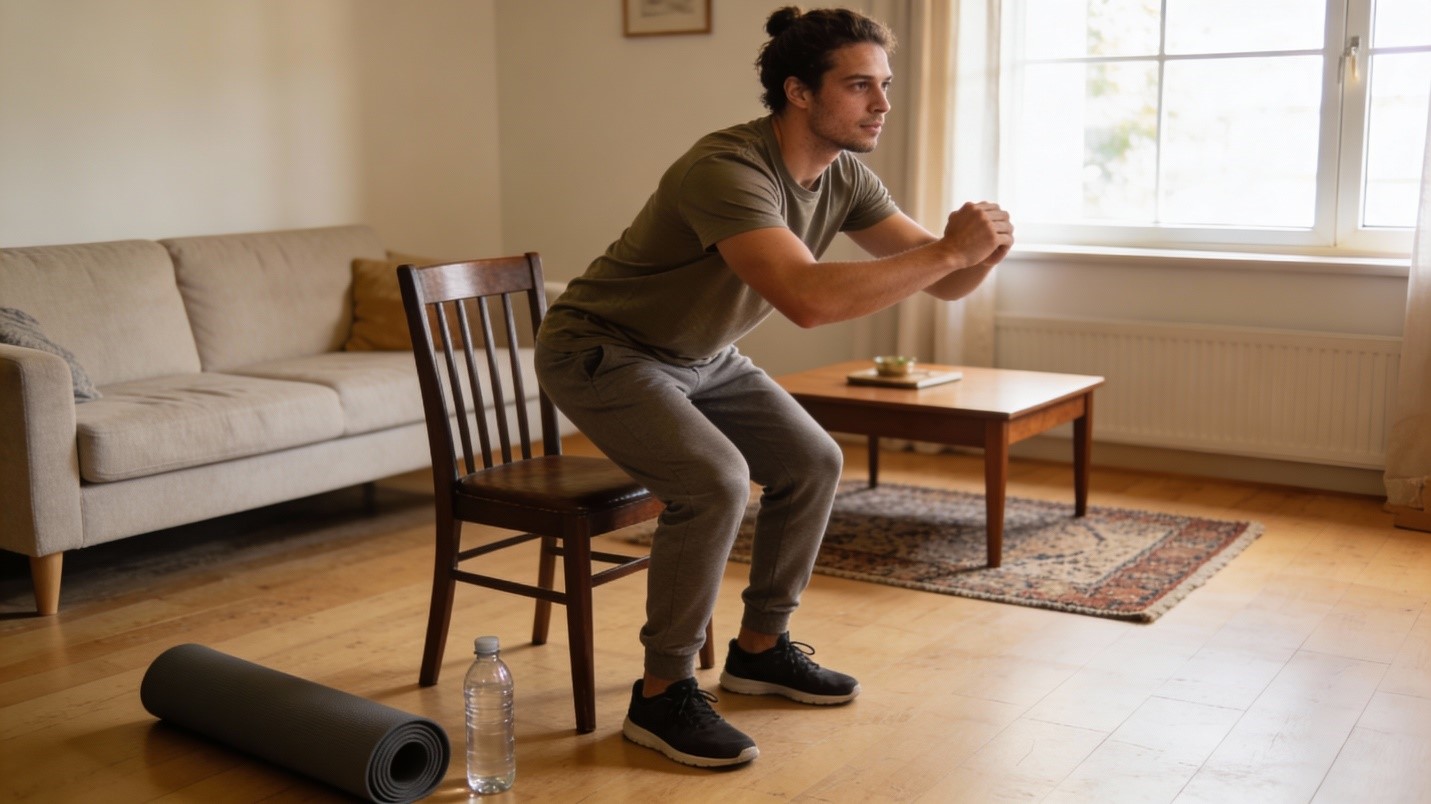
Exercise 1 — Step Squat: Stand with feet shoulder-width apart. Lower into a squat, hold for one second at the bottom, then stand. Controlled movement throughout. Don’t let your knees cave inward. Modification: reduce depth if your knees are uncomfortable.
Exercise 2 — Standing Mountain Climbers: Stand upright and alternate driving your knees up toward your chest, one at a time, at a brisk pace. This is the standing version of floor mountain climbers — no impact, similar core and cardiovascular engagement.
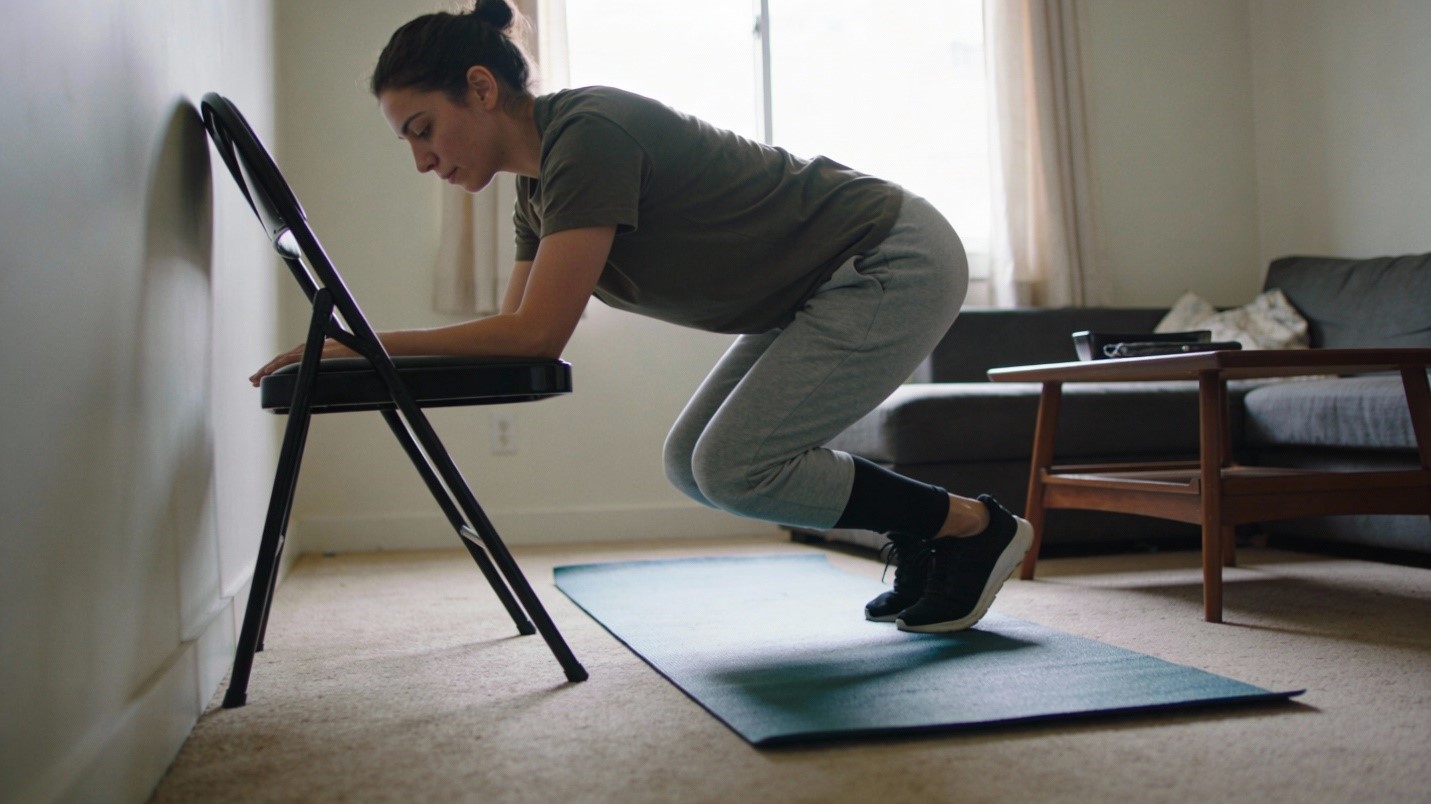
Exercise 3 — Wall Push-Up or Floor Push-Up: Use a wall if standard push-ups are too difficult. Place both hands flat on the wall at chest height, step back slightly, and perform a controlled push and pull. Move to the floor when you’re ready.
Exercise 4 — Standing Lateral Leg Raises: Stand with your weight on one foot and lift the opposite leg out to the side, foot flexed. Return to standing. Complete 20 seconds on each side per interval.
Cool-Down — 3 Minutes
Non-negotiable. Finishing the circuit and immediately sitting down is hard on your cardiovascular system.
- Slow march in place — 30 seconds
- Standing forward fold (reach toward toes, soft knees) — 45 seconds
- Hip flexor stretch in a low lunge position, hold — 45 seconds each side
- Seated hamstring stretch — 30 seconds
- Child’s pose — 30 seconds
Breathe slowly through the cool-down. The goal is to bring your heart rate down gradually and begin the recovery process.
Modifications For Every Starting Point
If the 40/20 ratio feels too hard, change it to 30 seconds of work and 30 seconds of rest. Reduce the number of rounds to 5 until your conditioning improves.
If you need a lower intensity due to joint concerns, the quiet home workout routine for beginners covers similar low-impact approaches that may be a more comfortable starting point.
If the routine feels too easy after 2 weeks: Shorten rest intervals to 15 seconds, or add a fifth exercise to each round — try slow step-ups onto a low surface, or hold a plank during what was previously your rest period.
How Often Should You Do This Routine?
Three times per week with at least one rest day between sessions is a reasonable target for beginners. If you’re also doing strength training, schedule this routine on alternate days.
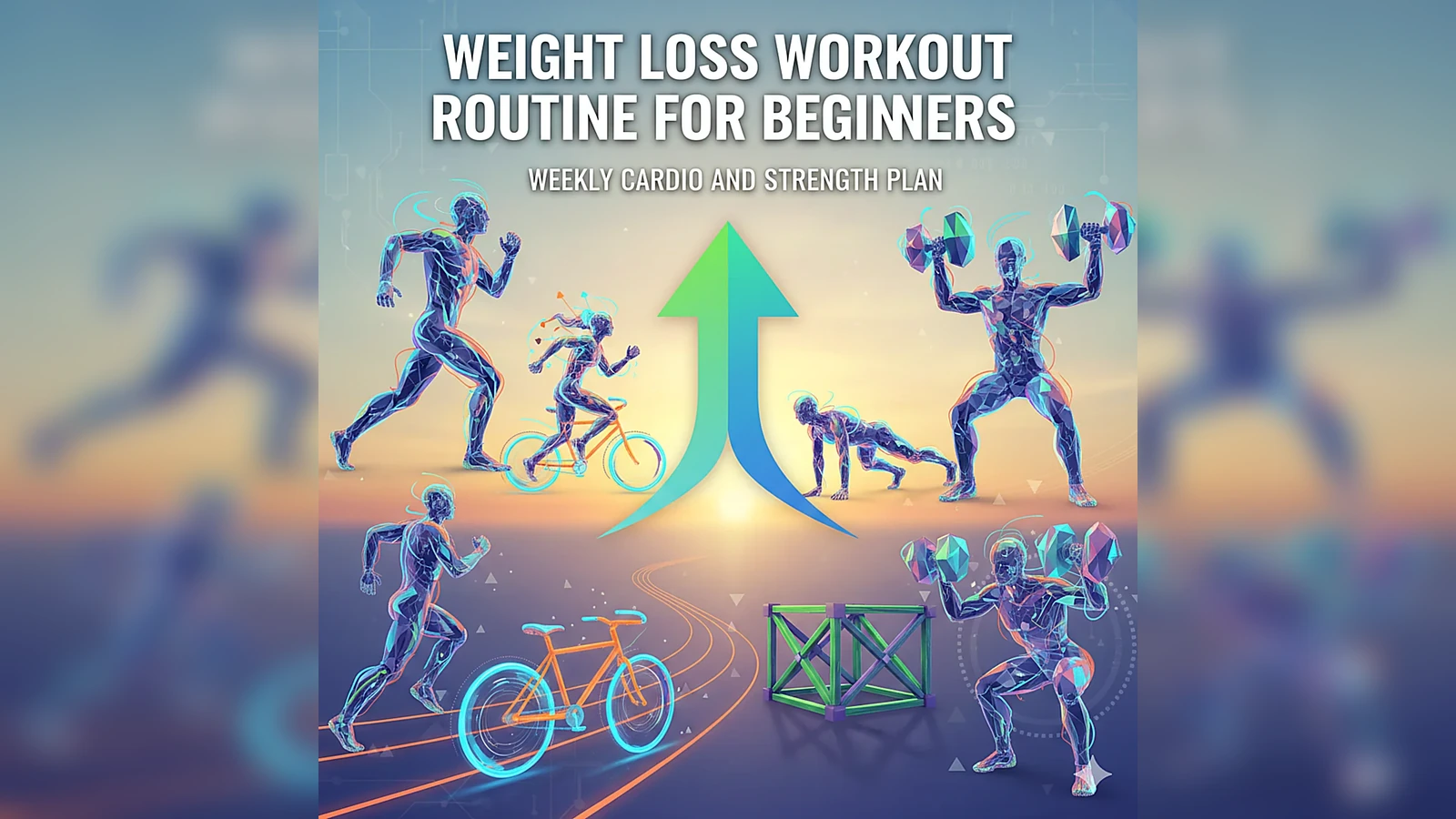
More than four sessions per week is not necessary at this stage. For a structure that shows how this fits into a complete weekly plan, the weight loss workout routine for beginners gives a full-week breakdown including both cardio and strength sessions.
Why This Works For Fat Loss
Interval-style training, even at low impact, creates a hormonal and metabolic environment that supports fat loss. The alternating effort and rest trains your body to work at higher intensities and recover faster over time, improving both cardiovascular fitness and calorie-burning efficiency.
More practically: 20 minutes done three times a week is 60 minutes of structured cardio. That’s more than most beginners manage when they attempt 45-minute steady-state sessions and lose motivation by week two. The routine’s brevity also lowers the psychological barrier to starting. When a workout feels like a 20-minute commitment rather than a 45-minute one, it’s easier to choose it on a tired Tuesday evening. That’s not a small thing. It’s one of the biggest drivers of long-term consistency.
Tracking Progress Over 6 Weeks
Weeks 1–2: Focus on form. Go slower than you think you need to. Get familiar with the sequence.
Weeks 3–4: Aim to complete all 7 rounds with fewer pauses. Your rest intervals will start to feel less urgent.
Weeks 5–6: Tighten rest intervals or add a fifth exercise. At this point, consider whether you’re ready to try a more varied or challenging format.
The next session doesn’t need to be perfect. Set a timer for 20 minutes, follow the structure, and see how it feels. That’s the only starting point that exists.