Beginner Home Fitness Routine: 3 Levels of Progression in Your Living Room
February 4, 2026
0
Beginning a fitness routine at home often starts with a simple question: where to begin without doing too much or too little. A beginner home fitness routine works
Beginning a fitness routine at home often starts with a simple question: where to begin without doing too much or too little. A beginner home fitness routine works best when it removes pressure, respects current ability, and offers a clear path forward. Progress should feel achievable, not overwhelming.
This guide introduces a three-level progression system designed for beginners who want structure without complexity. Each level builds logically on the previous one, allowing the body to adapt gradually while maintaining confidence and consistency. No equipment, no gym space, and no extreme intensity. Just movement that fits naturally into a living room and into daily life.
Why a Progressive Home Fitness Approach Matters
Many beginners stop early because routines either feel too easy or too demanding. A progressive system solves both problems.
A home fitness routine for beginners benefits from progression because it:
Reduces injury risk by avoiding sudden overload
Builds confidence through small, visible improvements
Encourages long-term consistency rather than short bursts
Allows flexibility based on energy and schedule
Health and fitness research consistently supports gradual progression as one of the most reliable ways to improve strength and endurance safely, especially for beginners.
Understanding the Three Levels
This routine uses three clearly defined levels:
Level 1: Foundation
Level 2: Development
Level 3: Strength & Control
Each level can be followed for several weeks before moving forward. There is no rush. Progression happens when movements feel stable, controlled, and repeatable.
Level 1: Foundation – Learning to Move Well
Level 1 focuses on awareness, posture, and basic strength. The goal here is not intensity but comfort and control.
Who Level 1 Is For
Complete beginners
Individuals returning after a long break
Anyone rebuilding routine consistency
Weekly Frequency
2–3 sessions per week
Warm-Up (5 Minutes)
A gentle warm-up prepares joints and muscles.
Shoulder rolls
Arm swings
Hip circles
Marching in place
Movement should feel easy and fluid.
Level 1 Exercises
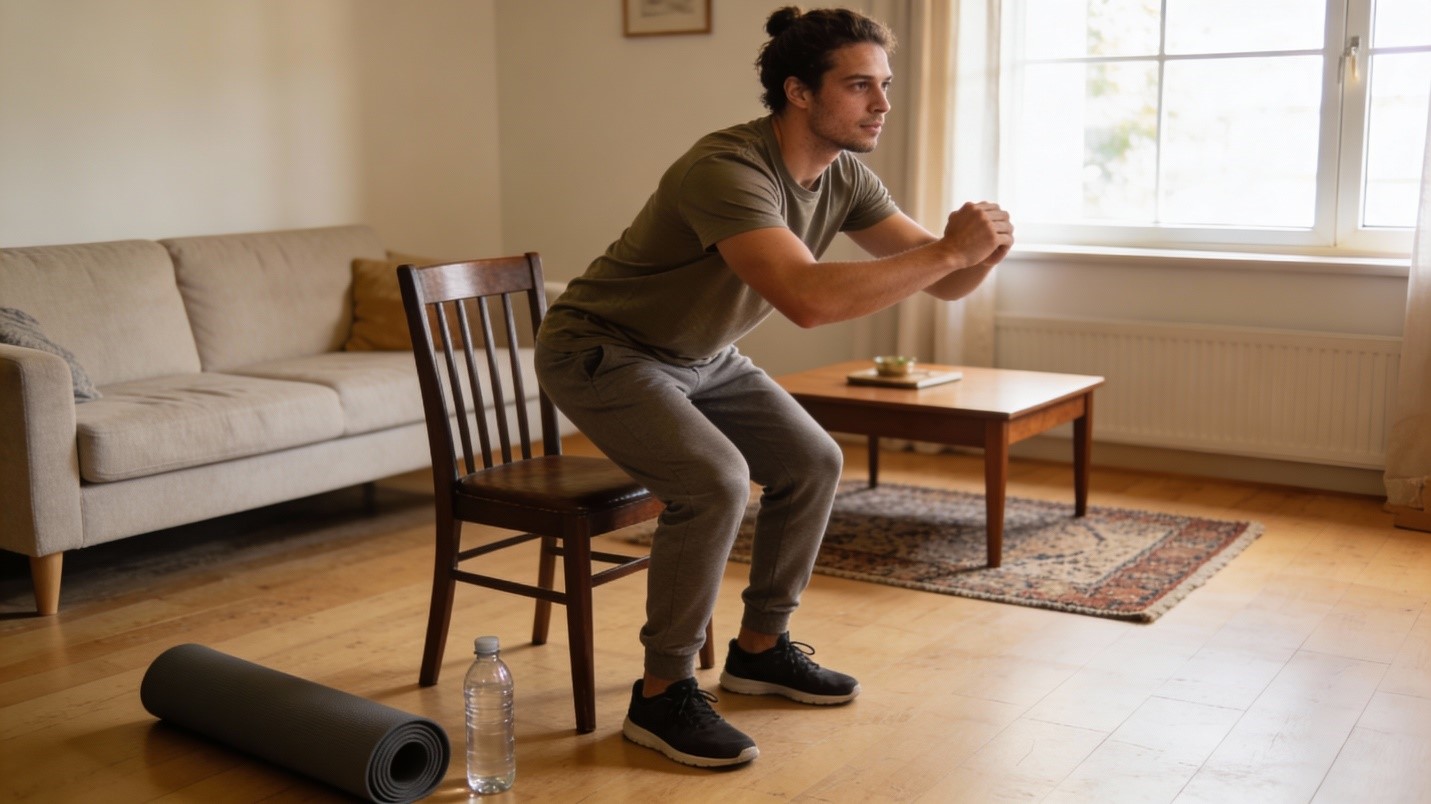
Chair Squats
Purpose: Teach lower-body movement and balance
Sit back toward a chair
Stand up using legs
Keep chest upright
Repetitions: 8–10 Sets: 2
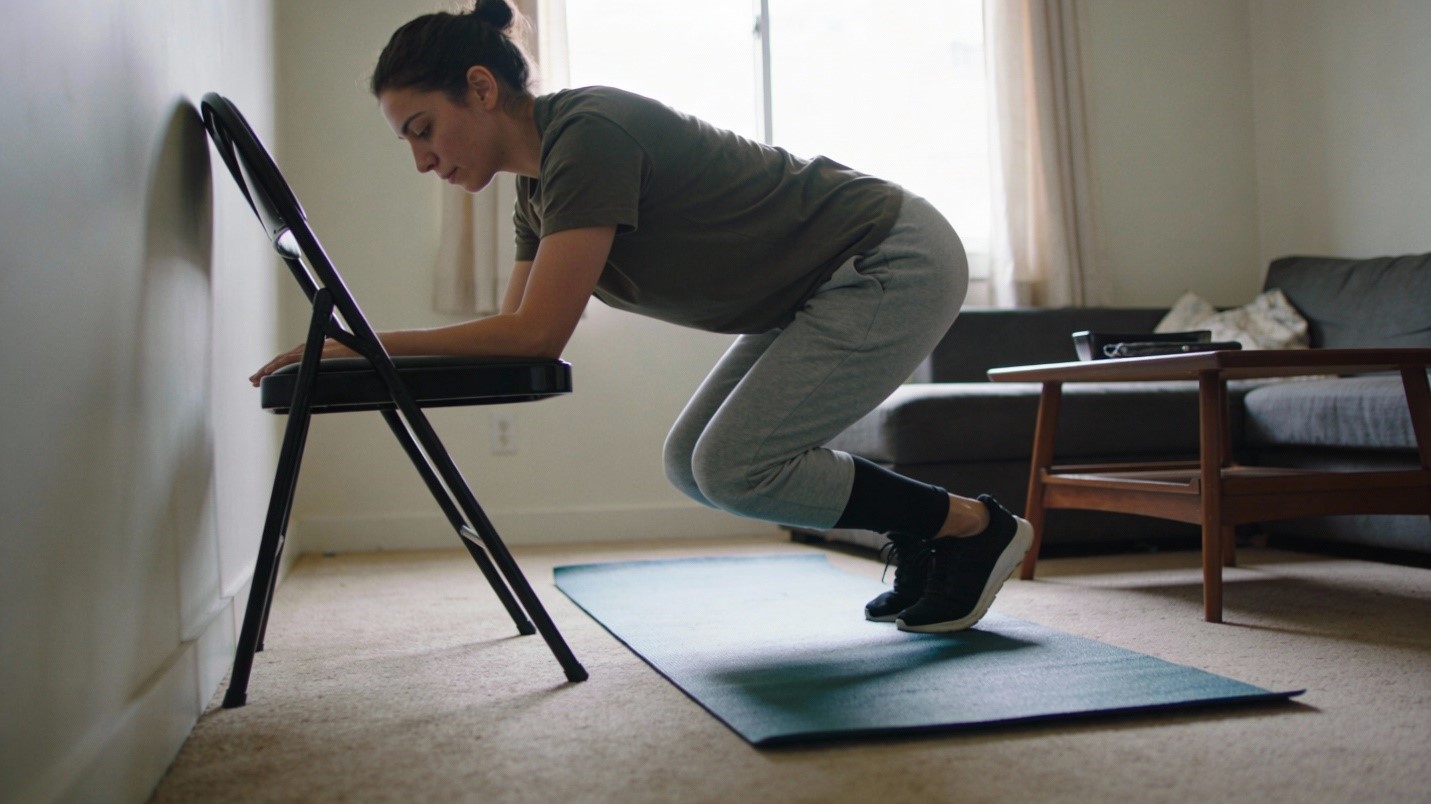
Wall Push-Ups
Purpose: Upper-body activation without strain
Hands on wall
Body straight
Controlled push and return
Repetitions: 8–10 Sets: 2
Standing Marches
Purpose: Core engagement and balance
Lift knees alternately
Stand tall
Controlled pace
Repetitions: 10 per side Sets: 2
Floor Glute Bridges
Purpose: Activate hips and support posture
Feet flat
Lift hips slowly
Squeeze at the top
Repetitions: 10–12 Sets: 2
Level 1 Focus
Learn movement patterns
Build routine habit
Finish sessions feeling capable
When exercises feel stable and breathing remains controlled, moving to Level 2 becomes appropriate.
Level 2: Development – Building Strength and Endurance
Level 2 introduces slightly more challenge while maintaining safety. Movements become more demanding, but still beginner-friendly.
Who Level 2 Is For
Beginners comfortable with Level 1
Those seeking more challenge without equipment
Weekly Frequency
3 sessions per week
Warm-Up (6–7 Minutes)
Add gentle dynamic movement:
Arm circles
Bodyweight half squats
Torso rotations
Level 2 Exercises
Bodyweight Squats
Purpose: Strengthen legs and hips
Feet shoulder-width
Sit back and down
Controlled rise
Repetitions: 10–12 Sets: 2–3
Incline Push-Ups
Purpose: Upper-body strength progression
Hands on table or couch
Core engaged
Elbows controlled
Repetitions: 8–10 Sets: 2–3
Reverse Lunges (Alternating)
Purpose: Balance and leg control
Step back
Lower slowly
Push through front foot
Repetitions: 6–8 per side Sets: 2
Standing Side Leg Raises
Purpose: Hip stability
Lift leg sideways
Control the movement
Keep torso steady
Repetitions: 10 per side Sets: 2
Incline Plank Hold
Purpose: Core endurance
Hands elevated
Body aligned
Steady breathing
Time: 20–30 seconds Sets: 2
Level 2 Focus
Improve strength control
Extend endurance slightly
Maintain clean technique
Fatigue should feel manageable, not draining.
Level 3: Strength & Control – Confident Full-Body Movement
Level 3 builds confidence through longer holds, deeper ranges of motion, and improved coordination.
Who Level 3 Is For
Beginners with consistent practice
Individuals ready for structured challenge
Weekly Frequency
3–4 sessions per week
Warm-Up (7–8 Minutes)
Include:
Light squats
Arm swings
Hip mobility drills
Level 3 Exercises
Squat to Chair (No Touch)
Purpose: Strength with control
Lower close to chair
Pause briefly
Stand smoothly
Repetitions: 12–15 Sets: 3
Knee Push-Ups
Purpose: Upper-body strength
Knees down
Core engaged
Smooth tempo
Repetitions: 8–10 Sets: 3
Static Lunges
Purpose: Stability and strength
Fixed stance
Lower straight down
Controlled rise
Repetitions: 8 per side Sets: 2–3
Dead Bug Hold
Purpose: Core coordination
Lying on back
Opposite arm and leg extend
Slow, controlled movement
Repetitions: 6–8 per side Sets: 2
Full Plank or Elevated Plank
Purpose: Core and shoulder stability
Time: 30–40 seconds Sets: 2–3
Level 3 Focus
Strength under control
Better balance and posture
Confidence in full-body movement
How to Progress Between Levels Safely
Progression depends on readiness, not timelines.
Signs to move forward:
Exercises feel controlled
Breathing stays steady
Recovery feels manageable
Progression options include:
Adding repetitions
Increasing hold times
Improving movement depth
Weekly Structure Example
A balanced beginner schedule:
Day 1: Level-based routine
Day 2: Rest or light walking
Day 3: Routine
Day 4: Rest
Day 5: Routine
Consistency matters more than intensity.
Common Beginner Concerns Addressed
“Is this enough?”
Yes. Progressive movement builds strength gradually.
“Do results require equipment?”
No. Bodyweight routines support foundational fitness.
“What if a level feels hard?”
Stay at the current level longer. Progress stays personal.
Why Living Room Workouts Work
A fitness routine for beginners at home removes logistical barriers. Training in familiar spaces increases adherence and reduces intimidation.
Many fitness professionals emphasize environment simplicity as a key factor in long-term habit formation.
Final Thoughts
A beginner home fitness routine works best when it respects where the body starts and where it can realistically go next. This three-level progression provides structure without pressure, challenge without overwhelm, and flexibility without confusion.
Fitness grows through steady practice, thoughtful progression, and patience. Starting small builds the foundation that lasts.