Full-Body Beginner Gym Routine For Busy People (3 Sessions A Week)
April 16, 2026
0
The average gym-goer wastes more time than they realize. Wandering between machines. Waiting for equipment. Scrolling through their phone between sets. For someone with a packed schedule, this
The average gym-goer wastes more time than they realize. Wandering between machines. Waiting for equipment. Scrolling through their phone between sets. For someone with a packed schedule, this kind of inefficiency isn’t just annoying. Infact, it’s the main reason they stop going entirely.
If you’re a beginner trying to fit gym sessions into a genuinely busy life, you need a different approach. You need a plan that uses limited time well, targets the whole body in each session, and still produces real results without demanding four or five visits per week.
That’s exactly what this guide delivers. A practical, efficient 3-day-per-week gym routine for busy beginners. No guesswork, no marathon sessions, no time commitments that fall apart the moment work gets hectic.
Why 3 Days Per Week Is Actually Ideal for Busy Beginners
More Training Doesn’t Always Mean More Progress
Beginners often assume they need to train five or six days a week to see results. In reality, three well-structured sessions per week produce significant strength and fitness gains, commonly in the first several months, when your body responds rapidly to any new movement stimulus. This is sometimes called ‘beginner gains,’ and it happens regardless of how many days you train, as long as you’re consistent.
Recovery Is Part of the Work
Between training sessions, your muscles repair and grow stronger. A three-day schedule gives your body adequate recovery time, reducing the risk of overtraining and the kind of nagging fatigue that makes beginners feel like exercise is doing more harm than good.
Consistency Beats Volume Every Time
Three sessions per week, done reliably for twelve weeks, outperforms a five-day schedule that falls apart by week three. For busy people especially, a sustainable plan is always more valuable than an aggressive one.
If you’re just starting out and want a broader foundation first, reviewing a structured 4-week beginner fitness plan before committing to gym-specific sessions helps you walk in with a clear sense of where you’re headed.
How to Structure 45 Minutes at the Gym
Time constraint is the central challenge here, so let’s address it directly. Forty-five minutes is enough time to warm up, work through a full-body session, and cool down, if you’re organized about it.
Phase
Time Allocation
Warm-Up
8–10 minutes
Main Workout (3–4 compound exercises)
28–32 minutes
Cooldown & Stretching
5–7 minutes
The key is arriving knowing exactly what you’re going to do. No guessing, no wandering, no checking Instagram between sets. Have your exercises written down before you walk through the door.
The 3-Day Full-Body Gym Routine For Busy Beginners
This plan runs three days per week — Monday, Wednesday, Friday works well, but any non-consecutive combination is fine. Each session targets the major muscle groups: legs, chest, back, shoulders, and core.
Day 1 — Strength Focus
Warm-Up (8 minutes): 5 minutes on the treadmill or bike at easy intensity; hip circles, shoulder rolls, 10 bodyweight squats.
Exercise
Sets
Reps
Rest
Leg Press Machine
3
10
75 sec
Chest Press Machine
3
10
75 sec
Seated Row Machine
3
12
75 sec
Dumbbell Shoulder Press
3
10
60 sec
Plank Hold
3
20–30 sec
45 sec
Day 2 — Functional Movement Focus
Warm-Up (8 minutes): 5 minutes on the elliptical; arm swings, hip hinges, slow lateral lunges × 8 each side.
Exercise
Sets
Reps
Rest
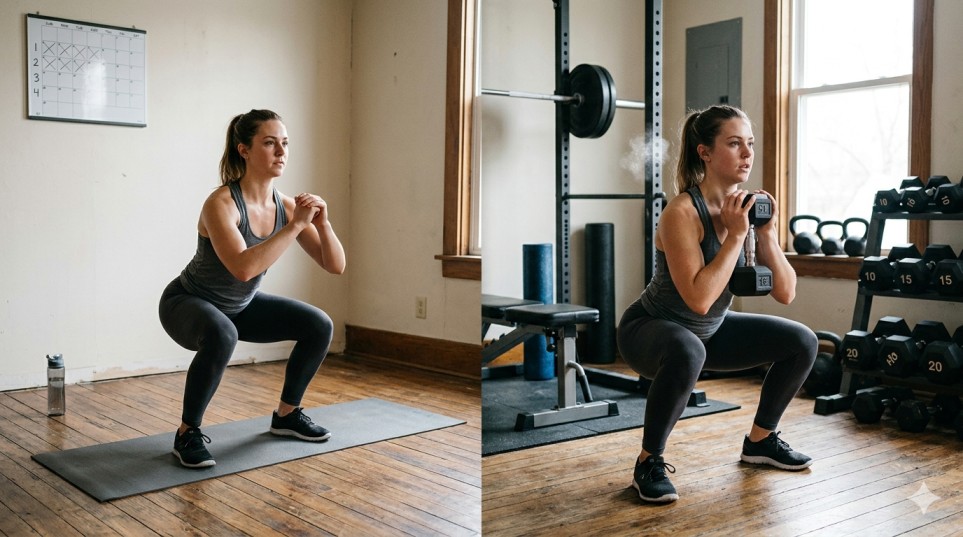
Goblet Squat (light dumbbell)
3
12
75 sec
Incline Chest Press Machine
3
10
75 sec
Lat Pulldown
3
12
75 sec
Lateral Raises (dumbbells)
3
12
60 sec
Dead Bug
3
8 each side
45 sec
Day 3 — Endurance & Core Focus
Warm-Up (8 minutes): 5 minutes on the rowing machine or bike; cat-cow stretches, ankle circles, arm crossovers.
Exercise
Sets
Reps
Rest
Smith Machine or Hack Squat
3
10
75 sec
Cable Chest Fly or Pec Deck
3
12
75 sec
Assisted Pull-Up or Cable Row
3
10
75 sec
Arnold Press
3
10
60 sec
Side Plank Hold
3
20 sec each
45 sec
If the machines feel unfamiliar or intimidating at first, working through the first four weeks on gym machines before jumping into this plan gives you the confidence to move through sessions efficiently.
Making the Most of Your 45 Minutes
Log Your Workouts Before You Go
Busy people benefit especially from tracking, not because it’s fun, but because it removes the need for decision-making. You show up, you follow the plan, you log the weights, you leave. Preparation before the session keeps it short and effective.
Have an Alternative for Every Machine
If the machine you need is occupied, substitute and move on. The cable row can replace the seated row. The incline press works instead of the flat chest press. Waiting five minutes for a machine breaks your rhythm, extends your session, and adds frustration to a workout that should feel productive.
Keep Your Phone Face-Down
This is the single biggest time-waster in any gym. If you’re tracking your workout on your phone, flip it over between sets. Every minute spent scrolling is a minute you’re not using, and in a 45-minute session, those minutes matter.
Use Rest Time to Stretch
Instead of sitting idle between sets, do a gentle stretch for the opposing muscle group. For example, stretch your hip flexors while resting after squats. This keeps your body warm, improves flexibility over time, and adds no extra time to your session.
How to Progress Over 4-6 Weeks
The first two weeks of this routine are about learning the movements and building the habit. Form comes before weight, always. By week three, you can begin applying a progression structure:
Phase
Focus
Weeks 1–2
Learn form at comfortable weight; no ego lifting
Weeks 3–4
Increase weight 5–10% when 3×12 feels genuinely easy
Weeks 5–6
Add one additional set per exercise, or reduce rest time slightly
If you want to understand the science behind this kind of gradual increase, progressive overload for beginners explains exactly how to keep getting stronger without hitting a wall prematurely.
What to Do When Life Gets in the Way
Busy schedules don’t stay predictable. Travel, late meetings, family commitments, and unexpected demands will all shrink your gym time at some point. Here’s how to handle it:
Only 30 minutes available: Cut to two exercises per muscle group; keep rest periods tight
Missed one session: Continue the plan from where you left off, don’t try to double up
Missed an entire week: Restart from the same week, not from scratch
Missing workouts is normal. Treating a missed week as a reason to quit is the only real failure. The plan is designed to accommodate imperfect schedules; the important thing is that you come back.
Pairing Your Gym Routine With Recovery
A 3-day gym plan is only part of the picture. On your off days, light movement, walking, stretching, or easy cycling keeps blood flowing and prevents the muscle stiffness beginners typically experience after starting strength training. For a structured approach to the first month in the gym, a full-body 3-day strength plan with clear week-by-week guidance offers a solid companion framework to build from.
Nutrition for Busy Beginners: The Basics That Matter
Three sessions per week are effective. But fueling those sessions and recovering from them makes the difference between gradual progress and stalled results. A few practical points:
Eat a balanced meal 1-2 hours before training (protein + carbohydrates)
Drink water throughout the day — not just at the gym
Eat protein after training: chicken, eggs, Greek yogurt, or a shake all work fine
You don’t need a complex diet — consistent, balanced eating beats any elaborate plan
Supplements aren’t necessary at this stage. Focus on food, sleep, and showing up consistently because those three things will produce more results than any protein powder during the first three months.
Wrap Up
Three focused sessions per week is not a compromise. It’s a legitimate training approach that works particularly for beginners juggling careers, families, and everything else that competes for time.
The plan above gives you a full-body gym routine you can complete in under 45 minutes, with clear exercise choices, simple progressions, and enough flexibility to handle real life without abandoning the routine entirely.
You don’t need more hours. You need a better plan. Book three sessions into your calendar this week, show up with this plan in hand, and repeat.