Starting a fitness routine often feels overwhelming, especially when equipment, gym memberships, or complex plans seem required. A beginner bodyweight fitness routine removes those barriers. It relies only
Starting a fitness routine often feels overwhelming, especially when equipment, gym memberships, or complex plans seem required. A beginner bodyweight fitness routine removes those barriers. It relies only on natural movement, controlled effort, and consistency. No machines, no weights, no complicated setups. Just the body, proper technique, and a clear structure.
This guide focuses on building strength, coordination, and confidence through a full-body, no-equipment routine designed specifically for beginners. Every movement included here mirrors patterns the body already understands. That approach helps reduce injury risk while improving overall fitness in a sustainable way.
Why Bodyweight Training Works for Beginners
Bodyweight training uses resistance that adapts naturally to the individual. Instead of forcing the body to move external loads, the body learns to move itself efficiently.
A bodyweight fitness beginner routine supports:
Joint-friendly movement patterns
Gradual strength development
Improved balance and control
Better awareness of posture and alignment
Research from organizations such as the American Council on Exercise highlights bodyweight training as an effective starting point for strength development when technique and progression are respected.
For beginners, the goal stays simple: learn how to move well before adding intensity.
Key Principles Before Starting
Before moving into the routine, a few fundamentals matter more than repetition count or speed.
Focus on Technique First
Proper form builds strength safely. Rushing through movements leads to compensation patterns that limit progress. Each repetition should feel controlled and intentional.
Breathe With the Movement
Breathing supports stability. A general cue works well:
Inhale during easier phases
Exhale during effort
This rhythm helps maintain control, especially during core-focused movements.
Move at a Comfortable Pace
Fitness progress depends on consistency, not exhaustion. A pace that allows clear form across all repetitions leads to better results over time.
Warm-Up: Preparing the Body (5–7 Minutes)
A proper warm-up prepares joints, muscles, and the nervous system.
Simple Warm-Up Flow
Neck rotations (gentle, slow)
Shoulder rolls and arm circles
Hip circles and standing leg swings
Marching in place with arm movement
The purpose stays activation, not fatigue. Warm muscles respond better and move more safely.
The Full-Body Beginner Bodyweight Fitness Routine
This beginner body weight fitness routine targets the entire body using basic movement patterns. Perform the exercises in order, resting as needed between sets.
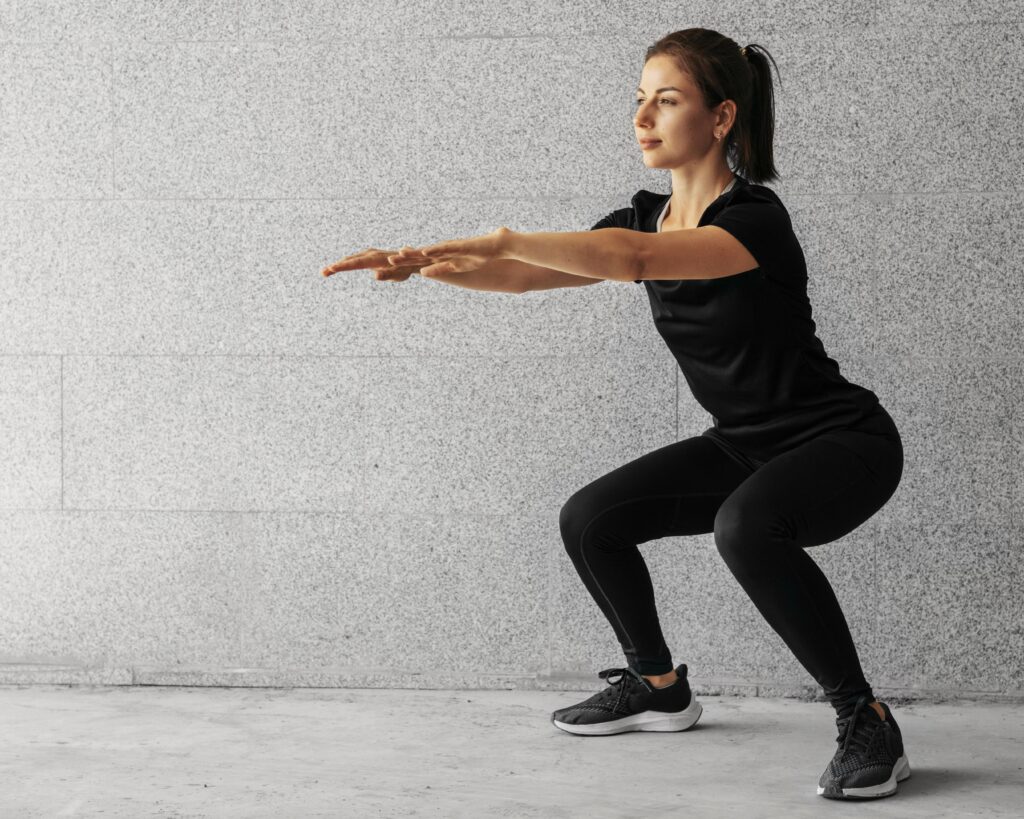
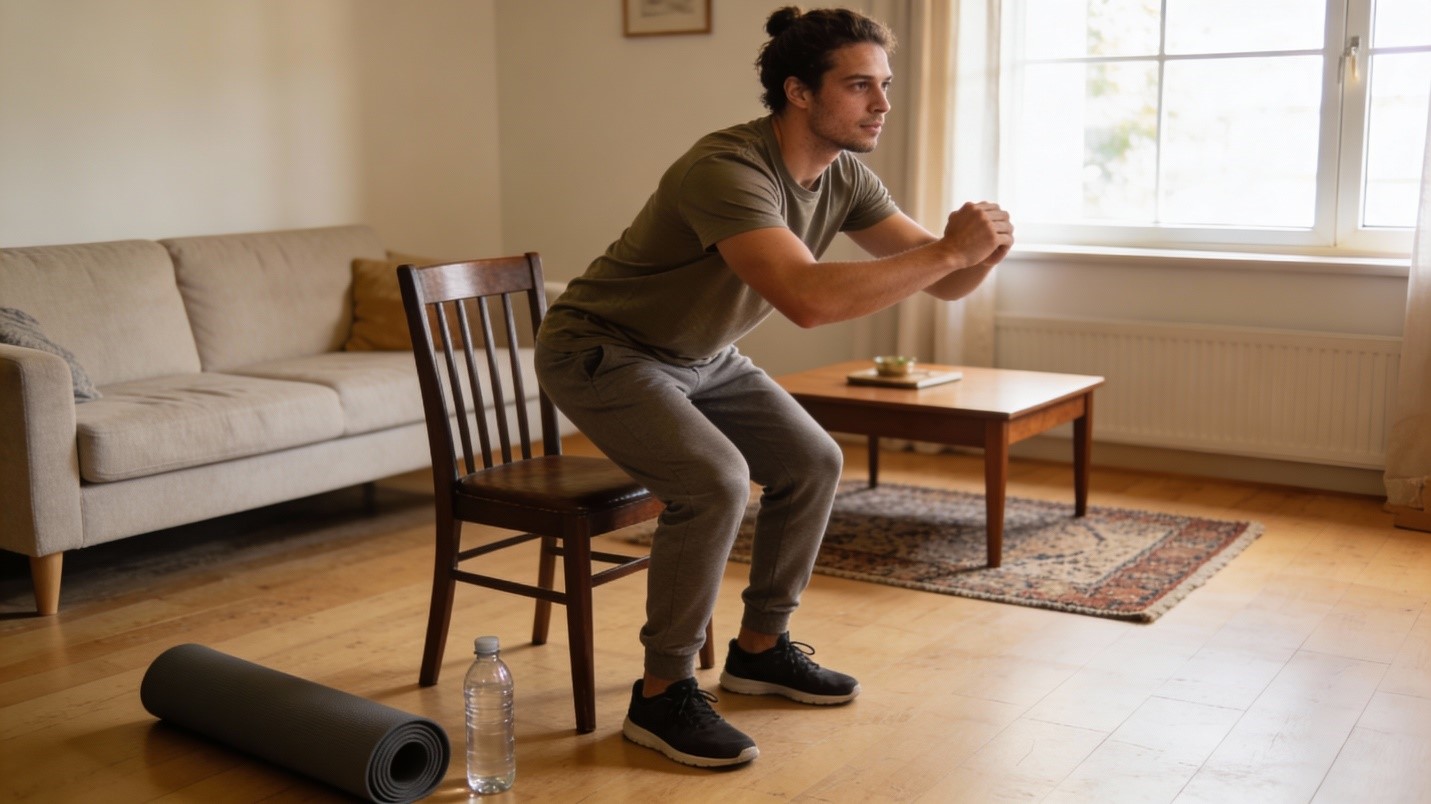
1. Squats – Lower Body Strength
Muscles involved: thighs, hips, glutes, core
Technique cues:
Feet shoulder-width apart
Sit back as if lowering onto a chair
Chest stays upright
Knees track in line with toes
Repetitions: 8–12 Sets: 2
Squats train a movement pattern used daily. Proper depth matters less than balance and control.
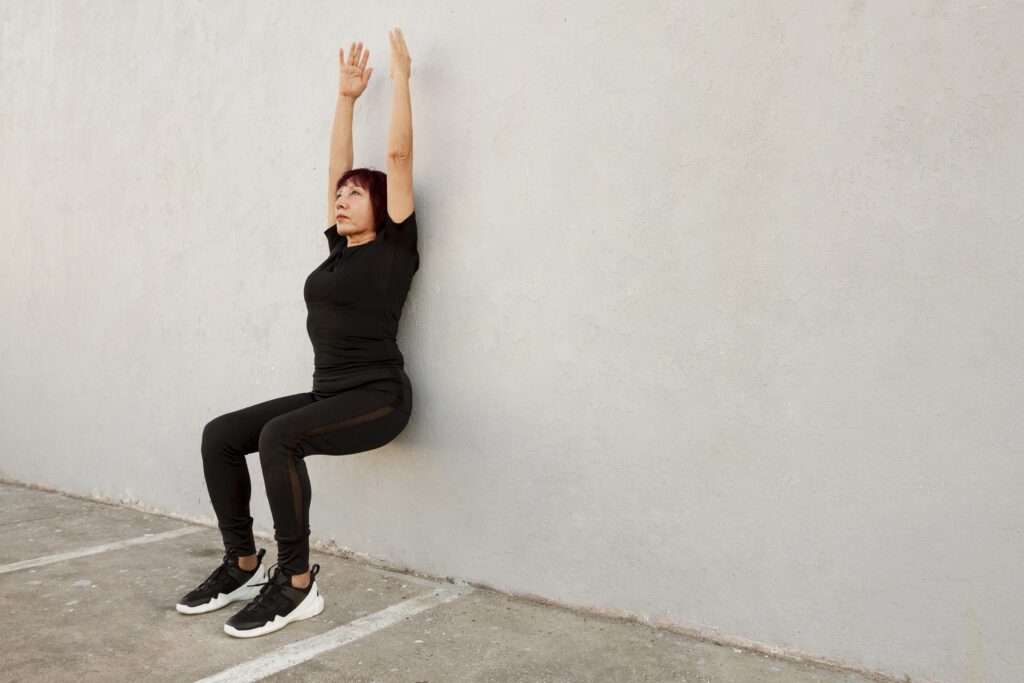
2. Wall Push-Ups – Upper Body Control
Muscles involved: chest, shoulders, arms, core
Technique cues:
Hands on the wall at chest height
Body in a straight line
Elbows bend at a controlled angle
Push away while maintaining alignment
Repetitions: 8–10 Sets: 2
Wall push-ups reduce load while teaching correct pressing mechanics.
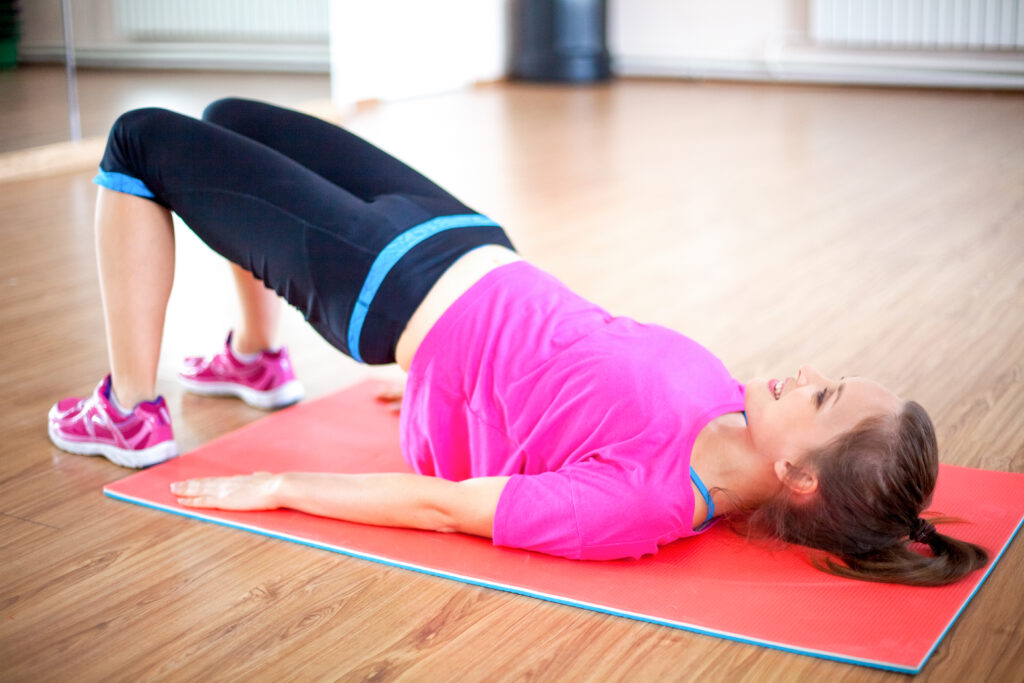
3. Glute Bridges – Posterior Chain Activation
Portrait of happy young Caucasian woman wearing sportswear doing pelvic muscle exercise lying on mat and smiling in gym
Muscles involved: glutes, lower back, core
Technique cues:
Lie on the back, knees bent
Feet flat, hip-width apart
Drive through heels
Squeeze glutes at the top
Repetitions: 10–12 Sets: 2
This movement supports hip strength and spinal stability.
4. Standing Knee Raises – Core Engagement
Muscles involved: abdominals, hip flexors
Technique cues:
Stand tall
Lift one knee at a time
Engage core before lifting
Avoid leaning back
Repetitions: 10 per side Sets: 2
This exercise improves balance while activating the core safely.
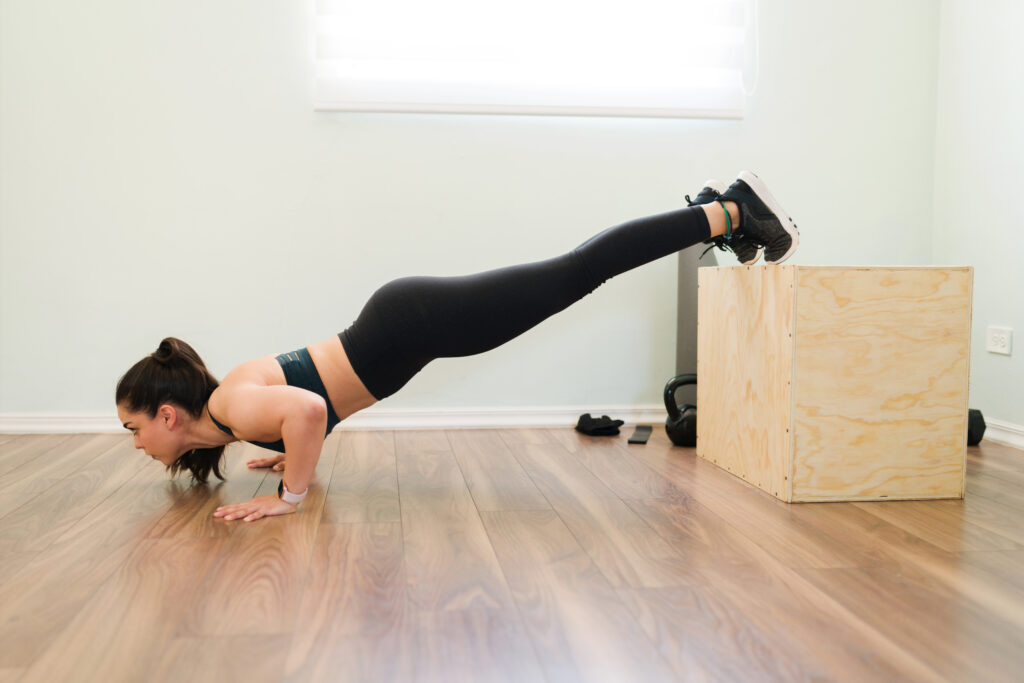
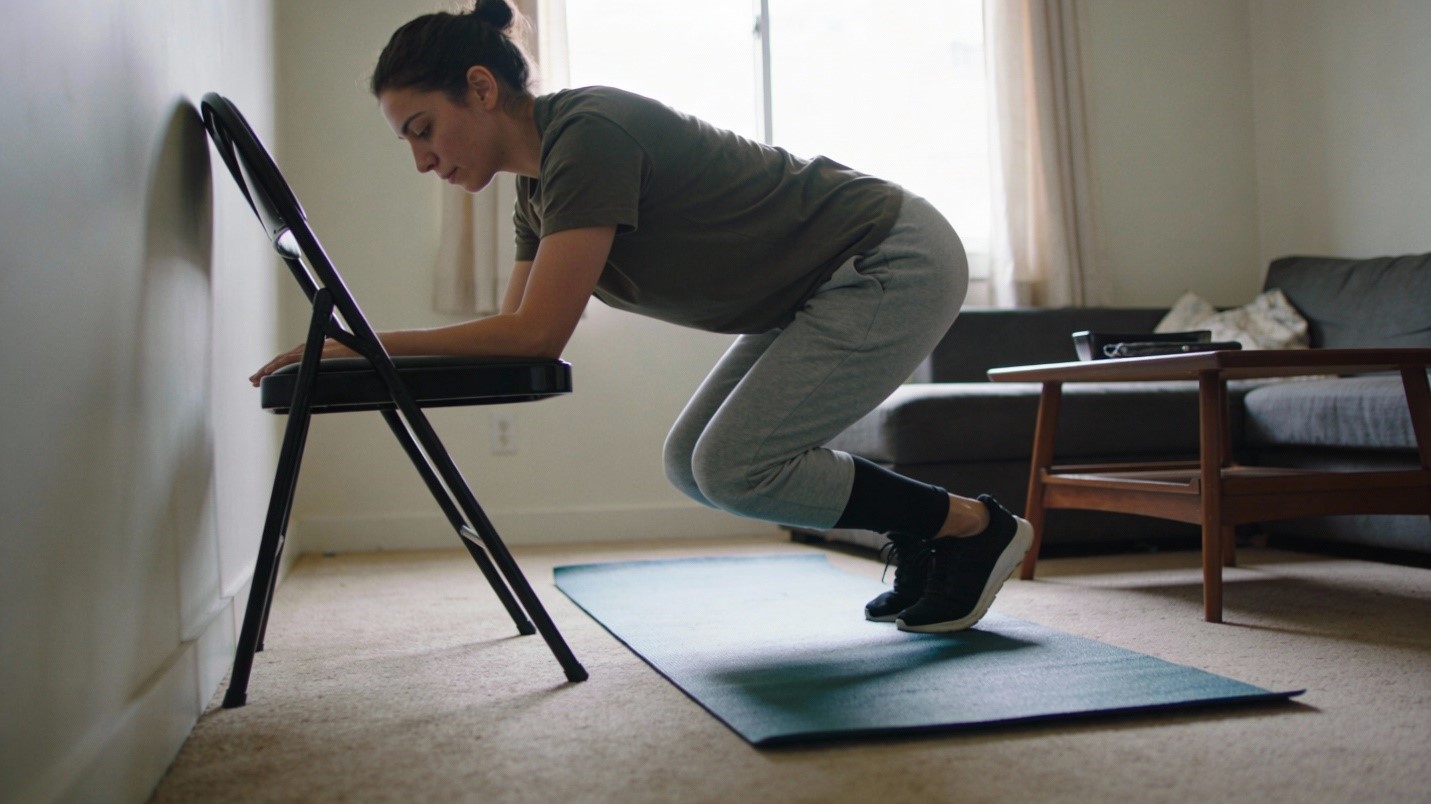
5. Incline Plank – Total Core Stability
Muscles involved: core, shoulders, back
Strong athletic woman doing push ups with a plyo box. Side view of a fitness woman in sportswear during her cross training at home
Technique cues:
Hands on a bench, table, or wall
Body straight from head to heels
Brace the core
Breathe steadily
Duration: 15–30 seconds Sets: 2
Planks build endurance without spinal movement, ideal for beginners.
Rest and Recovery Between Exercises
Rest allows muscles to reset and technique to stay clean. A simple guideline works well:
30–60 seconds between sets
Longer rest if breathing remains elevated
Recovery supports consistency, especially during the early stages.
How Often Should Beginners Train?
For most beginners, 3 sessions per week works well. This allows enough stimulus for improvement while giving the body time to adapt.
A sample weekly structure:
Day 1: Full routine
Day 2: Rest or light walking
Day 3: Full routine
Day 4: Rest
Day 5: Full routine
Consistency matters more than frequency.
Progressing the Routine Safely
Progress comes from small adjustments, not drastic changes.
Safe progression options include:
Adding 1–2 repetitions per exercise
Increasing plank hold time by 5–10 seconds
Reducing rest time gradually
The body adapts when challenged slightly beyond comfort, not pushed into strain.
Common Beginner Mistakes to Avoid
Awareness of common errors helps prevent setbacks.
Skipping warm-ups
Holding breath during exercises
Prioritizing speed over form
Training daily without rest
Avoiding these habits supports long-term progress and confidence.
Why No-Equipment Training Builds Confidence
A beginner bodyweight fitness routine builds self-reliance. Training anywhere removes dependency on external tools. This approach often leads to better adherence because it fits real-life schedules.
Many fitness organizations emphasize bodyweight training as a foundational stage before resistance or equipment-based programs.
Final Thoughts
Starting fitness does not require complexity. A structured, no-equipment routine allows beginners to focus on movement quality, consistency, and gradual improvement.
This bodyweight fitness beginner routine provides a practical, technique-focused approach that respects how the body learns and adapts. With patience and regular practice, strength and coordination improve naturally.
Fitness progress grows from reliable habits, clear movement, and steady effort. This routine supports all three.