A progressive overload routine for beginners is the most important principle for building strength safely and consistently. Many beginners follow a workout plan but stop seeing results after a few weeks. This usually happens because the body adapts quickly to the same level of effort.
To continue improving, your training must gradually increase in difficulty. Progressive overload ensures that your muscles are consistently challenged, which leads to strength gains, better performance, and improved muscle development over time.
What Is Progressive Overload?
Progressive overload is the gradual increase of stress placed on the body during exercise. This concept is supported by organizations such as the American College of Sports Medicine (ACSM) and the National Strength and Conditioning Association (NSCA).
Instead of making large changes, beginners should focus on small and controlled adjustments. These allow the body to adapt safely without increasing the risk of injury.
The most effective ways to apply progressive overload include:
- Increasing weight
- Increasing repetitions
- Adding sets
- Improving technique
- Reducing rest time
Each method increases training demand. Beginners should apply one change at a time to maintain control and avoid overtraining.
Why Progressive Overload Is Important for Beginners
When starting a fitness beginner weightlifting routine, the body adapts quickly. Early improvements often come from better coordination rather than actual muscle growth.
However, after this phase, progress slows unless additional stress is applied.
A structured progressive overload routine for beginners helps to:
- Maintain continuous strength improvement
- Support muscle growth
- Improve workout efficiency
- Prevent plateaus
Without progression, workouts become repetitive and ineffective.
Core Methods To Apply Progressive Overload
Increase Repetitions
This is the safest starting point. Increase the number of repetitions while keeping the same weight.
Example:
- Week 1: 8 reps
- Week 2: 10 reps
Increase Weight Gradually
Once higher repetitions feel manageable, increase the load slightly.
General guideline:
- Upper body: +2–5 kg
- Lower body: +5–10 kg
After increasing weight, reduce reps and build up again.
Add Additional Sets
Increasing sets improves total training volume.
Example:
This supports both endurance and strength.
Improve Technique
Better form increases muscle activation. Focus on controlled movement and full range of motion.
Reduce Rest Time
Shorter rest periods increase intensity and improve conditioning. Therefore, this should be done gradually.
Sample Progressive Overload Routine for Beginners
This progressive overload routine for beginners can be followed three times per week.
Workout A
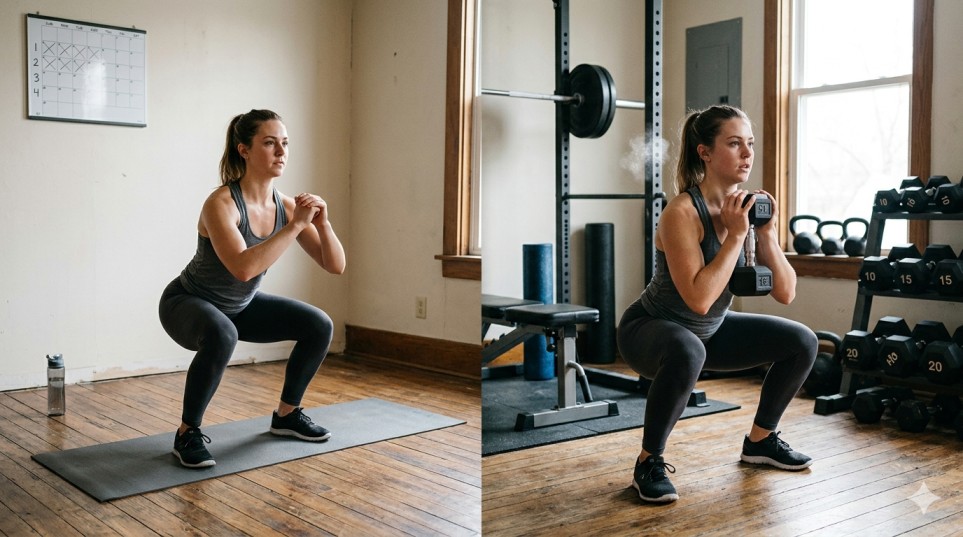
- Squats – 3×8
- Push-ups – 3×8
- Dumbbell rows – 3×8
Workout B
- Deadlifts – 3×6
- Overhead press – 3×8
- Plank – 3×20 seconds
Alternate between Workout A and Workout B.
Weekly Progression Plan
Weeks 1–2: Focus on Technique
- Use light weights
- Learn proper movement patterns
- Maintain controlled repetitions
Week 3 to 4: Increase Repetitions
- Add 1–2 repetitions per set
- Keep weight constant
Weeks 5–6: Increase Weight
- Add small weight increments
- Reset repetitions to a lower range
Weeks 7 to 8: Combine Progression
- Increase weight and repetitions gradually
- Maintain proper form
How To Track Progress Effectively
Tracking is essential for any progressive overload routine for beginners.
Record:
- Weight used
- Repetitions completed
- Sets performed
In general, tracking helps identify improvements and ensures consistency over time.
Recovery and Its Role in Strength Development
Recovery is necessary for muscle growth. Beside that training creates stress, while recovery allows adaptation.
Follow these recovery guidelines:
- Sleep 7–8 hours per night
- Consume adequate protein (~1.6 g/kg body weight based on NSCA recommendations)
- Take rest days between workouts
Obviously, wearable fitness devices can help monitor recovery, sleep quality, and readiness for training.
Common Mistakes To Avoid
Many beginners slow their progress due to simple errors:
- Increasing weight too quickly
- Ignoring proper form
- Skipping rest days
- Following advanced muscle and fitness workout routines beginners are not ready for
- Changing workouts too frequently
Certainly, consistency is more effective than frequent changes.
For a structured starting point, combine this method with a beginner strength training routine to build a strong foundation.
Signs You Are Progressing Correctly
You are applying progressive overload effectively if:
- You can lift slightly heavier weights over time
- Repetitions become easier
- Form improves
- Recovery becomes more efficient
Progress should be gradual and consistent.
Scientific Basis of Progressive Overload
Research published on PubMed shows that progressive overload increases mechanical tension and metabolic stress. These factors are essential for muscle growth and strength development.
Plus, structured progression produces better long-term results than random or inconsistent training.
Practical Tips for Beginners
To apply progressive overload effectively:
- Focus on one progression method at a time
- Maintain proper form before increasing load
- Track every workout
- Stay consistent with your schedule
- Avoid comparing your progress with others
Undoubtedly, these practices ensure steady and sustainable improvement.
Final Thoughts
A progressive overload routine for beginners provides a clear and effective method for building strength. Gradual increases in training demand lead to long-term improvements without unnecessary risk.
Focus on:
- Consistent progression
- Proper technique
- Adequate recovery
These fundamentals support safe and effective strength development.
Call to Action: Track Your Progress
Download a Progressive Overload Tracking Sheet to record:
- Weights used
- Repetitions completed
- Weekly improvements
Tracking ensures consistency and helps maintain long-term progress.