What Is Body Recomposition? A Beginner’s Guide to Losing Fat While Gaining Muscle
July 11, 2026
0
The early weeks of a fitness journey are when many people develop habits based on common fitness myths rather than evidence. They step on the scale after a
The early weeks of a fitness journey are when many people develop habits based on common fitness myths rather than evidence.
They step on the scale after a week of working out, see that the number hasn’t changed much, and assume nothing is happening. So they either eat less, train more, or quit. What they don’t realise is that their body may already be quietly doing something far more interesting.
If you’ve ever wondered whether you can really lose fat and build muscle at the same time, the short answer is yes, under the right conditions, and that process has a name, called body recomposition. For beginners, it is not just possible, research shows it is actually when it works best.
So, What Exactly Is Body Recomposition?
Body recomposition simply means changing the makeup of your body, reducing fat while increasing or keeping muscle, without necessarily losing a lot of weight on the scale.
It sounds like two things happening at once, and that is exactly what it is. Your body burns stored fat for energy while your muscles respond to training by growing stronger and slightly larger. The result? You can end up looking noticeably leaner, feeling stronger, and fitting into your clothes differently, even if the number on the scale barely moved.
This is why the scale is such a poor measure of real progress. A kilogram of fat takes up much more space than a kilogram of muscle. Losing fat while gaining muscle can visibly change your shape while the total weight stays almost the same.
Why Does This Work Better for Beginners?
There is a real advantage to being new to exercise, and it is backed by science.
A 2020 review in the NSCA’s Strength and Conditioning Journal (Barakat et al.) found that untrained individuals, people returning to training after a break, and those with higher body fat percentages are among the groups most likely to achieve body recomposition.
If you are just starting out, your muscles are highly responsive to any training stimulus. Your body has not adapted yet, so even moderate effort produces strong results. At the same time, your stored body fat can serve as an energy source to support the muscle-building process — even when you are eating slightly less than usual.
This is what fitness coaches sometimes call newbie gains. Your body is in a unique window where fat loss and muscle growth can happen side by side, driven by heightened sensitivity to resistance training and the fact that your fat stores can fund the energy cost of building new tissue.
This window does not last forever, which is one reason why how you train in your first few months really does matter.
The Three Things That Make Body Recomposition Work
Body recomposition is not magic, and it is not complicated. It comes down to three things working together.
1. Resistance Training — The Non-Negotiable
You cannot recompose your body through diet alone. Training is what sends the signal to your muscles to grow. Without it, a calorie deficit just leads to weight loss, not a meaningful shift in body composition.
Research consistently shows that resistance training three to four days per week, with progressive overload over time, is the minimum effective approach for body recomposition. Progressive overload simply means gradually making your workouts a little harder — more reps, more weight, or less rest — so your muscles keep adapting.
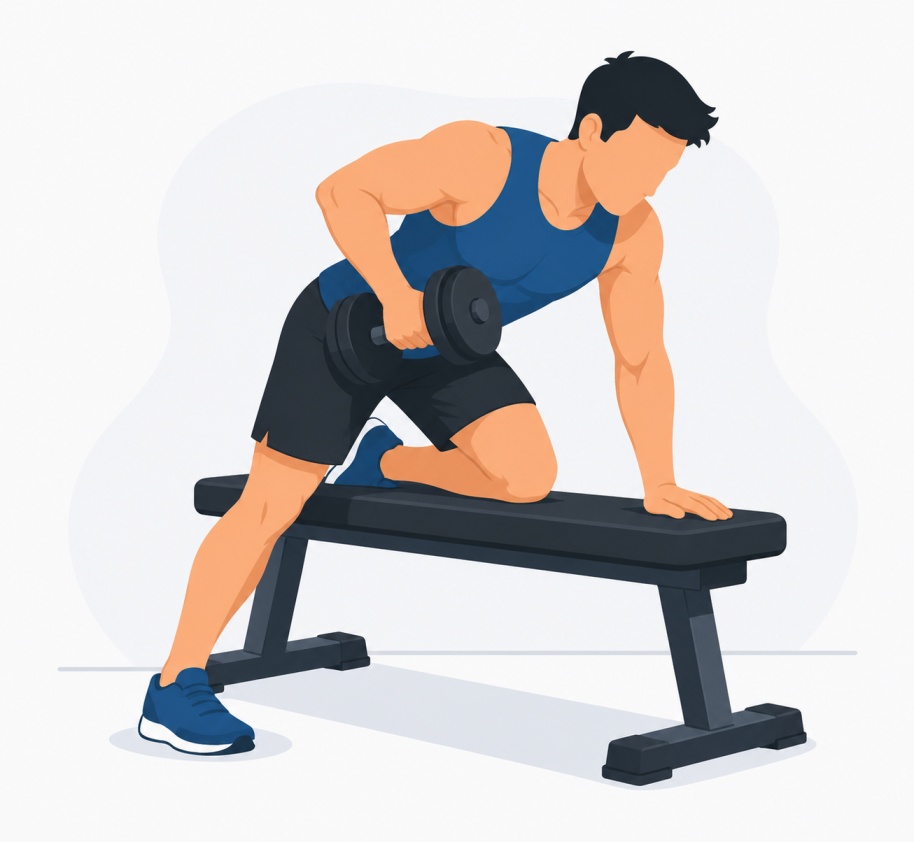
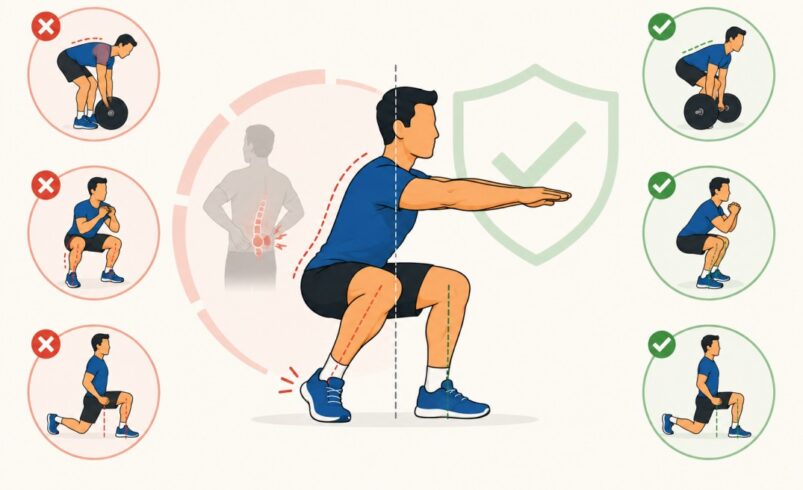
Compound movements that work multiple muscle groups at once (like squats, push-ups, rows, and deadlifts) are especially efficient for beginners because they build strength quickly and burn more energy per session. Understanding how compound and isolation exercises differ is a great place to start — it helps you build a routine that actually drives results rather than spinning your wheels.
2. Protein — The Building Block Your Body Needs Most
Protein does two critical things during body recomposition. It gives your body the raw material to build and repair muscle tissue, and it helps you feel full even when you are eating slightly less than usual.
Most research points to a target of around 1.6 to 2.2 grams of protein per kilogram of body weight per day for people aiming to build muscle while losing fat. For a simpler guideline: roughly 0.7 to 1 gram per pound of body weight works well for most beginners.
Good protein sources to build your meals around:
Food
Approx. Protein per 100g
Chicken Breast
31g
Eggs
13g
Greek Yogurt
10g
Canned Tuna
26g
Lentils (cooked)
9g
Cottage Cheese
11g
The specific source matters less than hitting your daily total. Spreading your protein intake across three to four meals throughout the day tends to support muscle protein synthesis better than eating most of it in one sitting. If you want a clear number to work with, this guide on how much protein beginners actually need walks through the exact formula without the guesswork.
3. A Small Calorie Deficit — Not an Aggressive One
Here is where most beginners go wrong. They either eat at a large calorie deficit (cutting hard to lose fat faster) or they eat at a big surplus (trying to bulk up). Neither approach is ideal for body recomposition.
The sweet spot is a modest deficit of around 200 to 400 calories below your daily maintenance level, or sometimes eating right at maintenance. This is small enough that your body can still support muscle growth through training, while gradually tapping into stored fat for energy.
An aggressive cut might help the scale move faster, but it usually comes at the cost of muscle loss, reduced training performance, and lower energy — none of which help you build the body you are after.
What Does Progress Actually Look Like?
This is the part people find most confusing.
During body recomposition, the scale often does not move much. Some weeks it goes up slightly, some weeks it goes down. This is normal and expected. You are simultaneously losing fat and gaining muscle, and those two changes can largely cancel each other out on a bathroom scale.
This is why it is so important to track progress in ways the scale cannot show:
Progress photos every two to four weeks (same lighting, same time of day)
Body measurements at the waist, hips, arms, and thighs
Strength in the gym — can you lift more or do more reps than last month?
How your clothes fit
If your strength is going up, your measurements are shifting even slightly, and your photos show a leaner appearance over time — body recomposition is happening. The scale just is not the right tool to see it.
Real results from body recomposition typically start becoming visible after eight to twelve weeks of consistent effort. This is slower than a rapid weight-loss diet, but the changes tend to be more permanent because you are not losing muscle in the process.
Sleep and Recovery Are Part of the Process
Most beginners focus entirely on training and food, and forget that the actual muscle-building process happens during rest.
When you train, you create small amounts of stress in your muscle fibres. Your body repairs and slightly rebuilds those fibres during sleep and recovery — that is what leads to growth over time. Consistently getting seven to nine hours of sleep is not optional if you want your training to pay off.
Poor sleep raises cortisol (a stress hormone), which can work against both fat loss and muscle building. It also dulls hunger signals, making it harder to eat the right amount of protein. Sleep is one of the most underrated tools in body recomposition.
On the days you are not training hard, active recovery, light movement like walking, gentle stretching, or mobility work, helps reduce soreness and keeps the recovery process moving without putting extra stress on your muscles.
A Simple Weekly Structure for Beginners
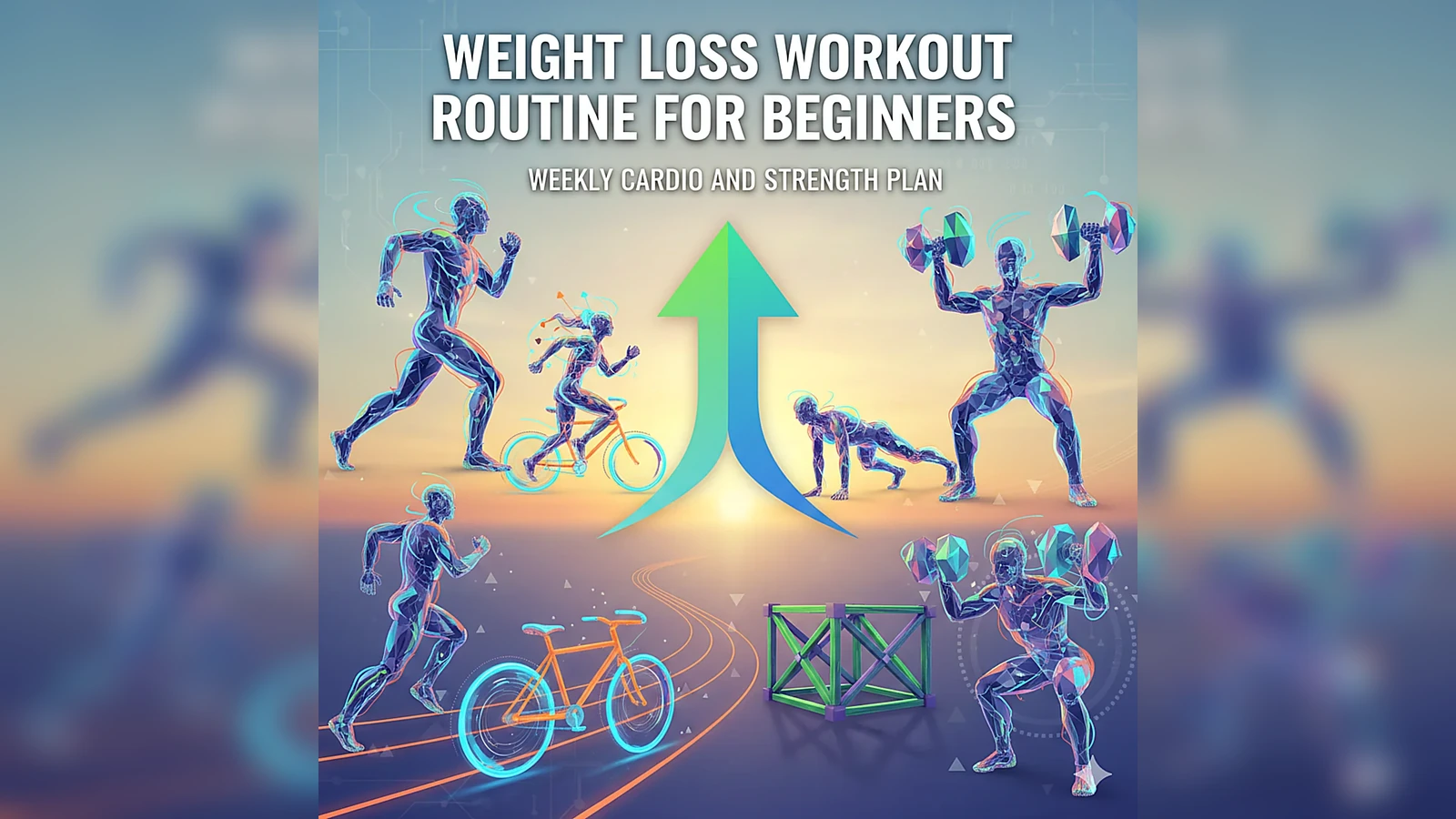
You do not need a complicated programme to start body recomposition. Here is a basic structure that works:
Stay roughly 200–400 calories below your maintenance level
Drink enough water — thirst is sometimes mistaken for hunger
Common Myths Worth Setting Straight
“You need to eat a lot to build muscle.” Not when you are a beginner. Your fat stores can provide energy for muscle growth even in a slight deficit. Eating at a large surplus mostly just adds fat.
“Cardio will make you lose muscle.” Moderate cardio — a few sessions of walking, cycling, or light jogging per week — does not meaningfully interfere with muscle building when protein is adequate. It can actually support fat loss and cardiovascular health alongside your strength training.
“If you’re not sore, you’re not making progress.” Soreness is not a reliable sign of muscle growth. Many beginners confuse the absence of soreness with lack of results. Progress is measured by the things mentioned earlier — strength, measurements, photos — not discomfort.
“The scale should drop every week.” Not during body recomposition. Stable or slightly fluctuating scale weight alongside improving measurements and photos is a clear sign that things are working exactly as they should.
Who Is Body Recomposition Right For?
Body recomposition is a particularly good approach for:
Complete beginners who have not trained with weights before
People returning to exercise after a gap of several months or longer
Those who want to improve how they look and feel without committing to extreme dieting or aggressive bulking
Anyone with a moderate to higher body fat percentage who wants to get leaner without losing the muscle they have or could build
It is worth noting that more advanced lifters, those who have trained consistently for years, may find it harder to achieve meaningful body recomposition and often benefit more from intentional phases of focused muscle building or fat loss. But for most people reading this guide, that is not a concern yet.
A Note on Realistic Timelines
One of the hardest parts of body recomposition is simply trusting the process long enough to see results.
There are no dramatic week-one transformations here. The first month might feel like nothing is happening, especially if you are only checking the scale. But underneath the surface, your muscles are getting stronger, your nervous system is learning new movement patterns, and your body is beginning to shift its composition. Staying consistent through that quiet early phase is what separates people who eventually see real change from those who give up too soon.
Think in terms of months, not weeks. Eight weeks of consistency will show you something. Sixteen weeks will show you something meaningful. A full year of steady effort produces a body that looks and feels genuinely different.
The Bottom Line
Body recomposition is the process of losing body fat and building muscle at the same time. For beginners, it is not only possible. It is often the most efficient thing you can do with your first months of training.
The formula is simple, even if the patience required is not: train with weights consistently, eat enough protein, maintain a modest calorie deficit, sleep well, and give your body time. The scale may stay quiet. The mirror eventually will not.