Common Workout Form Mistakes Beginners Make (And How to Fix Them Before They Hurt)
July 16, 2026
0
The Quiet Way Bad Form Does Its Damage Picture a new lifter three months into training. They show up consistently, add weight each week, and feel like things
The Quiet Way Bad Form Does Its Damage
Picture a new lifter three months into training. They show up consistently, add weight each week, and feel like things are going well. Then one day, a shoulder starts aching on bench press, or the lower back gets cranky after deadlifts. Nothing dramatic happened. No sudden pop, no obvious accident. The pain arrived gradually, as if it had been building in the background the entire time, because it had.
That is how poor exercise technique tends to work. It rarely announces itself immediately. Bad movement patterns accumulate silently over weeks and months, loading joints and connective tissue in ways they were not designed to handle. A 2025 review published in Cureus examined resistance training injuries across multiple studies and identified improper technique as one of the primary contributing factors. The shoulder was the most frequently injured region, affected in 10.5 to 50 percent of cases depending on the study population, followed by the lower back at 12.9 to 48 percent, and the knees at 11 to 21 percent. These are not random injury sites. They correspond precisely to the movements beginners attempt most often with the least technical guidance.
The encouraging reality is that technique is learnable, and beginner form errors are predictable. Every mistake in this article has a clear mechanical explanation and a practical fix. Learning both, not just what to do, but why it matters biomechanically, is what separates a beginner who trains for years from one who stalls or gets hurt in the first few months.
Why Technique Affects More Than Injury Risk
Before getting into specific mistakes, it is worth establishing what good form actually does — because the benefits go well beyond safety.
When an exercise is performed through its intended range of motion with correct joint alignment, the target muscles are placed under optimal mechanical tension. That tension is the primary stimulus for muscle growth. When alignment breaks down, synergist muscles and passive structures like ligaments and tendons absorb load that the prime movers were supposed to handle. The result is that you stress the wrong structures while underloading the ones you are trying to develop.
There is also a neurological dimension that matters enormously for beginners. The strength gains new trainees experience in their first eight to twelve weeks come primarily from neuromuscular adaptation, not from meaningful changes in muscle size. The nervous system is learning to coordinate motor units and fire muscles in the correct sequence. If flawed movement patterns are drilled during this critical window, those errors get encoded. Correcting them later takes far longer than getting them right early. The time to fix form is now, while the neural slate is still relatively clean.
Six Form Mistakes Worth Fixing Early
1. Rounding the Lower Back on Hip Hinge Movements
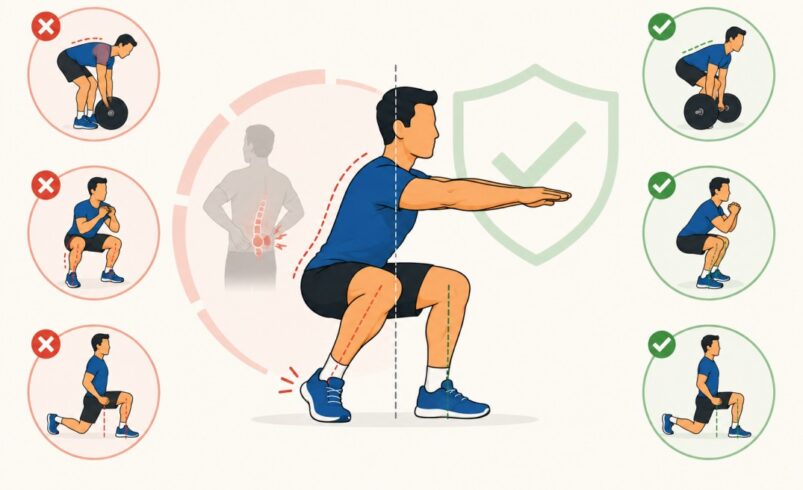
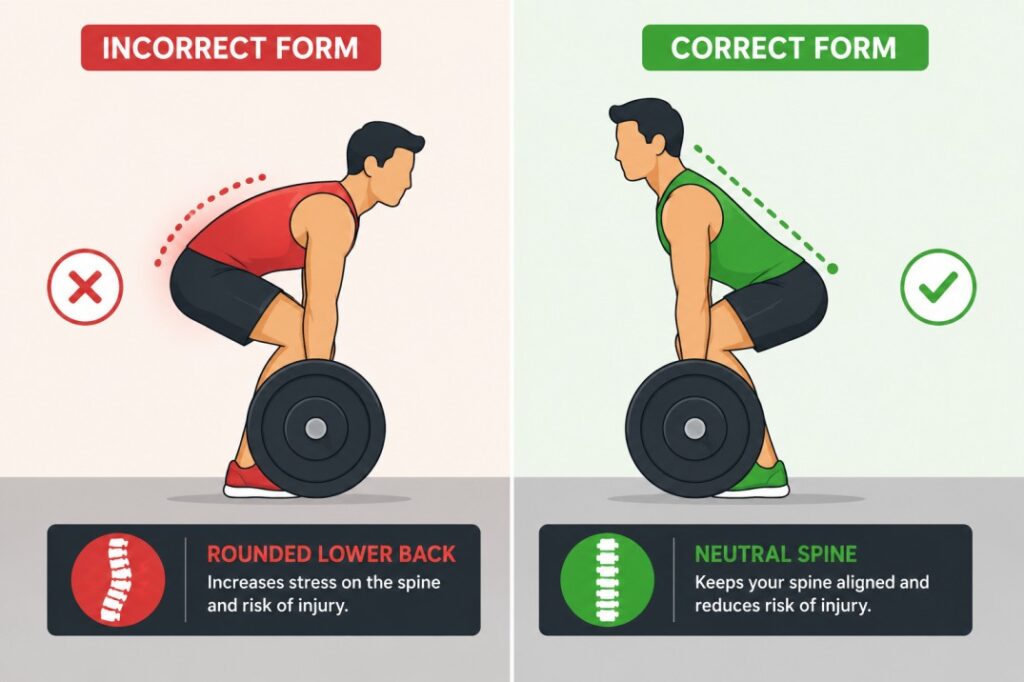
This error appears in the deadlift, Romanian deadlift, and bent-over row, and it also shows up in exercises as simple as picking up a dumbbell from the floor. When the lumbar spine loses its natural curve and flexes under load, the compressive and shear forces on the intervertebral discs increase sharply. The lower back muscles, designed to stabilize the spine in a neutral position, are suddenly being asked to work eccentrically under load — a role they are not built for.
Research in the Saudi Journal of Sports Medicine found that muscle and ligament strains account for the highest rate of lower back injuries during resistance training, with improper technique and overloading cited as the primary drivers. One injury analysis found that roughly 45 percent of barbell-related lower back strains in novice lifters trace back to faulty squat and deadlift mechanics.
Why it happens: Tight hamstrings and limited hip mobility prevent the pelvis from tilting forward correctly, so the lumbar spine compensates by flexing. Beginners also tend to initiate the pull by pushing the hips upward instead of maintaining a consistent hip-hinge position throughout the lift.
The fix: Before adding load to any hip hinge, practice the movement with a dowel or PVC pipe held along the spine. Three contact points — back of the head, upper back, and tailbone — should all maintain contact with the rod throughout the movement. This teaches what a neutral spine actually feels like before the nervous system has to manage weight at the same time. A coaching cue that works well for most people is ‘proud chest, hinge at the hips.’ Think of the movement as closing a car door with your glutes, not bending over to pick something up.
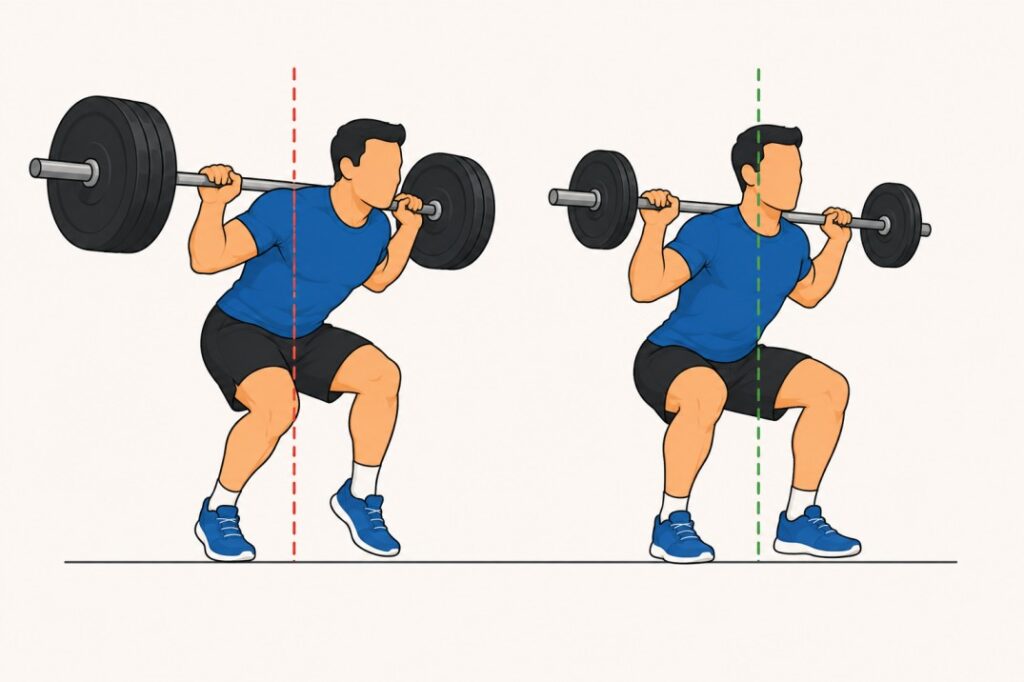
2. Knee Cave (Valgus Collapse) During Squats and Lunges
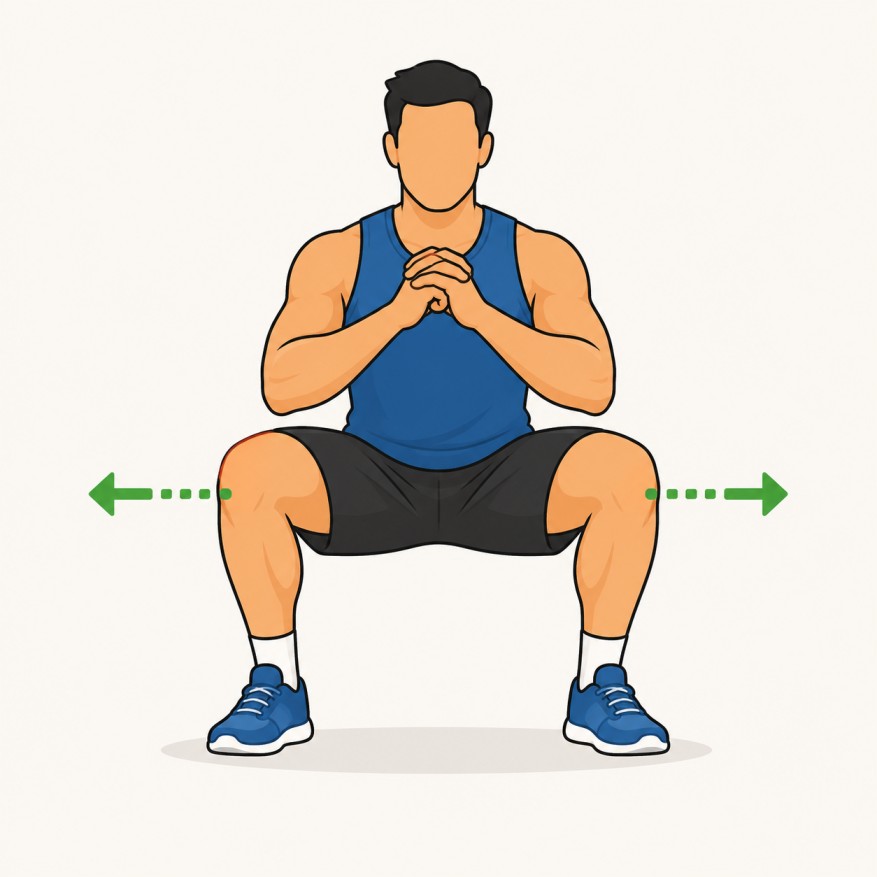
Knee cave — where the knees drift inward during a squat or lunge — is one of the most discussed beginner form errors, and the science around it has evolved in recent years. The traditional coaching view was that inward knee movement signals weak glutes and reliably predicts injury. Current evidence is more nuanced.
Recent systematic reviews have found that visual assessment of knee position during squats is often unreliable, and that knee valgus during athletic movement does not consistently predict ACL injury risk across populations. However, a 2022 biomechanical study published in Frontiers in Neurorobotics found that people with rearfoot valgus showed significantly greater medial knee contact forces during barbell squats, which may increase meniscal wear and soft tissue stress over time. The practical concern is cumulative: consistent, excessive knee cave under load — especially as weight increases — does place additional stress on the medial knee structures across thousands of repetitions, and that is worth addressing.
Why it happens: Limited ankle dorsiflexion is a primary culprit that beginners and coaches alike tend to overlook. When the ankle cannot flex enough to allow the shin to travel forward during a squat, the knee tracks inward as a compensation. Hip abductor weakness can also contribute, though the relationship is less direct than once assumed.
The fix: Test ankle mobility first. Stand facing a wall and try to touch your knee to it with your foot a few inches away. If your heel lifts, ankle dorsiflexion is limiting your squat mechanics. In the short term, a small heel elevation — a weight plate under each heel — allows you to maintain better depth and knee tracking while you work on ankle mobility separately. The cue ‘spread the floor with your feet’ activates the hip external rotators and naturally improves knee alignment for most beginners.
3. Elbow Flare in the Bench Press
The bench press is the exercise most likely to cause shoulder injury in beginners who do not receive technical guidance early. The shoulder is the most injury-prone region in resistance training across nearly all published studies, and elbow position is a central mechanical variable.
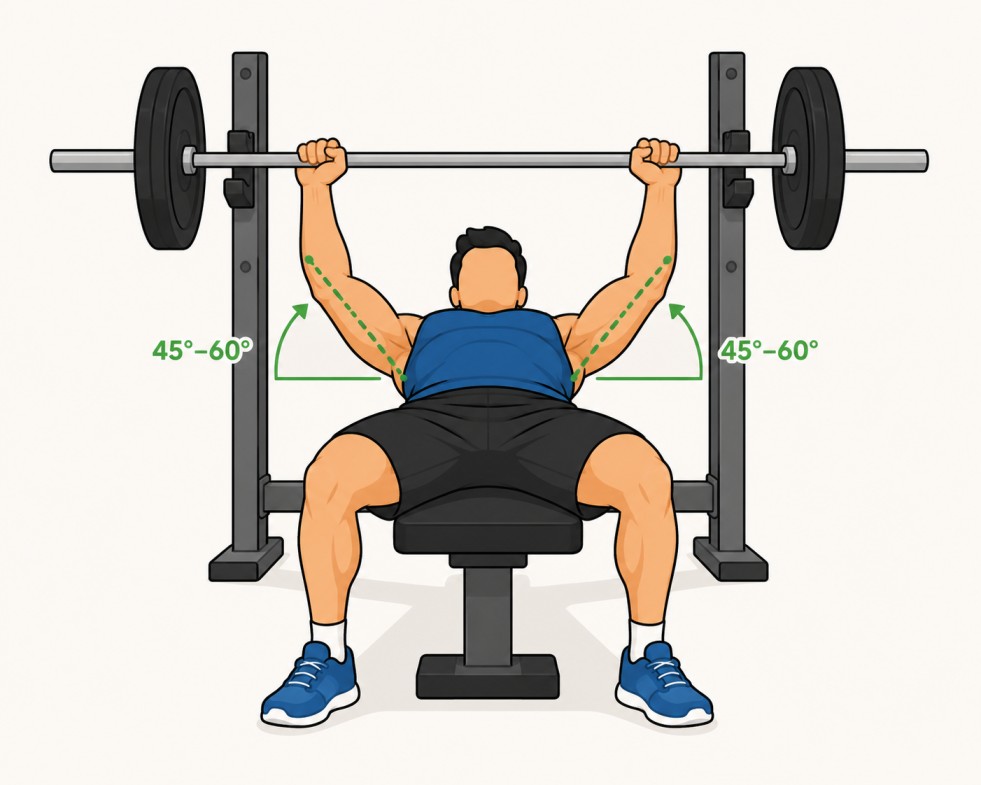
When the elbows flare out to roughly 90 degrees from the torso — which is how many beginners naturally perform the movement — the shoulder is placed in combined horizontal abduction and external rotation under load. This significantly reduces the subacromial space and increases stress on the rotator cuff tendons, particularly the supraspinatus. Sustained over months of training, this loading pattern leads to impingement syndrome, tendinitis, or in more severe cases, rotator cuff tears.
Evidence from the ISSA and sports medicine literature consistently recommends keeping the elbows at approximately 45 to 75 degrees from the torso during the bench press, depending on individual anatomy and grip width. This position maintains greater subacromial space, recruits the lats to stabilize the shoulder, and transfers force more efficiently through the pressing muscles.
Why it happens: Flaring the elbows can feel like it engages the chest more directly — and in isolation, it does. But that feeling comes at the cost of shoulder joint health. It is also a habit that goes uncorrected for a long time, because discomfort rarely appears immediately and the lift still feels productive.
The fix: Before unracking the bar, retract and depress the shoulder blades — pull them together and down, as if tucking them toward your back pockets. This creates a stable foundation for the press. As the bar descends, maintain that shoulder position and think about dragging the bar slightly toward your lower chest rather than dropping it straight down. A useful starting benchmark for grip width is a position where the forearms are roughly vertical at the bottom of the movement, which for most people means a grip slightly wider than shoulder width.
4. Skipping Core Bracing Before Each Rep
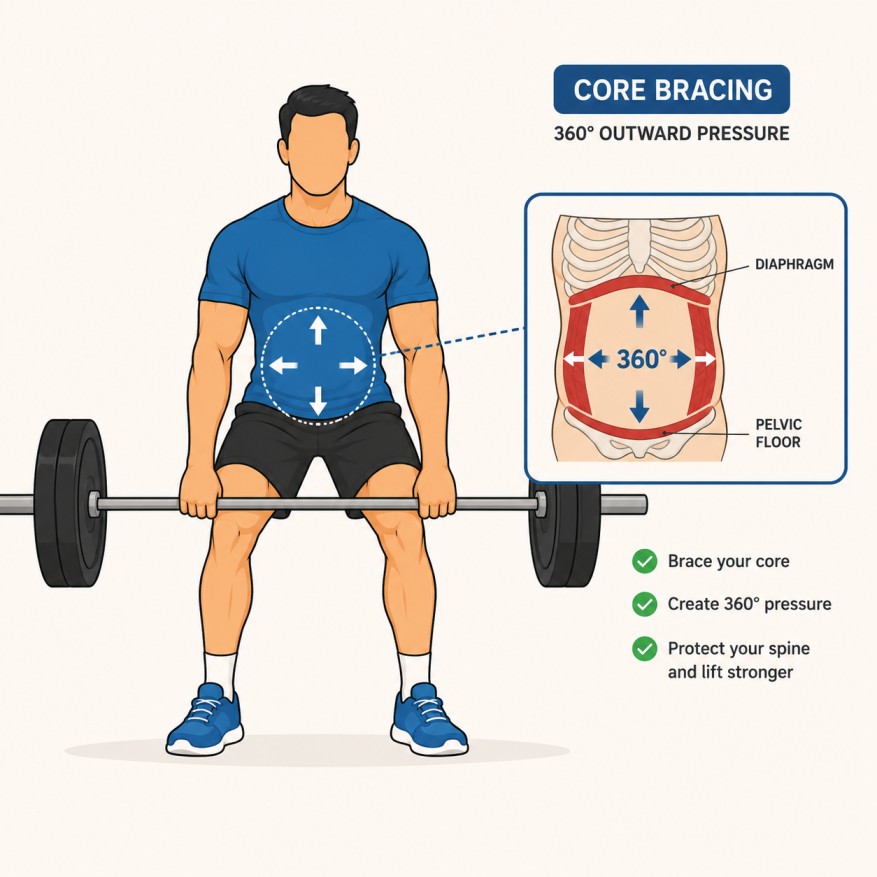
This mistake is invisible to the eye but mechanically significant. Many beginners perform exercises with what could be called a passive core, the abdominal muscles and surrounding structures are present but not actively engaged to create the spinal stiffness needed under load. At light weights this is manageable, but as loads increase it becomes a meaningful injury risk.
The mechanism is well understood in exercise science. When you take a diaphragmatic breath and brace the abdominals outward in all directions — not by drawing the navel inward, but by pushing outward against the air in your lungs — you generate intra-abdominal pressure that increases spinal stability substantially. A systematic review published in Biology of Sport confirmed that intra-abdominal pressure generated through the Valsalva maneuver during heavy resistance exercise provides meaningful spinal support. Importantly, research also shows that bracing outward activates more total core musculature than the older ‘draw in’ cue, which was popular for years but has since been shown to reduce rather than increase spinal stiffness.
For beginners working at moderate loads, a full Valsalva breath-hold is not always necessary on every rep. But actively bracing before each loaded repetition is a foundational habit that should be built from day one.
Why it happens: Nobody teaches it. Breathing feels automatic, and most beginners have no idea that breath control during exercise is a learnable, trainable skill with real mechanical consequences.
The fix: Before each set, practice a 360-degree brace. Take a breath into the belly — the stomach should expand outward, not the chest rise — then hold that breath and brace the abdominals as if bracing for an impact. Maintain that pressure through the hardest portion of the rep, then exhale and reset at the top. For higher-rep sets with lighter loads, exhaling during the concentric phase while keeping the core engaged throughout is perfectly acceptable.
5. Cutting Range of Motion Short
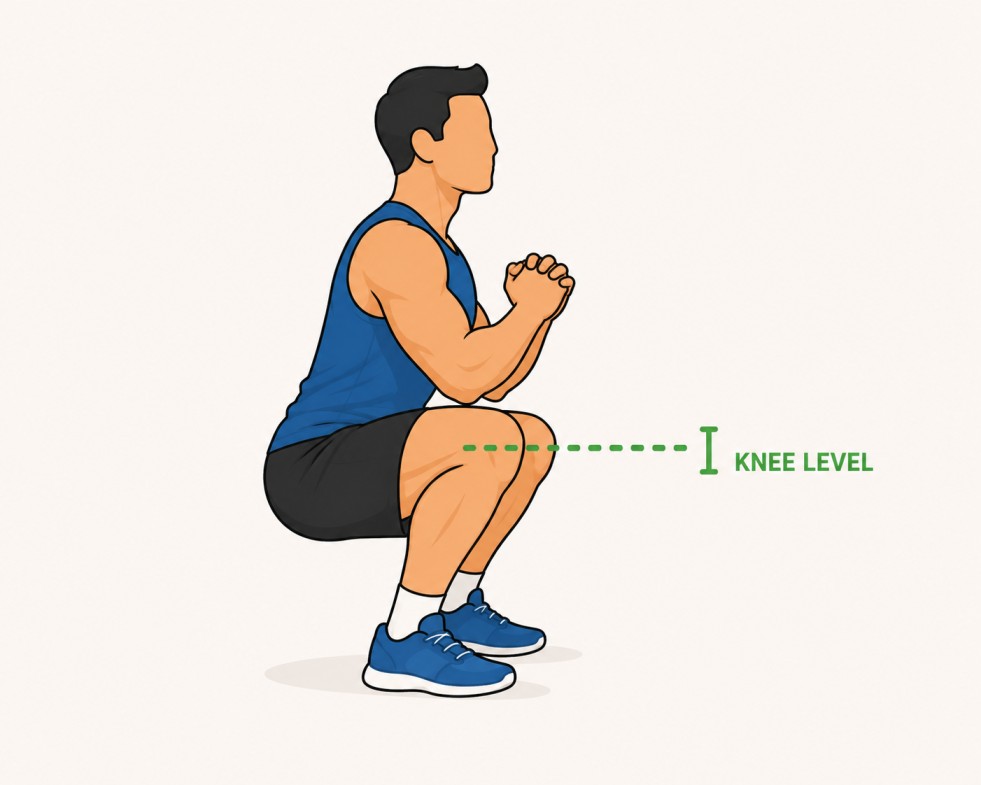
Partial-range squats, half-rep pull-ups, and quarter-depth push-ups are widespread in busy gyms. Beginners often default to reduced range of motion because the movement becomes easier when they avoid the bottom position — the point where mechanical leverage is worst and muscular demand is highest.
The cost is real. Research consistently shows that full range of motion training produces superior muscle development compared to partial range training at matched loads. A 2020 study in the Journal of Human Kinetics found that full range protocols produced greater improvements in muscle cross-sectional area than partial range protocols in untrained participants over an eight-week period. The deepest positions — the bottom of a squat, the full hang of a pull-up, the chest-near-floor position of a push-up — are where muscles are under the greatest mechanical tension and stretch, which is precisely the environment that drives hypertrophy.
There is also a functional cost. Muscles and joints that are never trained through their full range of motion fail to develop the strength and stability needed at those positions, which means real-world movement becomes less capable even as gym numbers appear to improve.
Why it happens: Ego load selection. The exercise becomes genuinely difficult through the full range of motion with the chosen weight. The temptation is to keep the weight and reduce the range. The biomechanically sound response is the opposite.
The fix: Reduce the load until the full range is achievable with control. For squats, aim for hips at or below knee level before adding weight. For push-ups, lower until the chest makes contact with the floor on every rep. For pull-ups, achieve full elbow extension at the bottom of each rep. If the full range is beyond current capacity, use a regression that allows training through the complete pattern — a goblet squat instead of a barbell squat, a band-assisted pull-up instead of unassisted.
6. Adding Weight Before the Movement Pattern Is Stable
This is arguably the root cause of several other mistakes on this list. The pull to increase load is strong, especially in the early weeks when strength gains come quickly. But progressive overload has a prerequisite that is rarely stated clearly: the movement must be technically consistent and controlled at the current load before any increase is appropriate.
The reason connects back to how early training adaptations work. The strength gains beginners experience in the first eight to twelve weeks are overwhelmingly neurological — the brain learning to coordinate muscle recruitment efficiently. Adding load before that neural pattern is stable does not accelerate adaptation. It layers stress onto an unstable foundation and creates compensatory movement patterns that are much harder to correct later than they would have been to prevent.
Injury statistics support this. One analysis found that rapid weight progression without deload periods contributes to approximately 29 percent of plateau-related overuse injuries. Pectoralis major tears — among the most severe acute injuries in recreational weight training — occur almost exclusively when loads exceed what the connective tissue has had time to adapt to.
Why it happens: Short-term progress is visible and rewarding. There is also social pressure in gym environments that associates more weight on the bar with more serious training.
The fix: Set a performance threshold before progressing. A reliable standard: complete all prescribed sets and reps with clean technique — no form breakdown, no shortened range — across two consecutive sessions at a given weight before adding load. On upper body lifts, 2.5 to 5 pound increments are typically appropriate. On lower body lifts, 5 to 10 pounds. Small, consistent progression over months outperforms large, erratic jumps every time.
A Quick Form Self-Check for Every Session
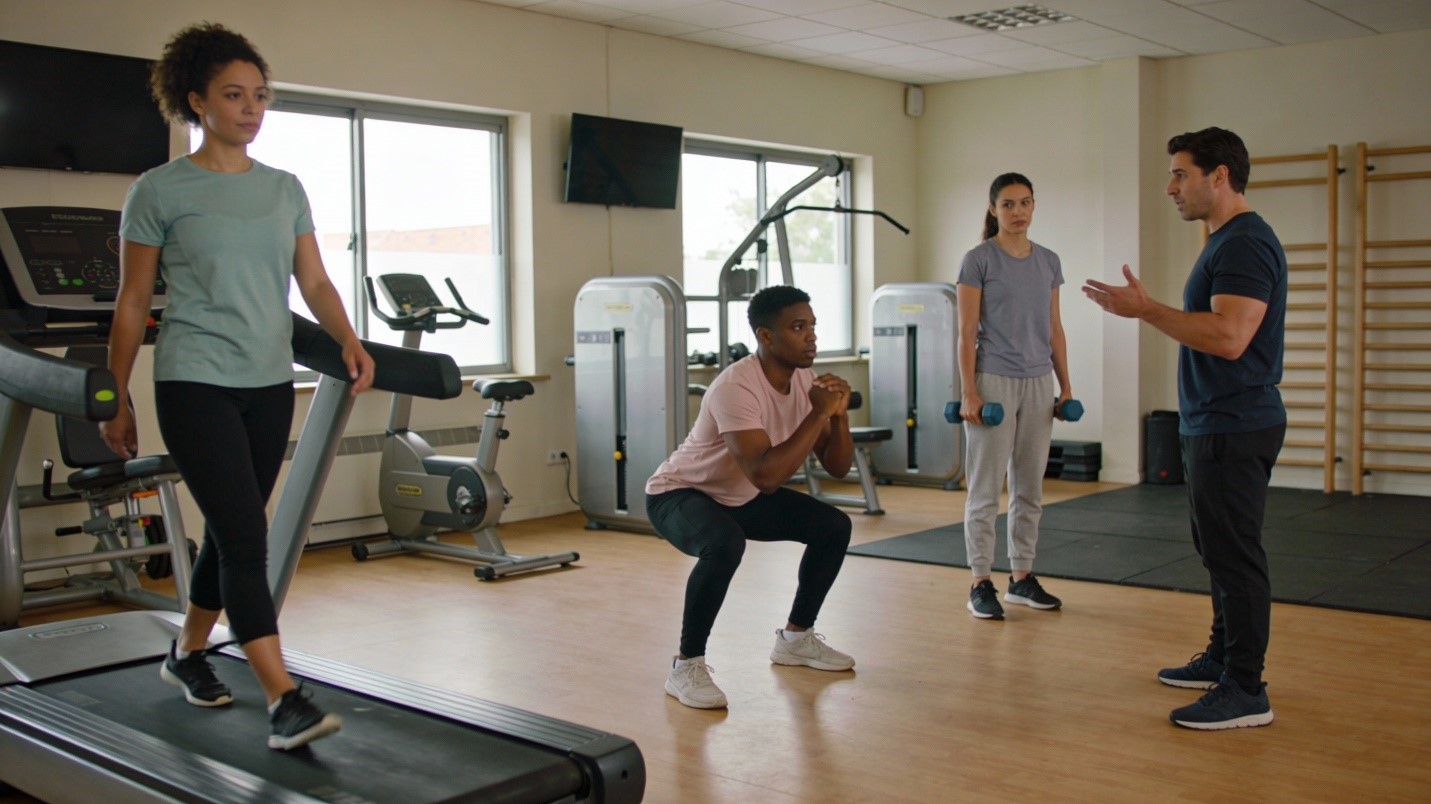
Without access to a coach on every session, consistent self-monitoring is the next best tool. Recording sets from a side angle is one of the most underused and effective techniques available to beginners, what you see on video is often dramatically different from what the movement felt like.
The table below outlines the three most important checks for each major movement pattern before adding load:
Movement
Check 1
Check 2
Check 3
Squat / Lunge
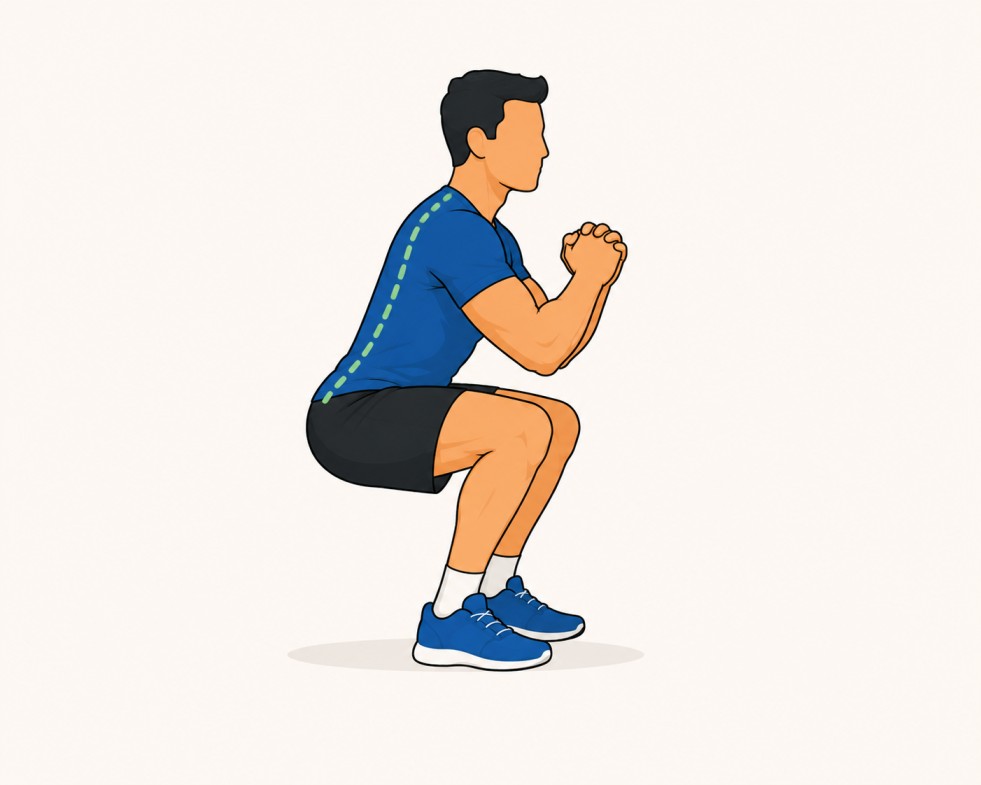
Neutral spine throughout
Knees tracking over toes
Full depth — hips at least parallel
Hip Hinge (Deadlift / Row)
Lower back neutral, not rounded
Hips hinge back, not down
Bar stays close to body
Push (Bench / Push-Up)
Shoulder blades retracted and depressed
Elbows 45–75 degrees from torso
Full range to chest
Pull (Row / Pull-Up)
Shoulders don’t shrug upward
Full elbow extension at bottom
Controlled eccentric phase
Overhead Press
Ribs don’t flare
Core braced throughout
Full lockout at top
Why Form and Habit Are Inseparable
Technical skill in training accumulates through consistent repetition over weeks and months. That makes form improvement fundamentally a habit-building challenge as much as a biomechanical one. Beginners who build structured, repeatable sessions tend to develop better technique simply because they are rehearsing the same movements regularly under low-stress conditions. Those who train inconsistently tend to return after gaps and push straight into heavier loads, skipping the warm-up sets and body awareness that good form depends on.
Understanding how to structure training as a repeatable part of your day, rather than something that requires a heroic effort on motivated mornings, is one of the most important things a beginner can do for long-term technique development. The behavioral side of this is explored in depth in this guide to habit stacking your fitness routine, which covers how to attach training to existing daily anchors so that showing up becomes automatic rather than effortful.
Warming Up Properly Protects Your Technique
One of the most overlooked contributors to poor exercise form is walking into a session cold. Reduced tissue temperature limits range of motion, reduces muscle compliance, and impairs the neuromuscular coordination needed for technically demanding movements. Research has found that cold muscles raise the risk of strain by approximately 2.9 times compared to adequately warmed tissue.
An effective warm-up does not need to be long. Five to ten minutes of activity that raises heart rate and mimics the mechanics of the upcoming session is far more valuable than static stretching done before lifting — static stretching performed before resistance training has been shown to acutely reduce force production and is better placed in the cool-down.
A practical warm-up for a typical strength session:
3 to 5 minutes of light cardio — walking, cycling, or light rowing
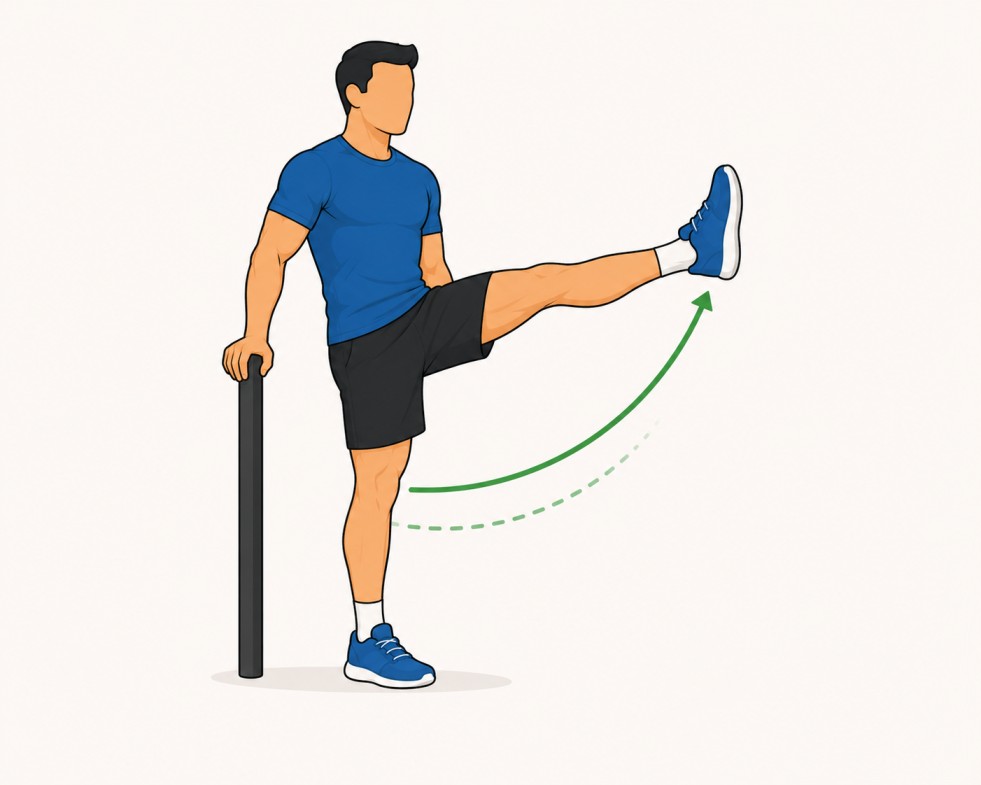
Hip circles and leg swings before lower body sessions
Arm circles and band pull-aparts before upper body sessions
1 to 2 warm-up sets of each planned exercise at 30 to 40 percent of working weight, prioritizing technique over load
Those final warm-up sets exist solely to rehearse the movement pattern before working weight is added. They should feel easy.
When to Add Load and When to Refine First
A reliable decision framework: if form breakdown occurs on the last one or two reps of a set but not in the earlier reps, the load is probably appropriate and the technique issue is one of fatigue and coordination that improves with practice. If form breaks down on the first or second rep, the load is too heavy for the current level of technical skill and needs to come down.
Progressive overload, the systematic increase of training demand over time, is the engine of long-term development. Applying it to flawed movement, however, does not produce progress; it produces accelerated tissue stress. The connection between sound technique and productive overload is direct and non-negotiable. This breakdown of progressive overload for beginners explains that relationship in practical detail, and is worth reading alongside this guide.
The Connection Between Form and Muscle Development
Poor technique does not just raise injury risk. In fact, it directly limits the quality of muscle stimulus. A bench press performed with the shoulder in a compromised position means the rotator cuff and anterior deltoid absorb the load that should be going through the pectorals. The chest is underloaded, the shoulder is overloaded, and neither benefits the way they should.
This helps explain why many beginners make slower progress than expected despite training consistently. The exercises are being performed, but the intended muscles are not being adequately loaded. Understanding which muscles each exercise targets and how to feel them working is part of what separates productive training from mechanical repetition.
If you are exploring how to structure your exercise selection around these mechanical principles, this guide to compound versus isolation exercises provides useful context for building a technically sound and effective program from the beginning.
Treat Form as the Work, Not the Preparation
A common beginner assumption is that form is something to master before real training begins — a prerequisite that can be checked off and then forgotten. Coaches who have worked with large numbers of beginners tend to see it differently. Form is not the preliminary work. It is the work.
The process of learning to move well under load, developing body awareness, and building technique that becomes automatic over time is genuinely what the first year of training is about. That means paying attention to how you move every session — choosing quality over quantity, refining patterns that are close to correct, and being willing to drop the load when something breaks down.
The beginners who exit their first year injury-free and with meaningful strength and muscle gains are overwhelmingly those who treated technique as a priority from the beginning, not an afterthought. Everything else — the programming, the sets and reps, the nutrition — works better on a foundation of movement that is mechanically sound.
External References
1. Cureus (2025). Most Common Injuries in Resistance Training: Mechanisms, Therapeutic Interventions, and Preventive Strategies. https://www.cureus.com/articles/416116
2. Frontiers in Neurorobotics (2022). Effect of rearfoot valgus on biomechanics during barbell squatting: A study based on OpenSim musculoskeletal modeling. https://www.frontiersin.org/articles/10.3389/fnbot.2022.832005/full
3. Journal of Human Kinetics (2020). Compound and isolation training protocols in untrained participants: strength and hypertrophy outcomes. https://pubmed.ncbi.nlm.nih.gov/33488834/
4. Biology of Sport (2019). Systematic review of intra-abdominal and intrathoracic pressures initiated by the Valsalva manoeuvre during high-intensity resistance exercises. Blazek et al.