
How to Stay Consistent With Working Out When Motivation Runs Out
- August 12, 2026
- 0
In a large clinical trial tracking new exercisers, two out of every three people who dropped out did so before they even finished ramping up to their prescribed
In a large clinical trial tracking new exercisers, two out of every three people who dropped out did so before they even finished ramping up to their prescribed

In a large clinical trial tracking new exercisers, two out of every three people who dropped out did so before they even finished ramping up to their prescribed routine. Not months in. Not after losing steam on a solid habit. Before the habit had a chance to form at all. Separate research tracking over half a million beginner exercisers found something similar: how consistently someone trained in their first 28 days was the single strongest predictor of whether they were still training months later.
That timing is not a coincidence. The first month of exercise is not a warm-up to the “real” habit-building phase. It is the habit-building phase, arriving faster and feeling harder than most people expect. Motivation carries people through the first week or two almost effortlessly. Then it thins out, right around the point where the body and the routine are still unfamiliar to each other. What happens next has less to do with willpower than most fitness advice suggests, and more to do with understanding what the first 30 days actually are: a period of physical adjustment, psychological recalibration, and early habit formation, not a test anyone is supposed to pass on discipline alone.

The first week rarely reflects fitness gained. It reflects a body registering a new kind of stress. Muscle soreness in this window is typically delayed-onset muscle soreness, or DOMS, caused by microscopic tears in muscle fibers and the inflammation that follows as they repair. It usually builds within 24 hours of a workout, peaks between 24 and 72 hours later, and eases within about a week. And it is not a sign of damage or a sign that a workout “worked.” It is simply what unaccustomed muscle tissue does when asked to do something new.
Cardiovascular capacity and strength barely move in this window either. Measurable fitness improvements take longer to appear than a week of effort can produce. What does show up early is enthusiasm. Starting something new tends to feel good on its own, independent of results, which is part of why week one rarely feels like the real test.
By the second or third exposure to a similar workout, most people experience noticeably less soreness than they did after the first, a well-documented adaptation known as the repeated bout effect. This is genuine physical progress, even though it shows up as reduced discomfort rather than visible change.
This is also where the emotional tone of the routine often shifts. The activity that felt novel and exciting in week one starts to feel ordinary. That is not a personal failing. Novelty itself carries a psychological reward that fades as an activity becomes routine, and for many beginners, this is the point where the workouts stop running on excitement and start needing something else to keep them going.
There is a persistent belief that a habit locks into place after roughly a month. The research behind habit formation does not support that. A widely cited study tracking new daily behaviors found that habits took a median of 66 days to feel automatic, with individual results ranging from about 18 days to well over six months depending on the behavior and the person. Day 30 sits closer to the beginning of that curve than the end of it.
Separately, research on new gym members has suggested that training around four times a week for at least six weeks tends to mark the point where a workout habit starts becoming somewhat self-sustaining, requiring less conscious effort to maintain. Thirty days lands right at the edge of that window. That is often exactly why the fourth week feels shaky. The body has adjusted more than most people give it credit for, but the habit itself is still under construction.

Motivation in the first days of a new routine is often inflated by novelty rather than genuine enjoyment of the activity. As a workout becomes familiar, that novelty-driven boost fades, and whatever is left has to come from somewhere else: enjoyment, a sense of progress, or a routine that no longer depends on feeling motivated at all.
Long-term tracking of new fitness club members found that only around a third to a little over half remained regular exercisers a year in, with dropout climbing steadily across the first several months. What separated people who kept exercising from people who did not was not how motivated they felt at the start. It was whether they rated the activity as genuinely enjoyable or personally challenging in a satisfying way, rather than something they were pushing themselves through.
There is also a distinction worth making between where motivation comes from. Motivation driven by external pressure, wanting to look a certain way by a deadline, or feeling like exercise is an obligation, tends to be the least durable kind. Motivation grounded in something more internal, actually enjoying the movement or valuing how a session makes the rest of the day feel, holds up better once the novelty wears off. Neither type is guaranteed to stay strong through week four, which is exactly why a routine built to depend on either one is taking on more risk than it needs to.
None of this means motivation is worthless. It means it is a poor long-term fuel source, and expecting it to still be running strong by day 20 or 30 sets an unrealistic bar. The dip is not evidence that something has gone wrong. It is closer to a predictable stage than a personal shortfall.
The clinical trial data mentioned earlier found something practically useful buried in the dropout numbers: people who made it through the initial ramp-up period, roughly the first two to three months, tended to maintain fairly steady participation afterward. The hard part was concentrated early, not spread evenly across the year.
That reframes what the first 30 days are actually for. The goal is not to perform impressively or feel ready every session. It is exposure and repetition, showing up often enough that the routine starts to feel less like a decision and more like something that already happens. Even imperfect consistency, three sessions instead of five, a shorter workout instead of the planned one, still counts toward that exposure. A perfect first two weeks followed by a collapse produces worse long-term results than a modest but repeatable pace sustained past the point where motivation runs out.
A routine built for peak motivation will only work on days when motivation shows up, which research suggests becomes less reliable by the second or third week. A more durable approach is to build the routine around a version of exercise that stays doable on an average day, not just a good one.
In practice, that means keeping sessions realistically short rather than ambitious. A shorter, well-structured workout that actually happens outperforms a longer one that keeps getting postponed. It also helps to remove decisions from the equation wherever possible: the same days, the same rough time window, the same starting exercises. Pairing a workout with something already fixed in the day, like right after a specific daily task, is one documented way to support that kind of automaticity, and readers looking for a structured way to build that cue can work through the mechanics in a dedicated habit-stacking approach.
The underlying principle is repeatability over intensity. A workout that can survive a tired, busy, or unmotivated day is more valuable during the first month than one that only works when everything lines up.
| Motivation-dependent design | Repeatable design |
| Session length and intensity change based on how motivated you feel | Session length is fixed in advance, regardless of mood |
| Workout time shifts around the day, decided in the moment | Workout is tied to a consistent time or existing daily cue |
| A bad day usually means skipping entirely | A bad day still gets a smaller, doable version |
| Success is judged by how the session felt | Success is judged by whether it happened at all |
Neither column describes a permanent personality trait. It describes two different ways of structuring the same routine, and the second one holds up better through the exact window, roughly days 15 through 30, when motivation is statistically most likely to dip.
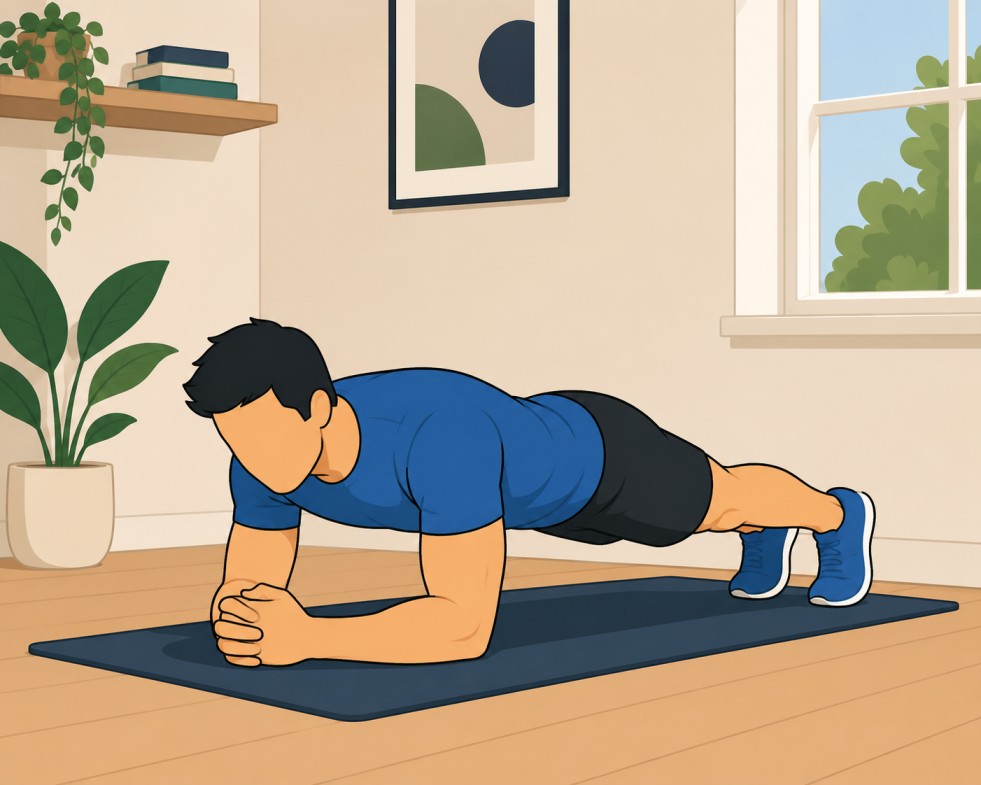
Beginners often assume the first month requires daily training or long sessions to count. Neither is necessary, and both increase the odds of burning out before the habit has a chance to take hold. General physical activity guidance suggests aiming for roughly 150 minutes of moderate activity a week alongside two strength sessions, a target built for sustainability rather than day-one intensity.
Given that a workout habit tends to firm up somewhere around four sessions a week sustained for six or more weeks, a realistic goal for the first 30 days is a frequency that could plausibly still be happening in month two, not the most ambitious schedule that fits on paper. Consistency at a moderate pace beats an aggressive pace that collapses by week three.
How that translates day to day varies. Someone returning to exercise after years away will tolerate a different starting frequency than someone who has never trained consistently, and factors like sleep, stress, and existing time constraints all shift what “sustainable” looks like for a given person. The specific number matters less than the underlying test: does this frequency feel like something you could still be doing without dread in six weeks, not just this week.
A missed session, or even a missed week, changes far less than it feels like it does. Cardiovascular and strength markers are essentially unchanged after a single week away from training, and the psychological research on habit formation backs this up directly: missing one day barely dents the automaticity a habit has built, and scores tend to recover quickly once the behavior resumes. A closer look at what actually happens physically when workouts stop shows just how forgiving short breaks really are.
The practical response to a missed workout is to return at the next scheduled slot rather than waiting for a symbolic clean start, whether that is a new week or a new month. Treating one missed session as proof the whole routine has failed is what actually derails progress, not the missed session itself.

A routine that cannot flex when a schedule tightens tends to get abandoned entirely instead of scaled down. When time genuinely shrinks, reducing session length or frequency for a stretch is a better move than stopping altogether, since a smaller version of the routine keeps the underlying habit loop intact. Beginners navigating unpredictable weeks may find it useful to build around schedules designed for busier stretches rather than treating every busy week as an exception to work around.
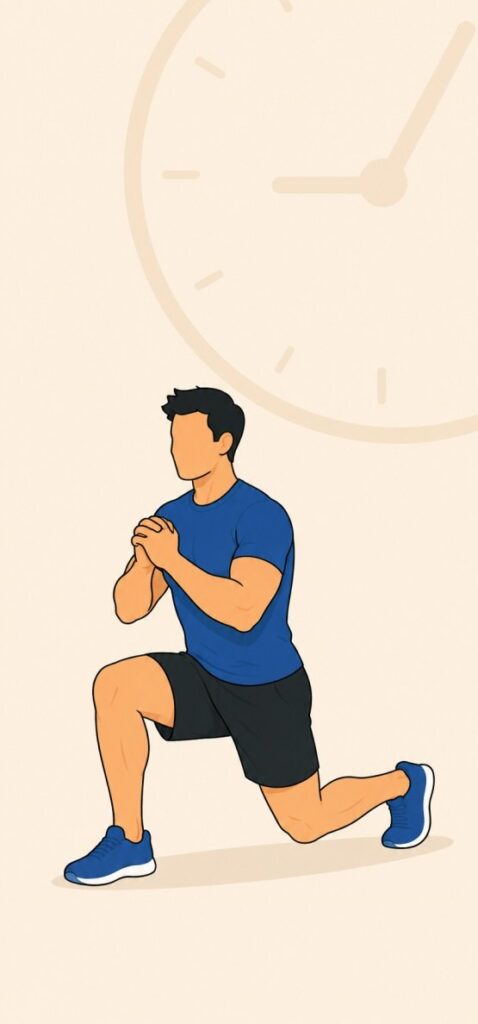
A few honest questions tend to separate routines that last from ones that quietly fall apart around week four:
Is recovery, including how much rest is actually needed, built into the plan rather than added as an afterthought?
A routine that depends on consistently feeling ready is fragile by design. One that keeps working on an ordinary, unmotivated day is the version worth keeping.
The first month of a workout routine was never designed to feel automatic, and the research on habit formation makes clear that expecting it to is unrealistic. What it actually involves is a body adjusting to new physical stress, enthusiasm fading as novelty wears off, and a habit that is still, quite literally, under construction. The version of a routine that survives past day 30 is usually smaller and simpler than the one built in an early burst of motivation, and that is not a compromise. It is what a sustainable routine is supposed to look like once the initial excitement has done its job and stepped aside for something more durable.