What to Eat After a Workout: The Post-Workout Nutrition Basics for Beginners
- September 2, 2026
- 0
Twenty minutes after her first spin class, a friend of mine stood in her kitchen holding a protein shake in one hand and a banana in the other,
Twenty minutes after her first spin class, a friend of mine stood in her kitchen holding a protein shake in one hand and a banana in the other,

Twenty minutes after her first spin class, a friend of mine stood in her kitchen holding a protein shake in one hand and a banana in the other, unsure whether she needed both, one, or neither. She’d heard “eat protein after you train” often enough to go buy the shake, but nobody had ever told her why, or what else might actually matter more.
That kind of confusion is normal, and it has nothing to do with a lack of discipline. Most beginners pick up post-workout advice in fragments, a rule about protein here, a warning about a closing “window” there, without ever getting the full picture of what the body is doing after a session or what kind of food genuinely helps it recover. This guide fills in that picture without turning it into a science lecture or a meal plan you have to follow to the gram.
No, and this is worth clearing up first because it’s the single most repeated myth in post-workout nutrition. The idea of a narrow “anabolic window,” a short stretch of thirty to sixty minutes after training where eating supposedly makes or breaks your results, has been walked back by the researchers who studied it most closely. Anabolic window research reviewing the evidence found that this window is realistically several hours wide, not a matter of minutes, and that total daily protein and food quality matter far more than hitting some precise post-workout deadline.
There are situations where eating sooner genuinely helps more. Training twice in one day, training on an empty stomach, or going more than four or five hours without food before your session are all cases where getting something in relatively soon supports the next stretch of your day better than waiting. For a beginner training once a day who ate normally beforehand, there’s no cause for urgency. A meal within an hour or two works just as well as one eaten the moment you rack the last set.
Two separate things are going on after a training session, and food supports each one differently.
The first is repair. Training disturbs the structural proteins inside muscle fibers, and in the hours afterward your body shifts into rebuilding mode, using amino acids from dietary protein as both raw material and a biochemical trigger. The full mechanism behind this, muscle protein synthesis, is covered in detail elsewhere on the site if you want the deeper explanation. For this guide, the practical takeaway is simpler that protein after training gives your body the material it needs to rebuild what the workout disturbed.
The second is refueling. Your muscles run partly on stored carbohydrate, called glycogen, and harder or longer sessions draw that supply down. A quick thirty-minute beginner strength workout usually only dents it slightly, but a longer cardio session, a tough interval workout, or a second training session later the same day will pull from it more heavily. Carbohydrate after training is what restocks that supply.

You don’t need to weigh anything to get this roughly right. A portion of protein around the size of your palm, something in the neighborhood of twenty to forty grams depending on your body size, gives your body enough amino acids to work with after a session. Nutrient timing guidance from sports nutrition researchers supports that range as a reasonable target for a post-training meal, without suggesting more is dramatically better.
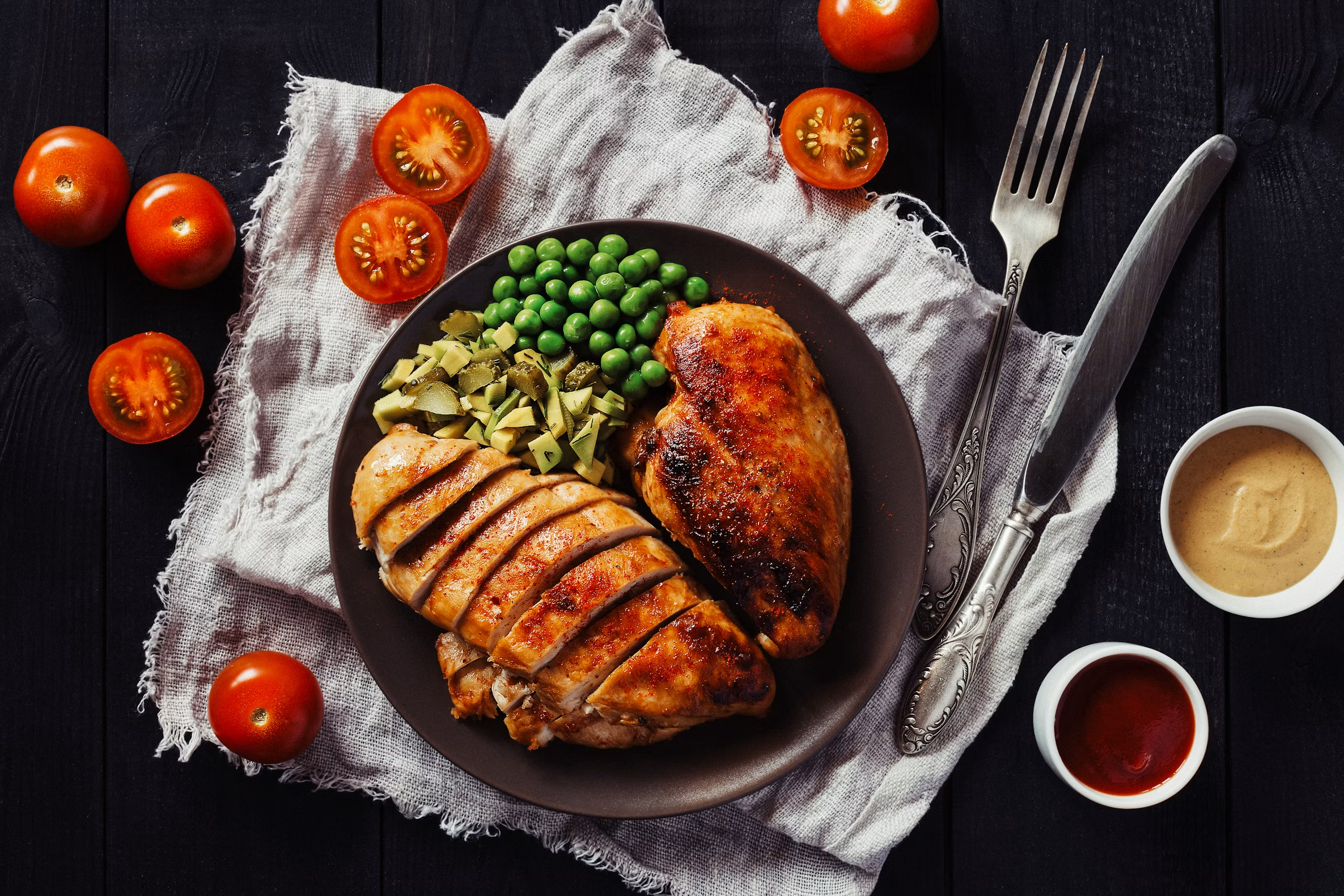
Whole food covers this easily. Chicken, fish, eggs, Greek yogurt, cottage cheese, tofu, or a bean-and-legume mix all work. A protein shake is a convenient option when you’re short on time or appetite right after training, not a requirement. If you’re still working out your overall daily protein needs, the post-workout portion is simply one piece of that total, not a separate number to chase on top of it.
Carbohydrate after a workout gets less attention than protein in most beginner content, which is a little backwards, since it’s doing real work too. Glycogen resynthesis research shows that pairing carbohydrate with protein after training helps restore muscle glycogen more effectively than protein alone, particularly when carbohydrate intake earlier in the day has been on the lower side.
How much this matters for you depends heavily on what kind of training you’re doing, which is easier to see laid out directly.
| Your Training | What It Means for Your Plate |
| Short beginner strength session (30–45 min) | Glycogen use is modest. A normal protein-and-carb meal or snack covers it comfortably. |
| Longer or higher-intensity session (60+ min, cardio-heavy) | Carbohydrate matters more here. Lean toward the fuller end of a meal rather than a light snack. |
| Two sessions in the same day | Eating sooner rather than later helps make sure there’s enough fuel on board for round two. |
| Trained on an empty stomach | Getting food in reasonably soon matters more than it does on a day you ate normally beforehand. |
Rice, oats, potatoes, whole-grain bread, and fruit are all straightforward carbohydrate sources that work well alongside a protein portion. None of them needs to be measured precisely. A cupped-hand amount is a reasonable starting point, adjusted up if your session was long or hard, and down if it was short and easy.
The actual decision comes down to combining a protein source with a carbohydrate source in whatever form fits your schedule. None of these need to be treated as the single “correct” post-workout meal. Personal preference, what’s already in your fridge, and how much time you have all reasonably shape the choice.
When you have time to sit down and eat:


When you’re eating on the way out the door or right after training:
If a full meal isn’t happening for another two or three hours anyway, a quick snack in this window and a normal meal later covers the same ground as trying to eat something elaborate immediately.
Food gets most of the attention in post-workout advice, but fluid loss through sweat is part of the same recovery picture. Rehydration guidelines point to replacing roughly one and a half times the fluid lost during a session, though for most beginner workouts that don’t involve heavy sweating in hot conditions, a simpler approach works just as well: drink water steadily through the day and have a full glass with your post-workout meal.
A rough, low-effort check is urine color. Pale yellow generally means you’re keeping up. Noticeably dark suggests it’s worth drinking more consistently, not just around workouts but across the day as a whole.

A few patterns show up again and again once you start paying attention to how beginners actually eat around their workouts.
Post-workout eating doesn’t need to be a source of stress or a rulebook you’re afraid of breaking. Pick a protein source, add some carbohydrate, drink water, and eat within a couple of hours of finishing, sooner if you trained fasted or you’re heading into a second session later that day. That covers the substance of what the research actually supports.
Nutrition is one piece of what happens after training. Pairing it with a proper cool down and a consistent recovery routine rounds out the rest of the picture, and if you’re curious about what all of this repair work is actually building toward, how muscle growth works connects the post-workout meal to the bigger process it’s supporting. And if pre-workout eating is still a question mark for you too, the companion guide to what to eat before a workout covers the other half of the same day.
None of this needs to be perfect every single time. A consistent, roughly-right approach beats an occasional precisely-right one, and that’s really the whole point of keeping it simple.