
How Many Days A Week Should A Beginner Work Out?
- October 22, 2026
- 1
Wondering how many days a week should a beginner work out? Start with two or three full-body strength sessions, leave a day between them, and build manageable cardio
Wondering how many days a week should a beginner work out? Start with two or three full-body strength sessions, leave a day between them, and build manageable cardio
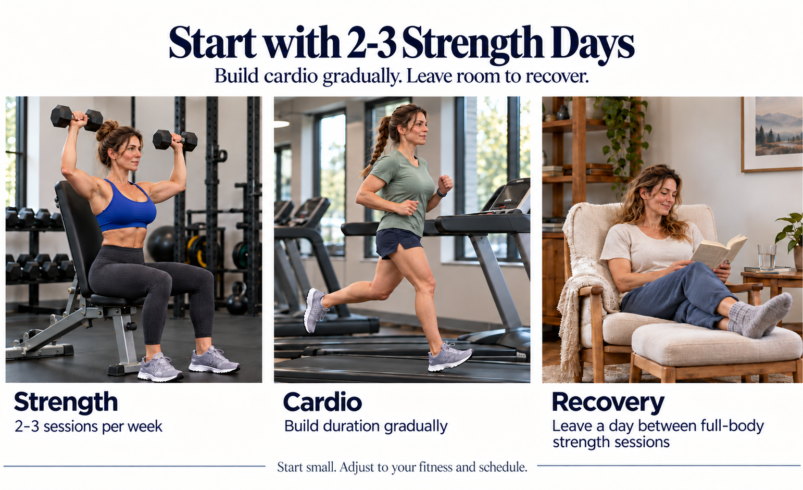
Wondering how many days a week should a beginner work out? Start with two or three full-body strength sessions, leave a day between them, and build manageable cardio around your schedule. If you currently do very little activity, begin with two short sessions. Give yourself a week you can repeat before you fill every evening with exercise.
The confusing part is what counts as a workout. A demanding strength session, a brisk walk, and gentle stretching place different demands on your body. You can move most days without training hard every day. Here is how to choose your starting frequency and adjust it as you gain confidence.
Two or three strength days provide a practical starting framework. NASM recommends this frequency for beginner full-body training, with at least a day between sessions. You practise the movements regularly while leaving room for recovery.
For overall health, also consider aerobic activity. CDC guidance for adults calls for at least 150 minutes of moderate-intensity aerobic activity each week, or 75 vigorous minutes, plus muscle-strengthening activity on at least two days. Strength work should cover all major muscle groups.
Treat those aerobic minutes as a goal to build toward. A starter week with two workouts and a few short walks may fall below it, and that still gives you a useful beginning. Some activity beats none. Training frequency describes how often you train; it does not tell the whole story about effort or duration.
Choose two days if work, family, or your current energy makes a third session difficult. Monday and Thursday, for example, leave plenty of space between workouts. Choose three if you can protect the time and recover comfortably between sessions.
Resistance training simply means working your muscles against a challenge, such as bodyweight, bands, or dumbbells. A full-body session spreads that work across your legs, hips, back, chest, shoulders, arms, and core. You do not need a different gym day for every body part.
Use our beginner bodyweight fitness routine for an accessible starting option. If your main barrier is time, try the 20-minute beginner home workout. Pick one routine and learn it before you collect five alternatives.
Short sessions still deserve preparation. Follow the beginner five-minute warm-up before your strength work, and allow extra time for it when you plan your calendar.
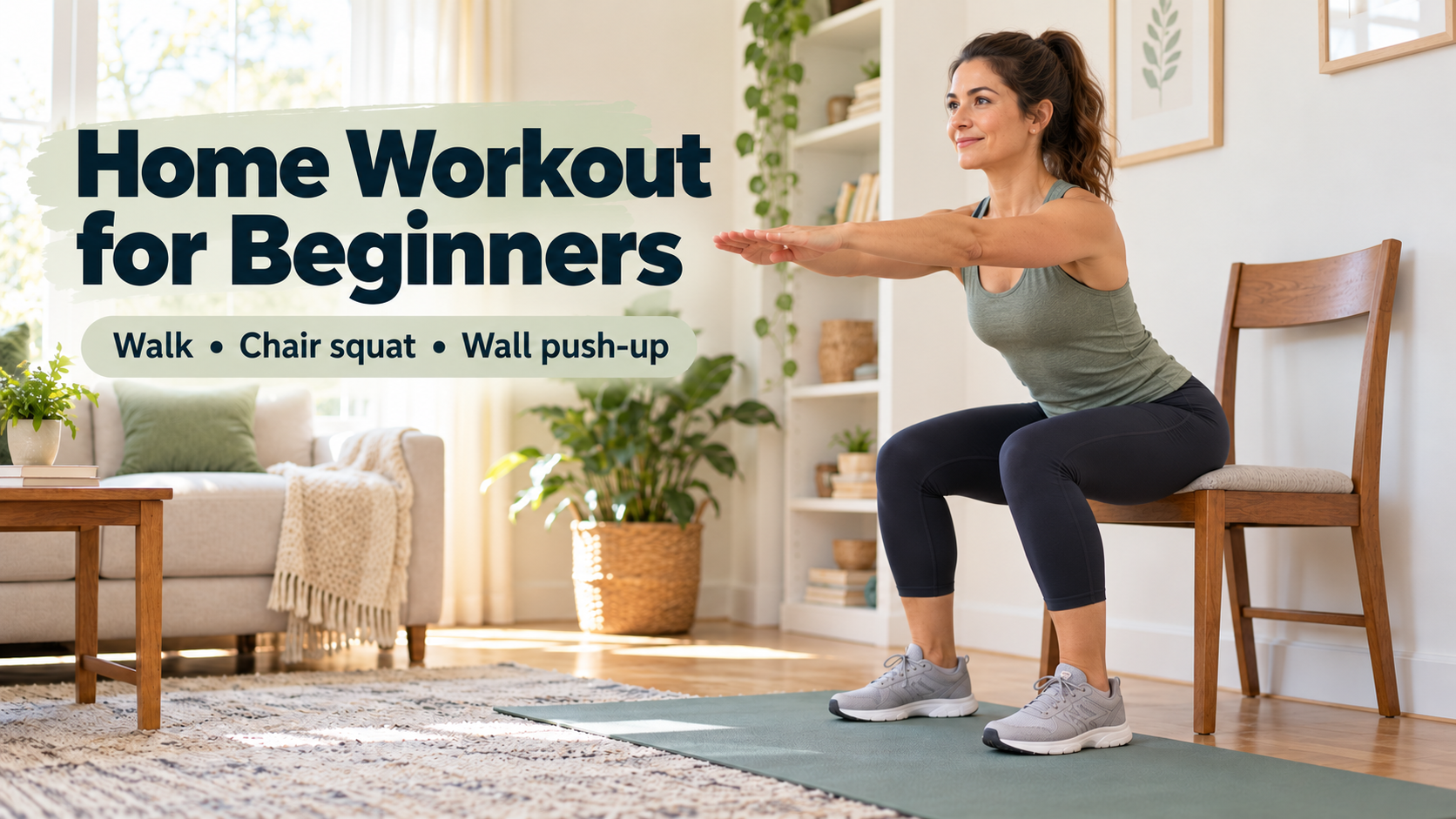
For your first session, choose comfortable versions of the exercises in your routine. A chair squat can introduce the squat pattern; a wall push-up can make pushing more manageable. Use a controlled range of movement and finish a set before fatigue makes your technique fall apart. Take enough rest to catch your breath rather than racing through every exercise.
The first week also gives you information. If you finish comfortably and feel ready by your next session, repeat the plan. If you dread the next workout because the last one left you exhausted, shorten it or reduce the challenge. You can learn from that response without abandoning the whole schedule. Keep exercise choices familiar so you can judge how the workload feels, rather than trying something completely new every time. A repeatable starting point makes the next decision much easier.
Use the schedule below as a starting example. The Friday session stays optional: keep it only when you feel ready and your week allows it. If you prefer two strength days, move Wednesday to Thursday and skip Friday.
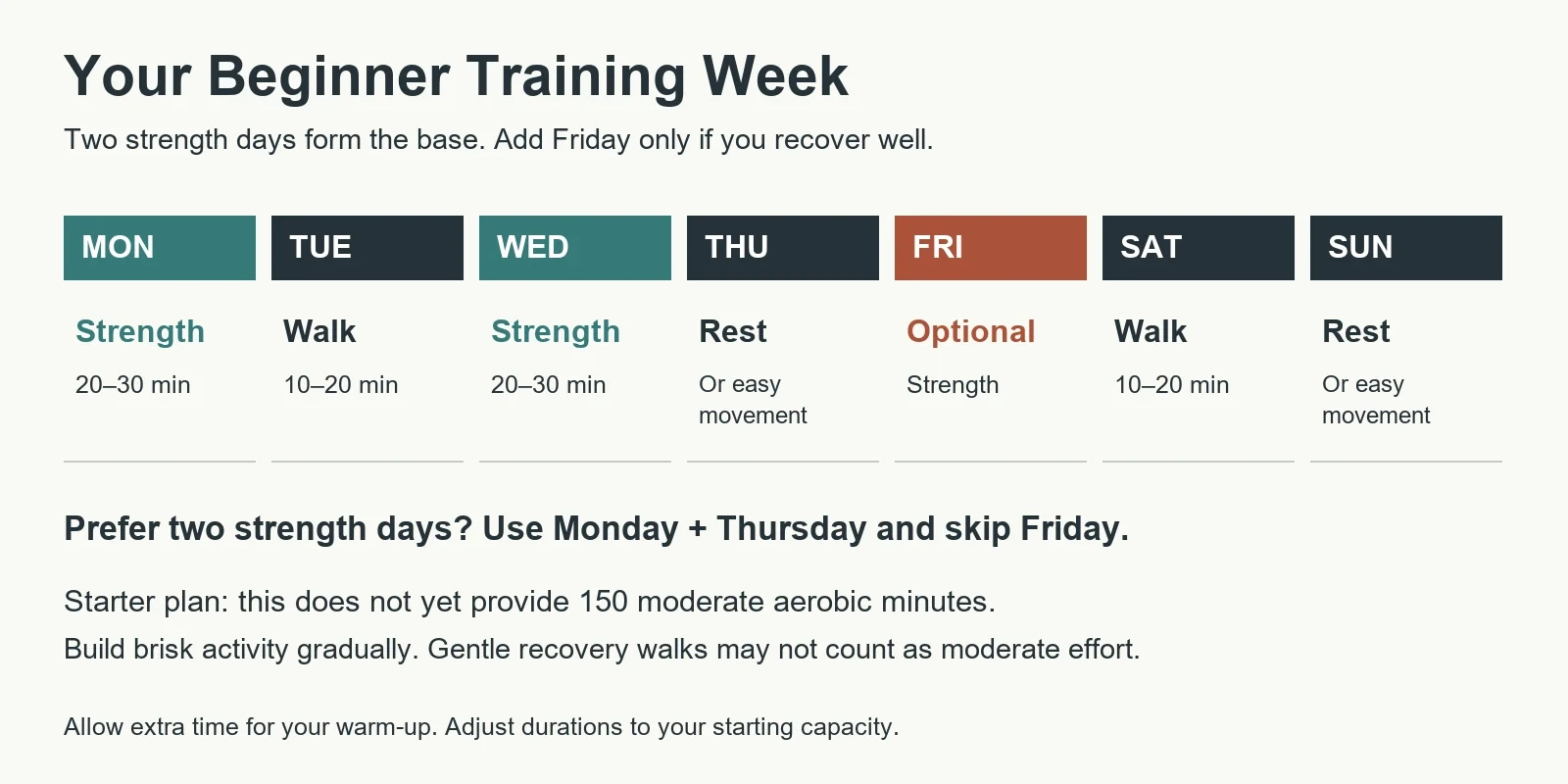
On strength days, allow roughly 20–30 minutes for manageable exercise, plus time to warm up. On walking days, start with 10–20 minutes if that suits your capacity. Choose a shorter outing when necessary. These times offer starting options, not requirements you must hit immediately.
This example does not automatically supply 150 moderate-intensity aerobic minutes. Over time, extend walks or add short brisk bouts on suitable days. A slow recovery stroll may feel helpful without reaching moderate intensity.
If your shifts change, keep the spacing between strength sessions and move the calendar labels. Our daily workout schedule guide offers more ways to fit training around busy days. The calendar should help you show up, not create a second job.
When you ask how many days a week should a beginner work out, count the type of work as well as the days. You can combine strength and a short walk on one day instead of creating separate appointments for everything.
For cardio, choose something you can imagine doing regularly: brisk walking, comfortable cycling, or swimming. During moderate activity, you should generally manage conversation but struggle to sing. Adjust your pace to your own fitness rather than someone else’s speed.
You can divide aerobic activity into smaller chunks. A brisk ten-minute walk at lunch and another after dinner both contribute. Keep genuinely easy movement easy when you need recovery, though; every walk does not need to become a challenge.
Weekly exercise volume means the total work you accumulate. Five minutes of extra walking may fit your week better than another full workout. Build from what you already manage.
Rest days for beginners give you room to recover from unfamiliar work. Leave at least a day between full-body strength sessions as a starting rule, then adjust for soreness, fatigue, and how you move. The calendar alone cannot tell you whether you feel ready.
Active recovery means comfortable movement, such as an easy walk or gentle mobility. Choose it because it feels manageable. You can also take a complete break from planned exercise.
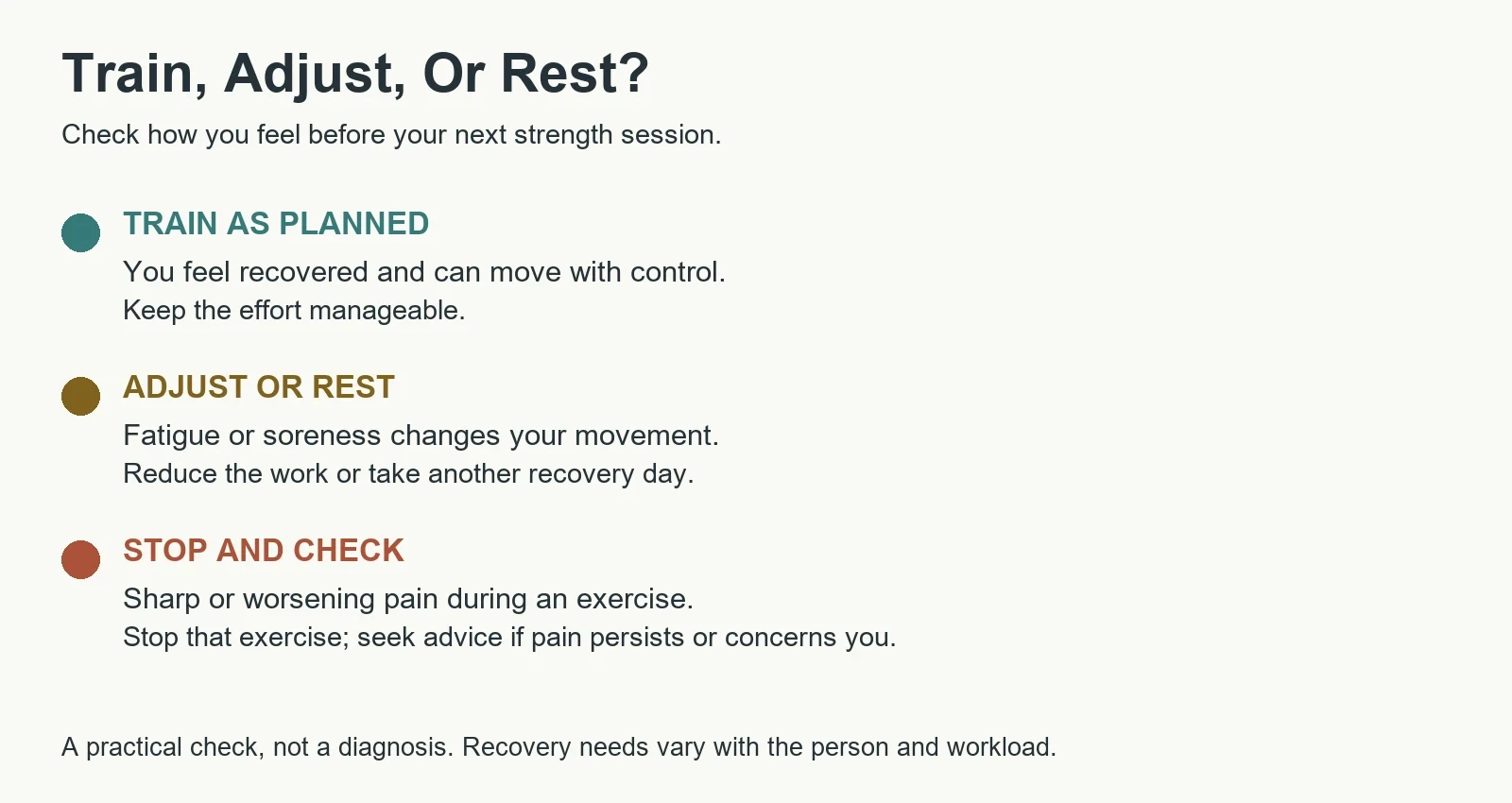
Mild muscle soreness can follow a new session. If soreness changes how you walk, squat, or use the stairs, reduce the next workout or give yourself more recovery time. Stop an exercise that causes sharp or worsening pain; seek medical advice when pain persists or concerns you.
Our beginner recovery routine covers practical ways to handle the time between sessions. Protect sleep and regular meals alongside the workout itself. A demanding week outside the gym also affects how much training you can manage.
You do not need to add a training day simply because a month has passed. First check whether you complete your current sessions, recover before the next one, and control the exercises without rushing.
Keep a simple record of your workout, repetitions, and how the session felt. Our guide to tracking workout progress as a beginner helps you notice improvements beyond the bathroom scale.
If you feel ready for more, change one thing. Add a few repetitions, a modest amount of resistance, or a little cardio time. See how that feels before you also add another session. The three-level beginner home fitness routine offers exercise progressions when your current movements become comfortable.
Keep the next step small enough that you can tell whether it suits you. More training helps only when you can manage the work and keep returning.
Start with the same manageable foundation: two or three strength sessions and gradually increasing aerobic activity. More days alone do not guarantee weight loss. Food intake, total activity, and consistency also influence your results. Choose a schedule you can maintain rather than chasing the largest calorie estimate on a watch.
You can include comfortable movement most days if it suits you. Daily demanding full-body workouts create a different workload. Alternate harder training with easier activity and leave recovery space between strength sessions.
Yes. Two sessions give you a useful starting structure. Work all major muscle groups across those sessions and build aerobic activity separately. If you only manage one session during a difficult week, return to your usual plan when you can.
Move it to a suitable day or resume the next planned session. Preserve recovery between strength workouts instead of squeezing two demanding sessions together. For a habit that needs less daily negotiation, try stacking workouts onto an existing routine.
Open your calendar and choose your first two strength days now. Give each session a start time, prepare your space, and open the 20-minute beginner home workout before that first appointment arrives.
Add one manageable walk between them. Then review the week: did you show up, recover, and leave yourself enough time? Use the daily workout schedule guide to make the next week easier to follow. Start with those two appointments and make them real.

1 Comment
[…] The real question is how to spread the work across your week and still recover. Your routine has to survive an ordinary week, including the days work, family, or travel get in the way. If you’re still deciding how many days to train, start with our guide on how many days a week a beginner should work out. […]