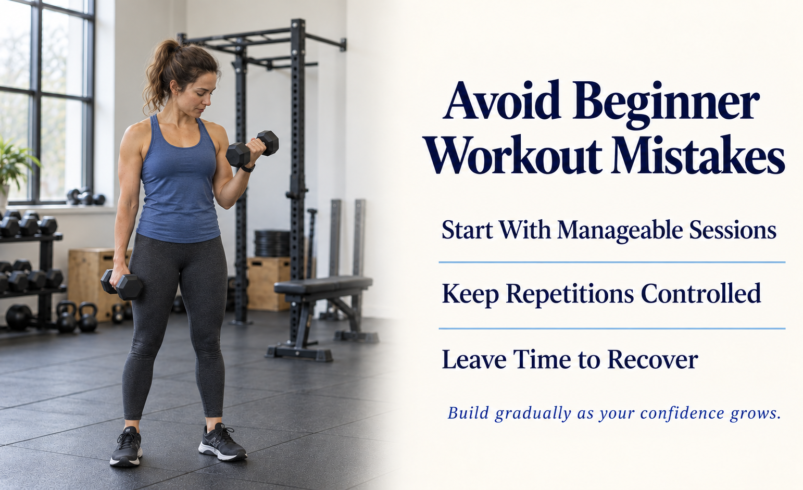
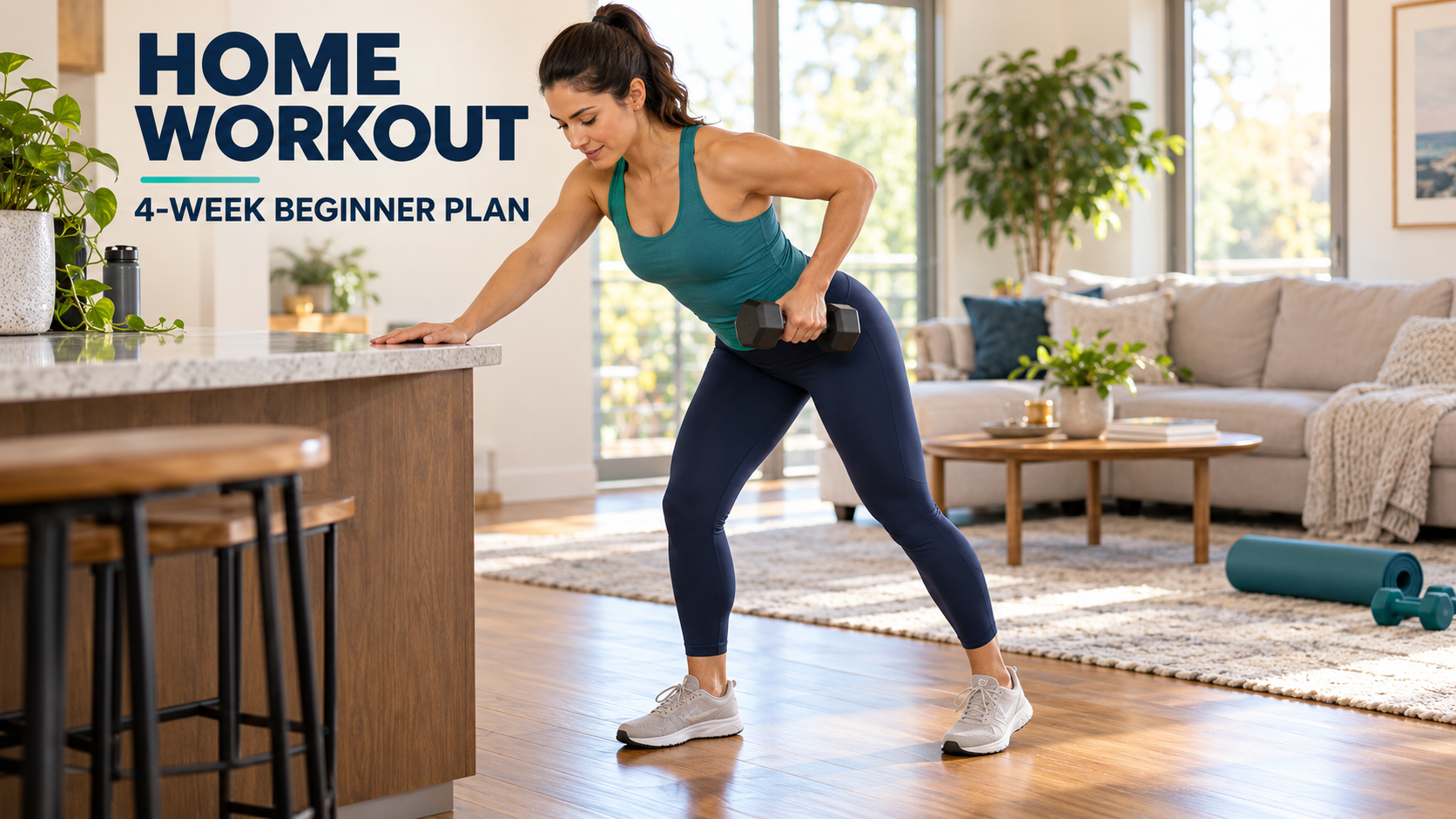
The most common beginner workout mistakes include doing too much too soon, choosing exercises you cannot control, and leaving too little time to recover. Start with manageable sessions,
The most common beginner workout mistakes include doing too much too soon, choosing exercises you cannot control, and leaving too little time to recover. Start with manageable sessions, learn the movements, and increase the challenge gradually. That gives you a routine you can return to while your strength and confidence grow.
You don't need to get everything right on day one. Your early workouts help you discover what suits your body and schedule. The useful question is whether your current approach lets you practise consistently, recover, and make progress. These nine corrections will help you judge that at home or in the gym.
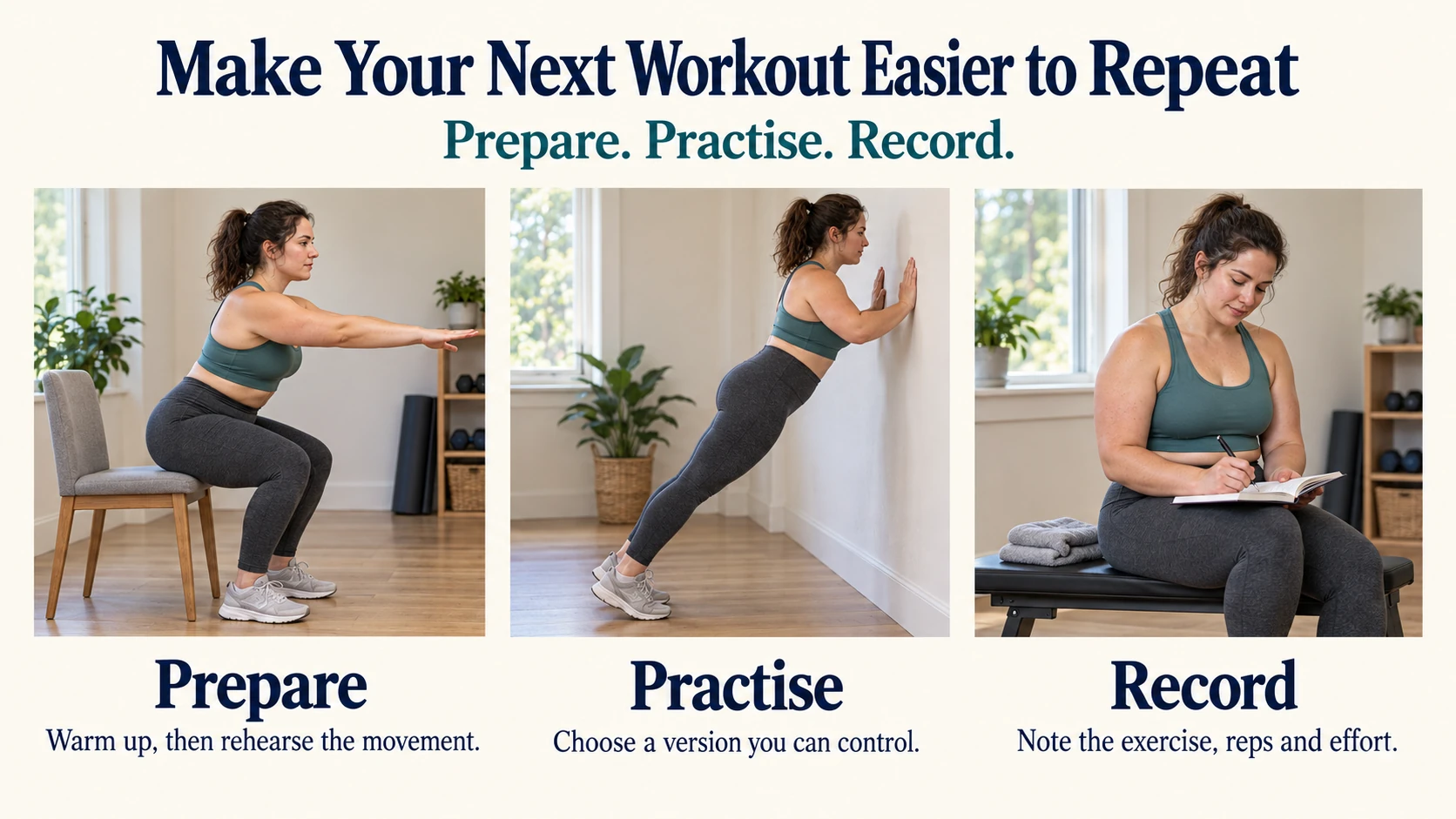
Prepare for the movement, choose a manageable version, and record what you do.
Beginner Workout Mistakes At A Glance
Use these signs to spot what needs attention before adding more work.
Mistake
Sign To Notice
What To Change
Too much too soon
Sessions leave you exhausted
Reduce the starting workload
Constantly switching routines
You cannot compare sessions
Repeat a simple plan
Skipping preparation
You jump into hard sets
Warm up and rehearse
Unmanageable resistance
You lose movement control
Use a lighter or easier version
Rushing and breath-holding
You jerk through repetitions
Move smoothly and breathe
Never progressing
The same work feels easy
Increase the challenge gradually
Too little recovery
Fatigue carries into sessions
Adjust training and allow rest
Chasing soreness
Pain becomes a target
Track ability and consistency
Stopping abruptly
Hard effort ends suddenly
Gradually reduce your pace
1. Doing Too Much Too Soon
Start with a workload you can manage again at your next planned session. Adding more exercises, longer sessions, and harder effort together makes it difficult to tell what your body can handle.
For example, a previously inactive beginner might find a short walk and a few simple strength exercises enough for one day. That starting point can grow as the work becomes manageable.
The American College of Sports Medicine's 2026 guidance emphasizes regular participation and a plan that fits the individual. If your first week leaves you constantly drained, reduce the work. You can build from a smaller session without treating every workout as a test of endurance.
2. Switching Routines Before Learning The Basics
Repeat a simple routine long enough to learn its movements and compare your sessions. A different online workout every day may feel interesting, but it gives you little practice with any one exercise.
A short training log helps: note the exercise, repetitions, resistance, and how demanding it felt. Over time, you can see whether the same task feels more controlled or whether you're managing more work.
Our beginner bodyweight workout gives you a routine to work from. Adapt exercises that don't suit you, and keep enough familiar movements to judge progress. Variety can support enjoyment without replacing your whole plan each session.
3. Skipping The Warm-Up And Practice Sets
Ease into the session before starting harder exercise. A few minutes of comfortable walking or marching can begin the warm-up; then practise movements that match the workout ahead.
Before a loaded squat, for example, you might rehearse the movement without weight. Warm-up sets are lighter practice sets that prepare you for the more demanding sets to follow. They should help you feel ready without tiring you out.
Follow our beginner five-minute warm-up for a practical starting sequence. Some sessions need longer preparation, especially as resistance increases. Treat the time as a starting point and adjust to the exercise and how you move.
4. Choosing A Weight Or Exercise You Cannot Control
Choose resistance that lets you keep control throughout each repetition. If you need to swing a dumbbell or twist your body to finish, reduce the weight or end the set.
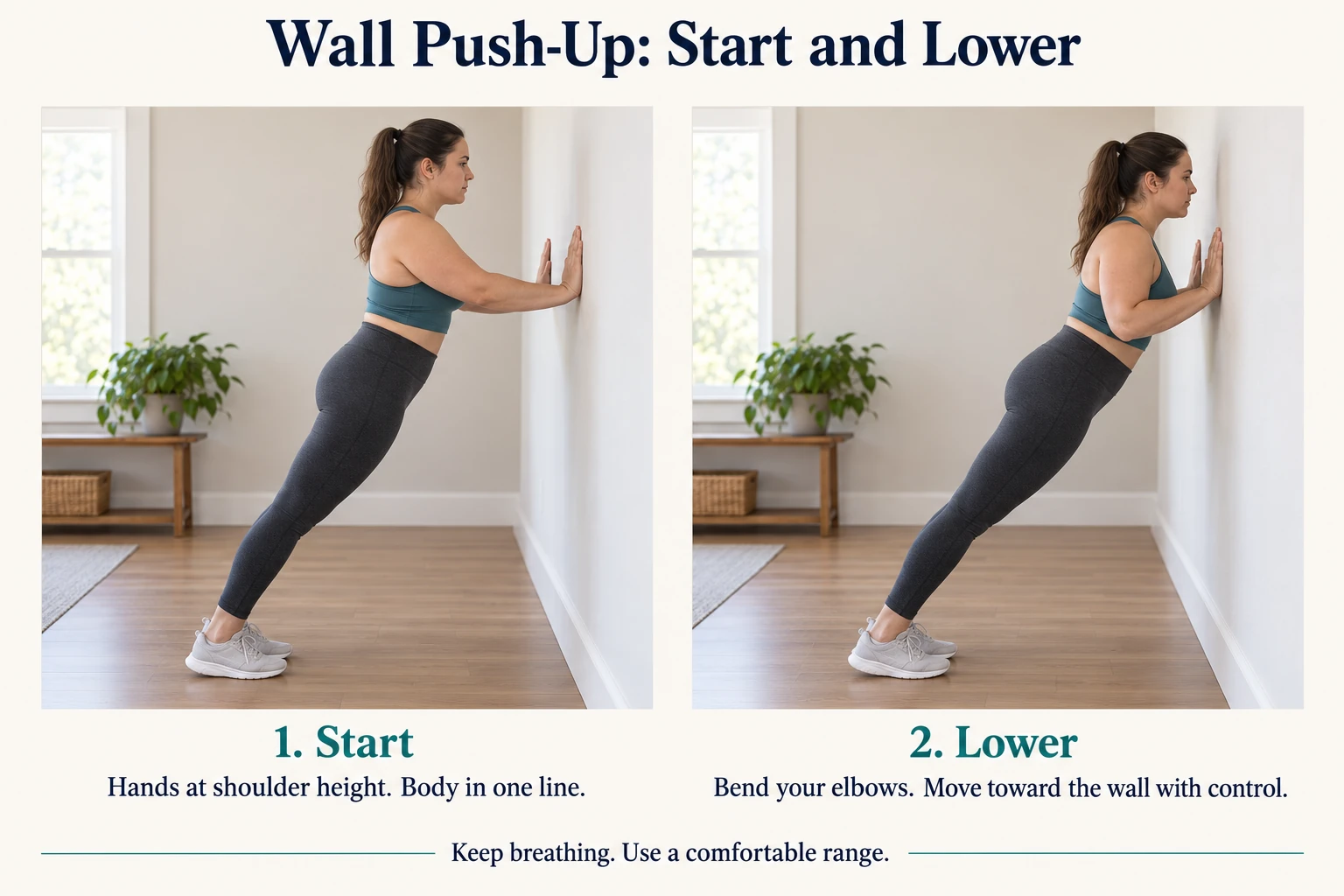
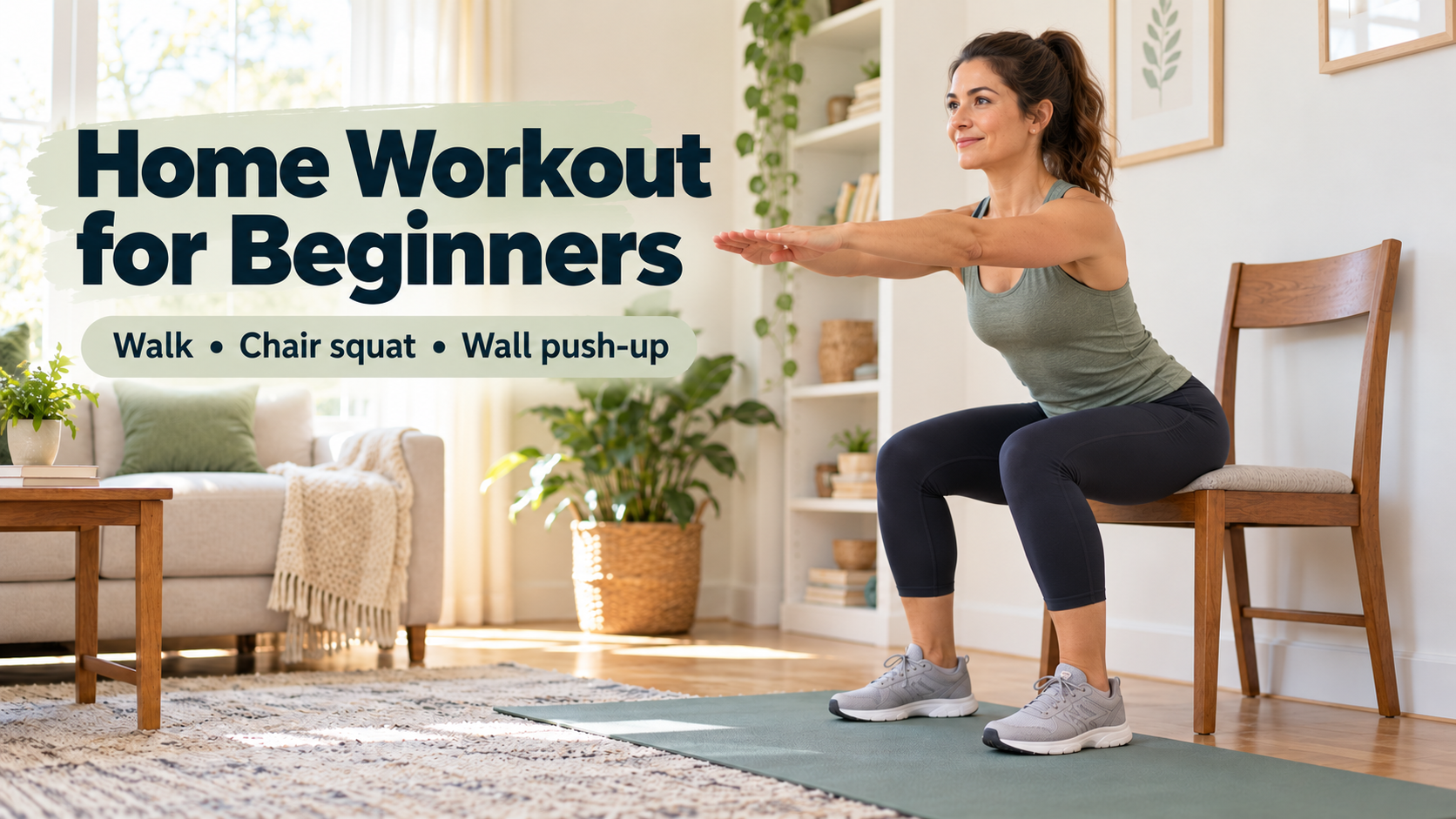
The same principle applies to bodyweight exercises. A wall push-up lets you practise pushing with less demand than a floor push-up. Face a solid wall, place your hands around shoulder height, and bend your elbows to move toward it. Keep your body aligned, then press back through a comfortable range.
Keep the body aligned, breathe freely, and move through a comfortable range. Press back to the starting position.
5. Rushing Repetitions And Holding Your Breath
Move smoothly in both directions and keep breathing throughout the exercise. Even a light weight becomes harder to control when you hurry or use momentum to throw it upward.
During a dumbbell curl, for instance, lift without swinging your torso, then lower the weight with control. You don't need an unusually slow count. You need a pace that lets you guide the movement rather than chase the next repetition.
Mayo Clinic also advises breathing freely during strength training. For many basic exercises, breathing out during the harder part and in during the easier part provides a useful rhythm. If you cannot maintain control, pause and reduce the challenge.
6. Never Adjusting The Challenge As You Improve
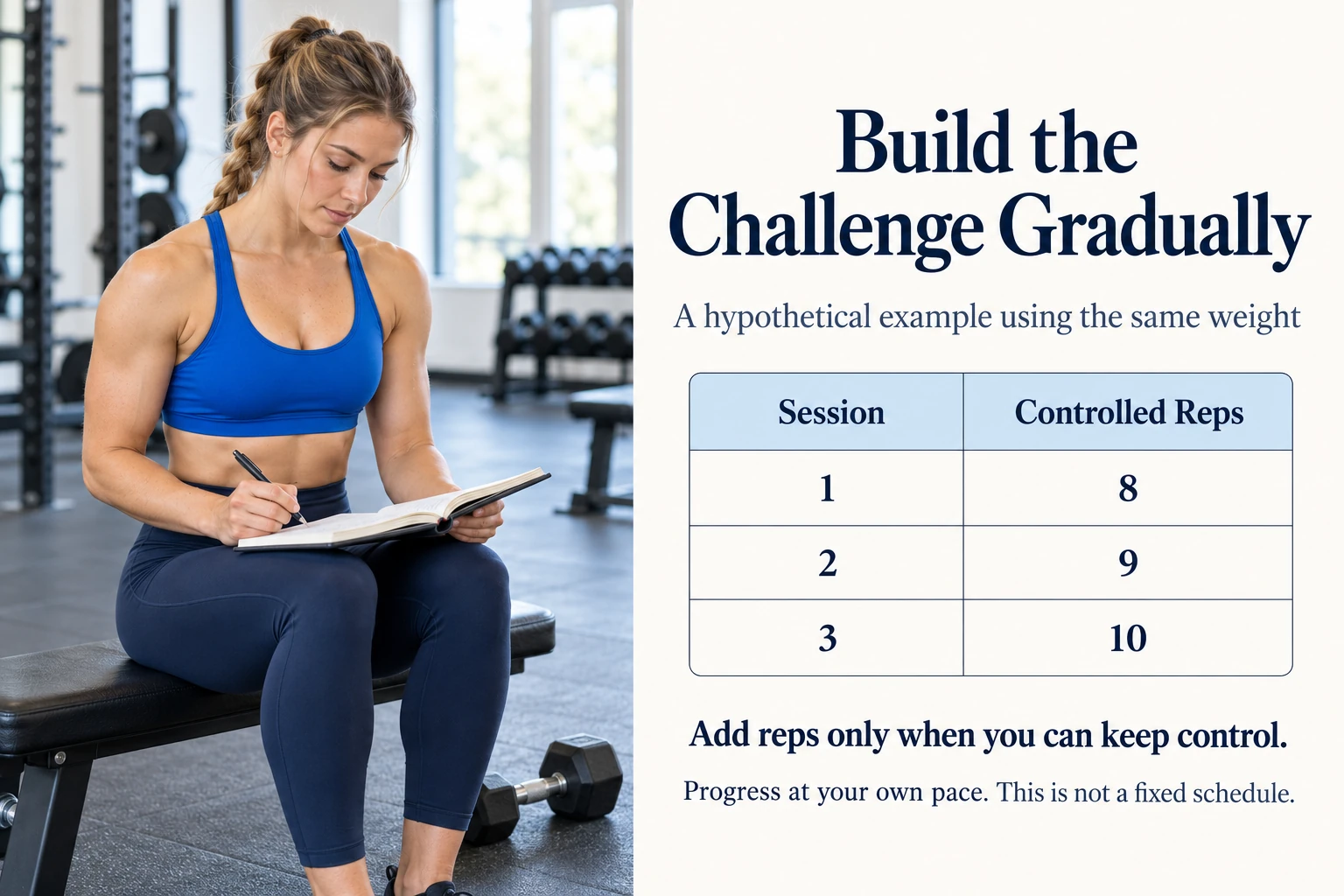
Gradually increase the challenge when your current work becomes manageable. Progressive overload means asking a little more of your muscles over time, through changes such as added repetitions or resistance.
As a hypothetical example, suppose your routine allows eight to ten repetitions with a dumbbell. You might build from eight controlled reps toward ten using the same weight. Once that feels manageable, a small weight increase may suit the plan. You may then perform fewer reps again.
This is an example, not a requirement to improve every session. Among beginner workout mistakes, staying at an easy starting level indefinitely can be as limiting as rushing ahead. Your technique and recovery should guide the next step.
Example progression: add repetitions only when control and recovery allow. Increases do not need to happen every session.
7. Leaving No Room For Recovery
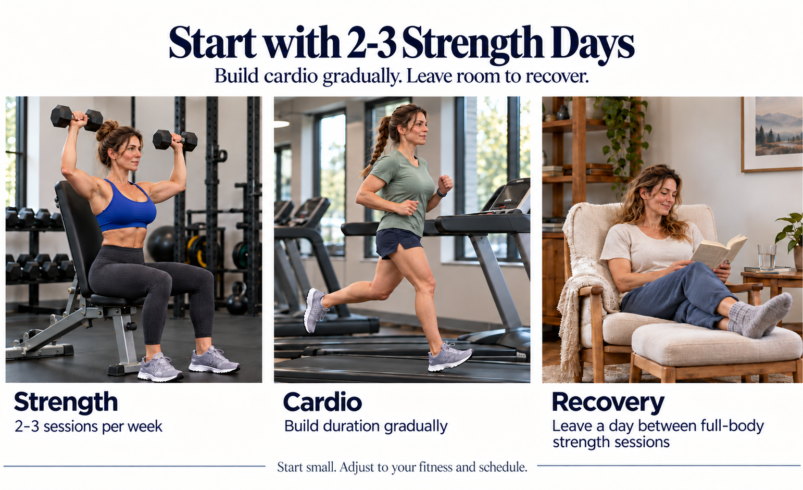
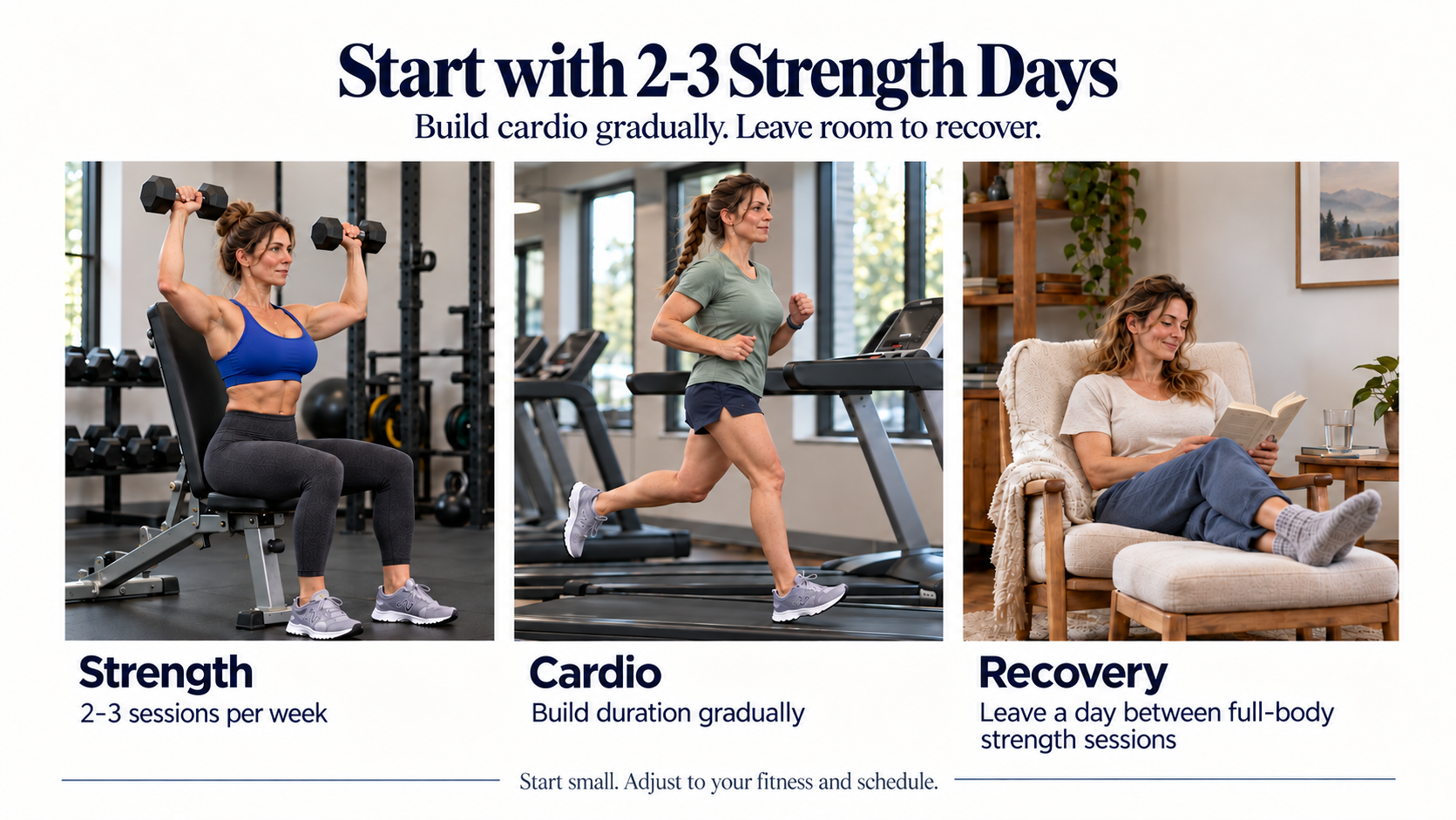
Plan recovery days alongside your workouts. As a beginner starting full-body strength training, leaving a day between sessions gives the same muscles time away from demanding work.
An easy walk may fit that day, or you may prefer a complete break from planned exercise. Sleep and enough food also support recovery. If fatigue keeps carrying into your next session, consider reducing the workload or allowing more rest.
Judge progress by what you can do with control and how consistently you train. Muscle soreness can follow unfamiliar exercise, but making yourself sore is not a useful training goal.
Delayed muscle soreness and sharp pain during a movement need different responses. If soreness changes how you move, make the next session easier or take more recovery time. Stop an exercise that causes sharp or worsening pain, and get professional advice about persistent or concerning symptoms.
Trying to make every session hurt is one of the workout mistakes for beginners that can encourage unnecessary effort. Record useful changes instead: a steadier repetition, a manageable increase in resistance, or a routine you can repeat.
9. Stopping Abruptly After Hard Exercise
Bring the effort down gradually after demanding cardio. Slow your walk, run, or cycling pace rather than finishing a hard effort and immediately standing still.
Gentle stretching can support flexibility, but it does not reliably prevent next-day soreness. A Cochrane review of stretching and muscle soreness found no clinically important reduction. Keep the gradual movement and optional stretching in their proper roles.
Use This Check Before Your Next Workout
Turn these beginner training tips into a short check before you start:
Know which routine you're following and which exercises need practice.
Allow time for your warm-up and a gradual finish.
Choose a resistance or variation you can control today.
Check whether fatigue or soreness calls for an easier session.
Record what you did so the next decision has a clear starting point.
These checks address common gym mistakes without adding a complicated system. If several points need attention, begin with the one that most affects your next session. You can make another adjustment once that change feels familiar.
Questions About Workout Mistakes For Beginners
Can These Mistakes Happen With Home Workouts?
Yes. Bodyweight exercises and light dumbbells can still become too demanding if you rush, add excessive work, or ignore recovery. Apply the same checks at home: use a suitable variation, prepare for the movements, and increase the challenge gradually. A gym membership does not determine whether a routine suits your starting point.
Do Beginners Need To Train To Failure?
No. Training to failure means continuing until you cannot complete another repetition. ACSM's 2026 guidance indicates that this approach is optional for many healthy adults. Beginners can practise consistent, challenging training without forcing every set to that point. End the set when you can no longer keep the intended movement under control.
Put One Change Into Your Next Session
Choose one of these beginner workout mistakes to address before you train again. If you still need a plan, use our guide to starting exercise with no fitness experience to choose a manageable first session. Put it on your calendar, note the correction you want to practise, and record how it went. You'll have a clearer basis for deciding what to repeat or adjust next time.