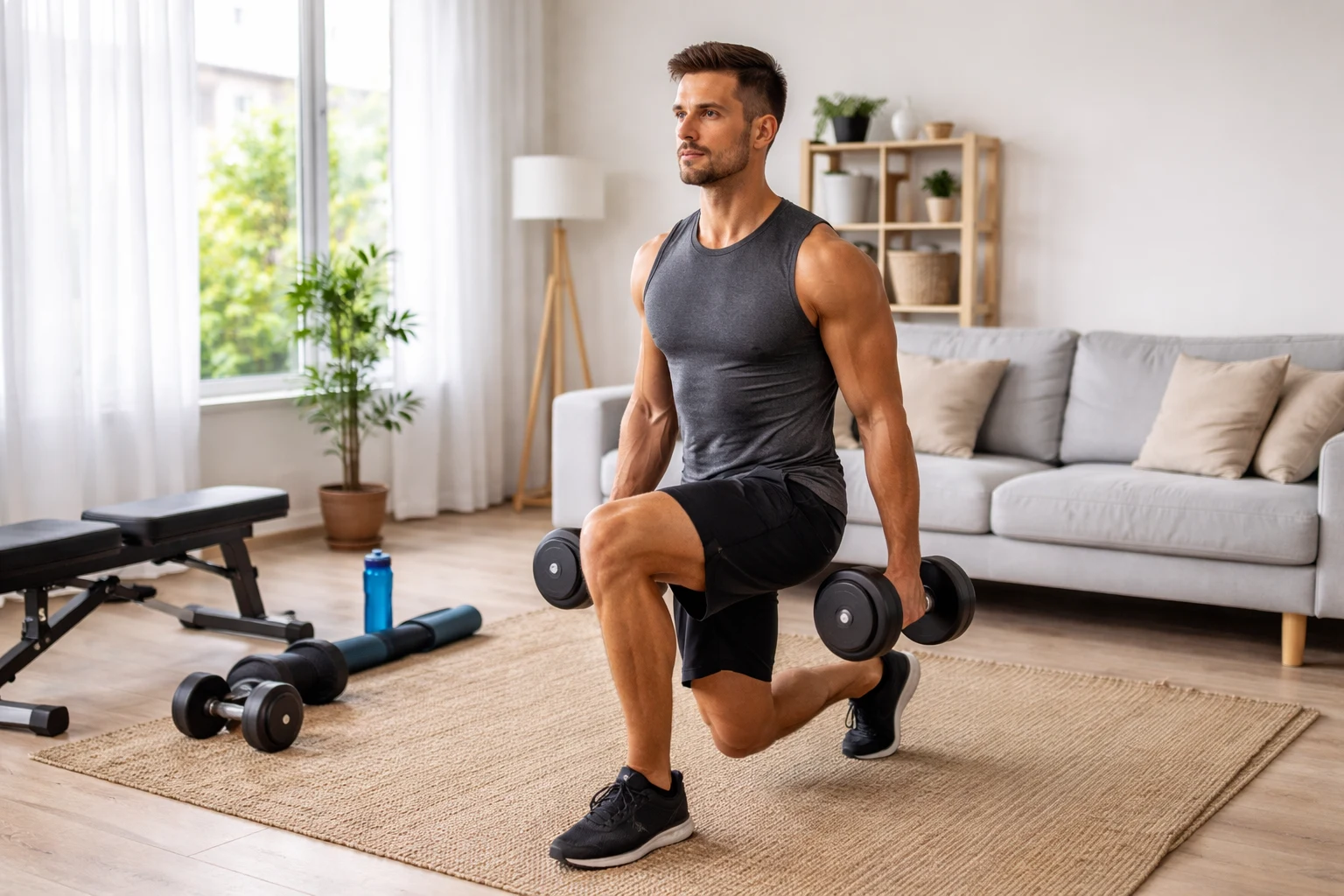
The single biggest thing holding women back from strength training is a myth so persistent it still circulates in gyms: that lifting weights makes women “bulky.” It doesn’t. And understanding why it doesn’t , not just hearing that it doesn’t, is what actually changes how women approach the weights section.
Women produce roughly 15–20 times less testosterone than men. Testosterone is one of the primary hormones driving muscle hypertrophy (size increase). Without that hormonal environment, building the kind of muscle mass that produces a bulky appearance requires years of dedicated high-volume training, a significant calorie surplus, and in many cases pharmacological assistance. None of that applies to a beginner strength routine.
What women do build through consistent strength training is lean strength: improved muscle definition, a more sculpted appearance, stronger bones, better posture, and a body that functions better in daily life. That’s the goal here.
What Lean Strength Actually Looks Like
Lean strength means your muscles become more defined and functional without dramatic size increases. Stronger arms. A firmer midsection. More shape in the glutes and legs. Shoulders that sit back naturally instead of rounding forward.
This kind of change comes from consistent resistance training, adequate protein intake, and progressive challenge over time. It doesn’t come from cardio alone — and it doesn’t come from the high-rep, low-weight “toning” approach that’s been marketed to women for decades. There’s no physiological mechanism for toning without building some muscle, so you might as well train in a way that actually builds it efficiently.
The Structure Of This Plan
Two full-body sessions per week, split into two sessions with different emphases. Two sessions is enough to see clear progress for beginners while leaving room for cardio, recovery, and real life. Train on non-consecutive days — Monday and Thursday, or Tuesday and Friday, for example. At least 48 hours between sessions.
Session A — Upper Body And Core
Warm-up: 5 minutes of light movement — arm circles, shoulder rolls, 10 slow bodyweight squats.
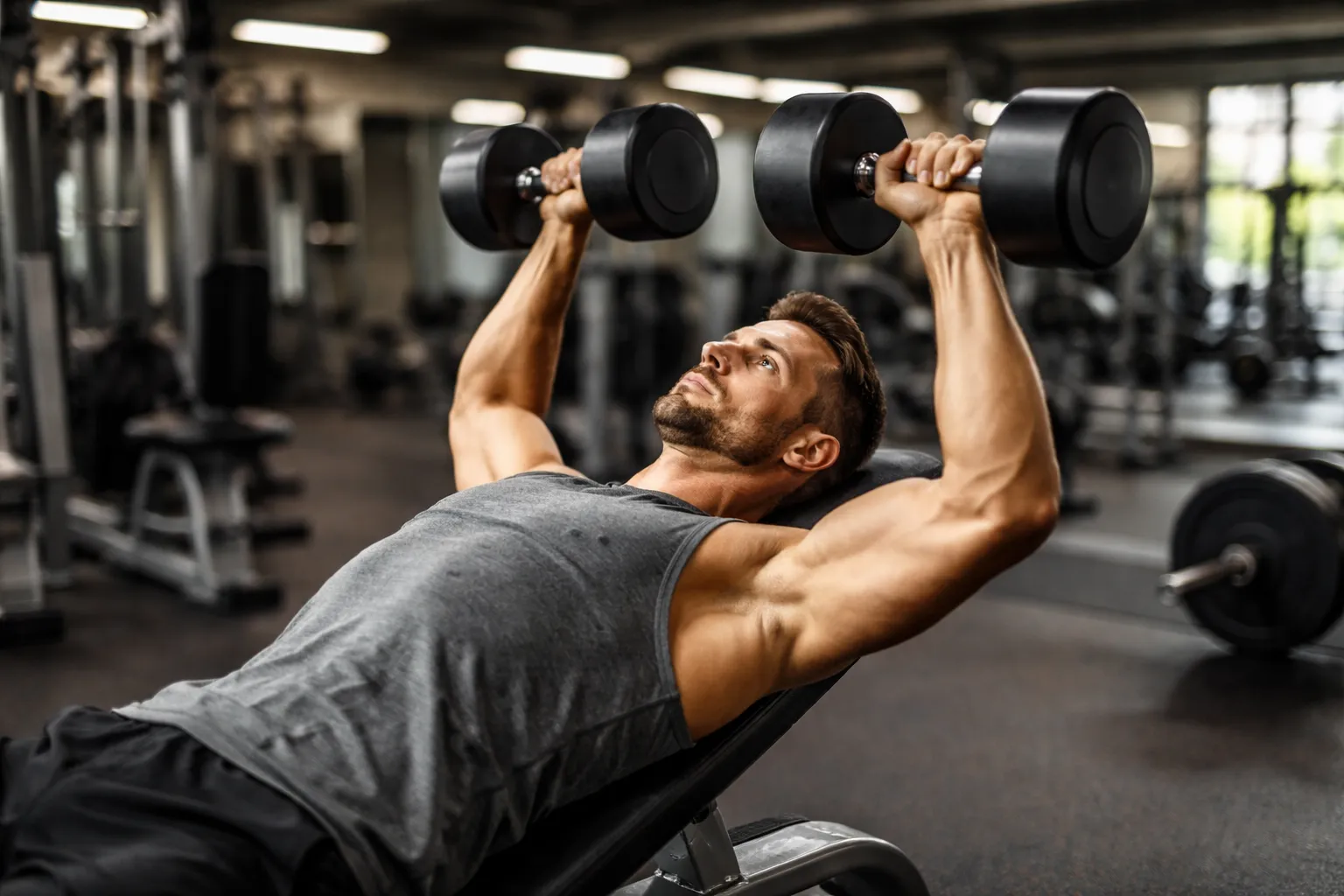
- Dumbbell press (seated or flat bench) — 3 sets x 10 reps
- Dumbbell rows, braced on bench (one arm at a time) — 3 sets x 10 reps per side
- Lateral raises — 2 sets x 12 reps (keep weight light — these accumulate quickly)
- Assisted pull-up or lat pulldown — 3 sets x 8–10 reps
- Dead bugs (core, floor) — 3 sets x 8 reps per side
- Push-up variation (wall, incline, or floor depending on current level) — 2 sets x max reps
Rest 60–90 seconds between sets. Form matters more than weight here, especially in the first 3–4 weeks.
Session B — Lower Body And Glutes
Warm-up: 5 minutes of light cardio, plus 10 slow bodyweight squats and 10 hip circles per side.
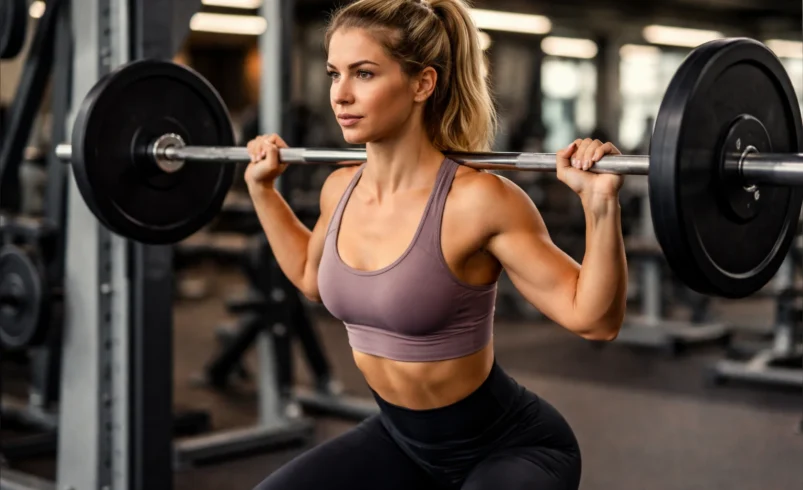
- Goblet squat (dumbbell held at chest) — 3 sets x 10 reps
- Romanian deadlift (barbell or dumbbell) — 3 sets x 10 reps
- Hip thrusts (glute bridge on floor or elevated with bench) — 3 sets x 12 reps
- Lateral band walk or side step squat — 2 sets x 15 steps per side
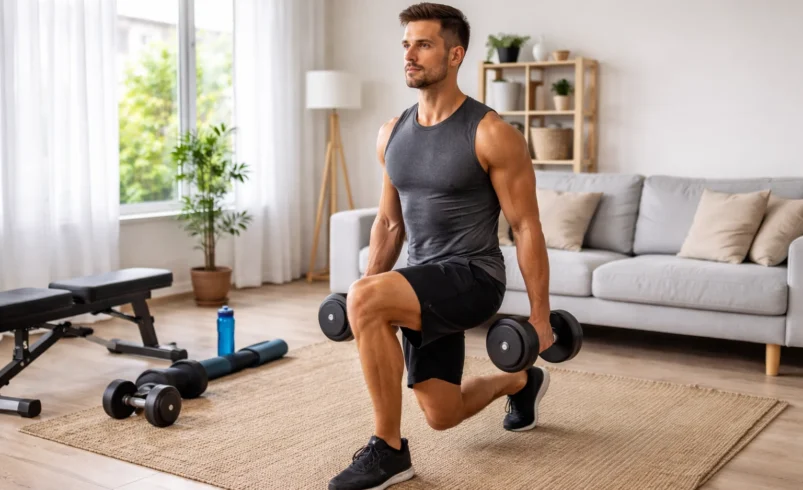
- Leg press (gym) or split squat — 3 sets x 10 reps per side
- Calf raises (standing, slow tempo) — 3 sets x 15 reps
These exercises target the glutes, hamstrings, quads, and calves with specific attention to hip extension movements often underrepresented in beginner programmes but critical for glute development and lower body strength.
How Often To Train And When To Increase Load
Two sessions per week is the baseline. As you adapt, usually around week 4, consider adding a third session if your schedule and recovery allow.
For understanding how the early weeks of a new fitness routine tend to work, the beginner fitness routine 4-week starter plan provides a useful framework for the adaptation process.
Progression: when you can complete all prescribed reps with clean form and the last two reps no longer feel challenging, it’s time to add weight. Even 1–2.5 kg is enough to create a new growth stimulus. Don’t increase load and volume at the same time — change one variable at a time.
Progressive Overload For Women Beginners
Progressive overload is the principle of continuously increasing the demand placed on your muscles over time. Without it, muscles adapt to the current challenge and stop responding.
For women beginners, progression comes through four routes:
- Adding load — increase weight by 1–2.5 kg when reps feel too easy
- Adding reps — once you’re at the top of the rep range, add weight and drop back to the lower end
- Reducing rest — shorter rest periods make the same workout more demanding
- Adding sets — moving from 3 to 4 sets increases total volume
Work through these progressions gradually. Beginners often experience rapid early strength gains (neurological adaptation) that slow around weeks 6–10. That’s a normal phase, not a plateau.
Protein And Recovery — The Two Things Most Women Miss
Protein is the building block of muscle. Without adequate intake, your body can’t repair muscle tissue effectively after sessions, which limits the adaptations you’re training for.
A reasonable starting target: 0.7–0.9g of protein per pound of bodyweight. For a 140-pound woman, that’s around 98–126g daily. Eggs, Greek yogurt, cottage cheese, chicken, fish, legumes, and tofu are all practical, affordable sources. Spread protein across your meals throughout the day.
Sleep is the other side of the equation. Growth hormone release is critical for muscle repair peaks during deep sleep. Consistently sleeping less than seven hours measurably impairs training results, regardless of how well you follow the programme.
For low-impact movement between sessions, the quiet home workout guide covers beginner-friendly active recovery options that help without adding fatigue.
The Mindset That Actually Drives Results
Strength training requires a different mental model than cardio-based fitness. Results come slowly at first, and then more visibly. The first 4–6 weeks are mostly neurological adaptation — you’ll get stronger and more coordinated without much visible change in the mirror. This is the phase where most people quit, incorrectly assuming the programme isn’t working.
The visible changes come after. Muscle definition, improved posture, better endurance in daily tasks, clothes fitting differently, these tend to appear around weeks 8–12 and continue developing for months. Tracking your lifts, even informally, helps bridge this gap. Writing down weights and reps each session gives you concrete evidence of progress when the mirror hasn’t caught up yet.
Frequently Asked Questions
Should women train differently from men? In most meaningful ways, no. The principles of muscle building, progressive overload, compound movements, adequate protein and sleep apply to both sexes. Primary differences are in starting weights (women typically start lighter) and some evidence suggesting women may recover slightly faster between sessions.
Is it okay to train during my period? Yes, with adjustments as needed. Some people find training more difficult in the first 1–2 days due to fatigue and discomfort. Reducing intensity is a reasonable modification, not a step backward.
Can I combine this with cardio? Yes. Keep cardio sessions at low-to-moderate intensity, preferably on separate days from strength sessions. Excessive cardio in a calorie deficit can interfere with muscle building, so avoid cutting calories dramatically while doing both.
This plan isn’t built around aesthetics first. It’s built around what your body needs to become stronger and more capable. The aesthetic changes follow the function. That’s the right order to approach it in.