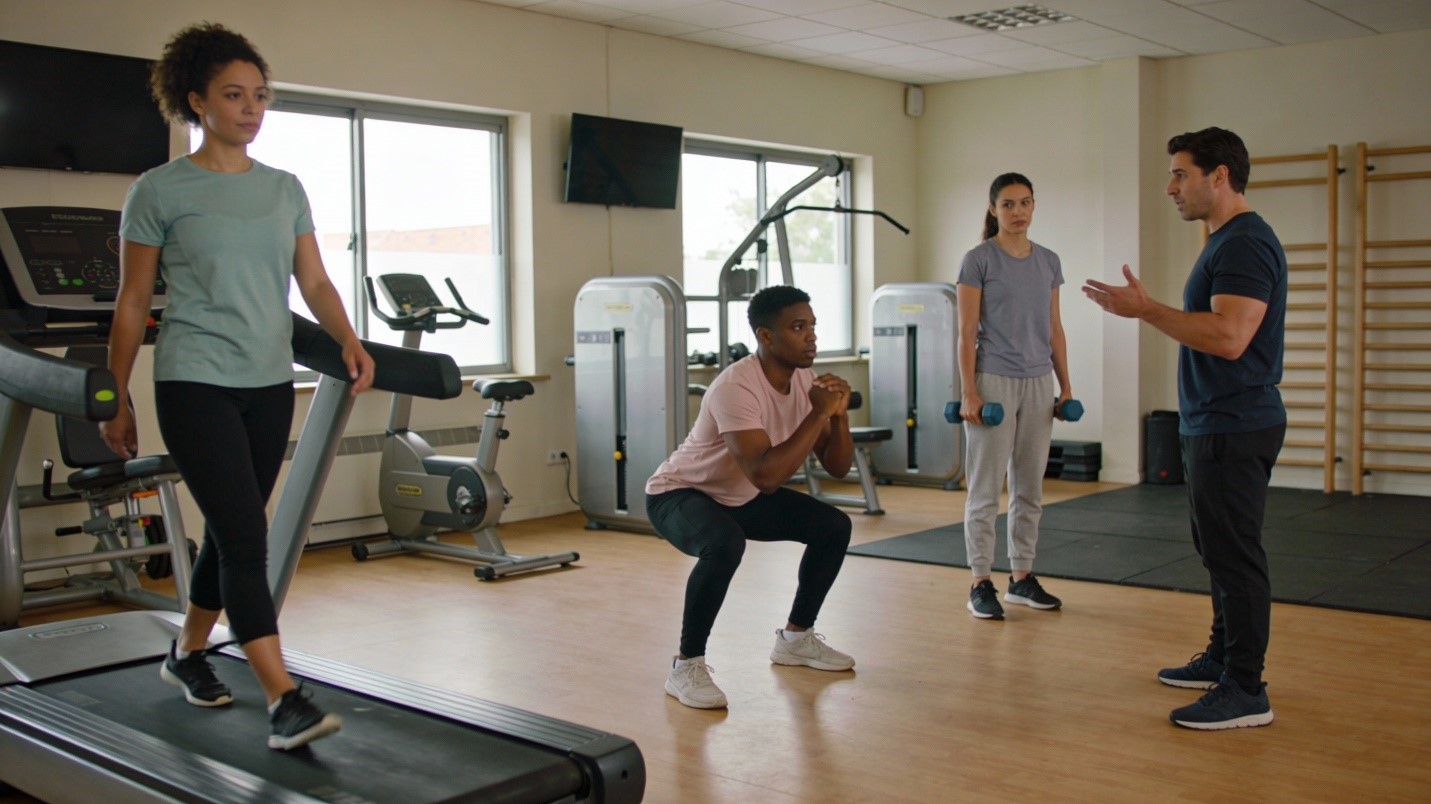
“You can’t build real muscle without weights.” You’ve probably encountered some version of this idea. It’s not entirely wrong, at some point, serious hypertrophy does require external load. But for beginners? Your body doesn’t know what’s resisting it. It only knows whether the demand is greater than what it’s currently adapted to.
A pull-up is demanding. Progressing from wall push-ups to floor push-ups to feet-elevated push-ups creates measurable stimulus. A slow, controlled bodyweight squat challenges the quads, glutes, and core in ways that a light dumbbell squat might not. You can build a meaningful foundation of strength and lean muscle at home, with no equipment, if you’re smart about how you train.
Can You Actually Build Muscle Without Equipment?
Muscle hypertrophy happens when three conditions are met: the muscle is placed under meaningful mechanical tension (it’s working against resistance), some degree of metabolic stress occurs during training, and adequate protein and recovery follow the session.
Bodyweight training can satisfy the first two conditions if exercises are properly selected and progressively challenged over time. The third condition depends entirely on habits outside of training. The limitation of pure bodyweight training becomes apparent later, particularly for lower body work, where bodyweight eventually stops providing enough resistance for continued growth. But for a beginner’s first three to six months? It’s more than enough.
The Full-Body Home Muscle Routine
Two sessions per week on non-consecutive days. Session A focuses on pushing and anterior chain work; Session B focuses on pulling and posterior chain work. You’ll need a floor, approximately 6 square feet of clear space, and something stable for step-ups (a sturdy chair or low step). A mat is helpful. A door-mounted pull-up bar opens up significant options for Session B but is not strictly required to start.
Workout A — Push And Anterior Chain Focus
Warm-up (5 minutes): March in place, arm circles, slow bodyweight squats, hip rotations.
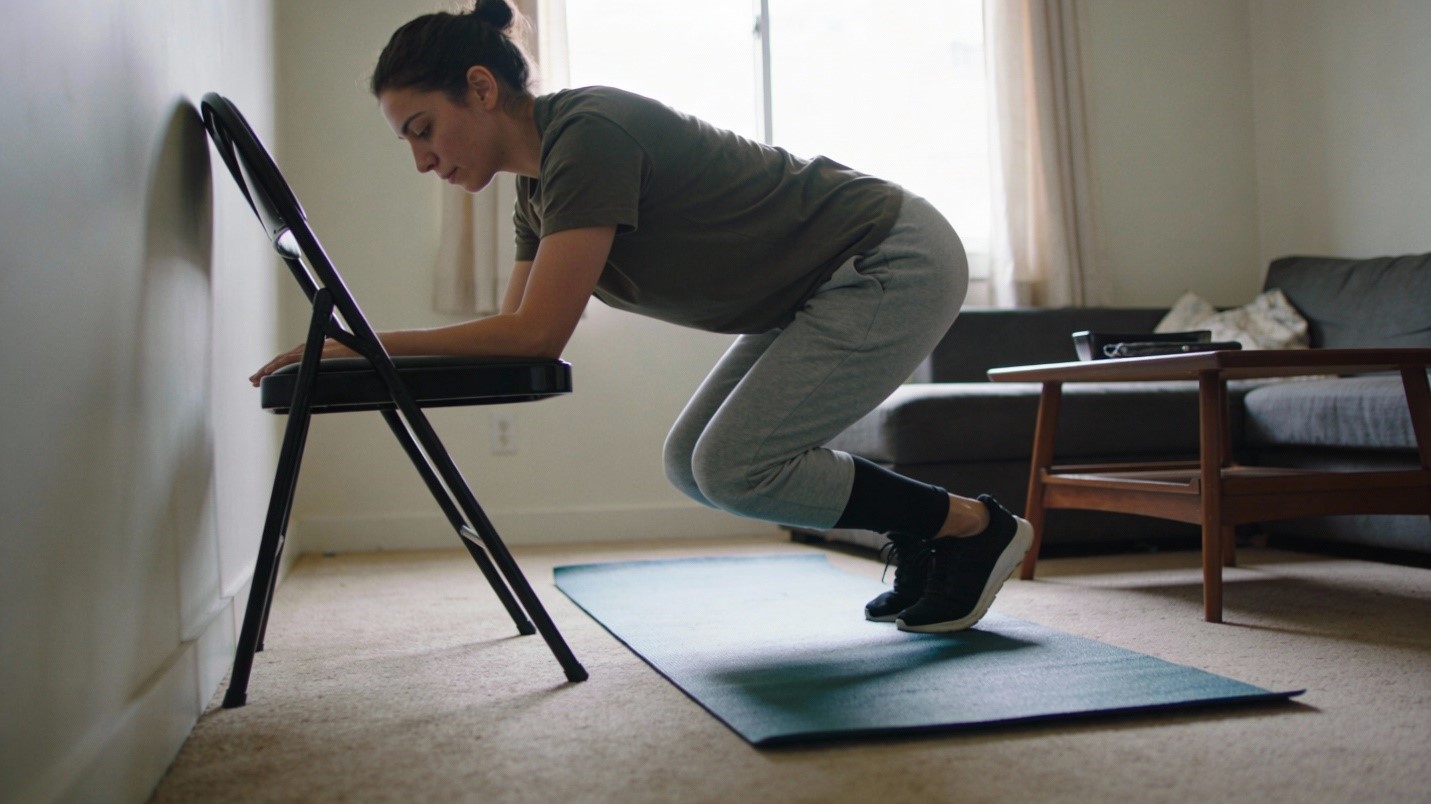
Push-up progression — 4 sets x 8–12 reps: Choose your current level: wall push-up → incline push-up (hands on chair) → floor push-up → close-grip push-up → feet-elevated push-up. Move to the next variation when you can complete 12 reps cleanly with controlled form.
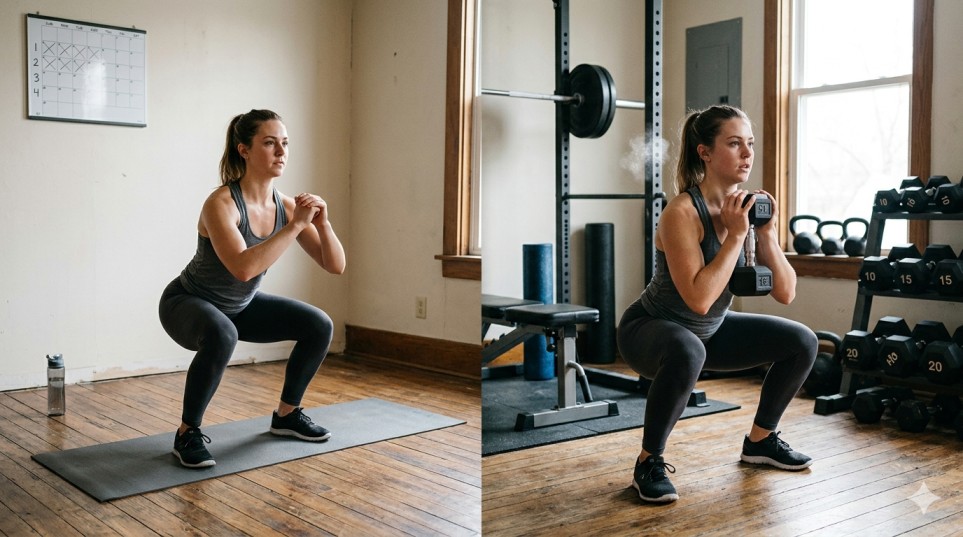
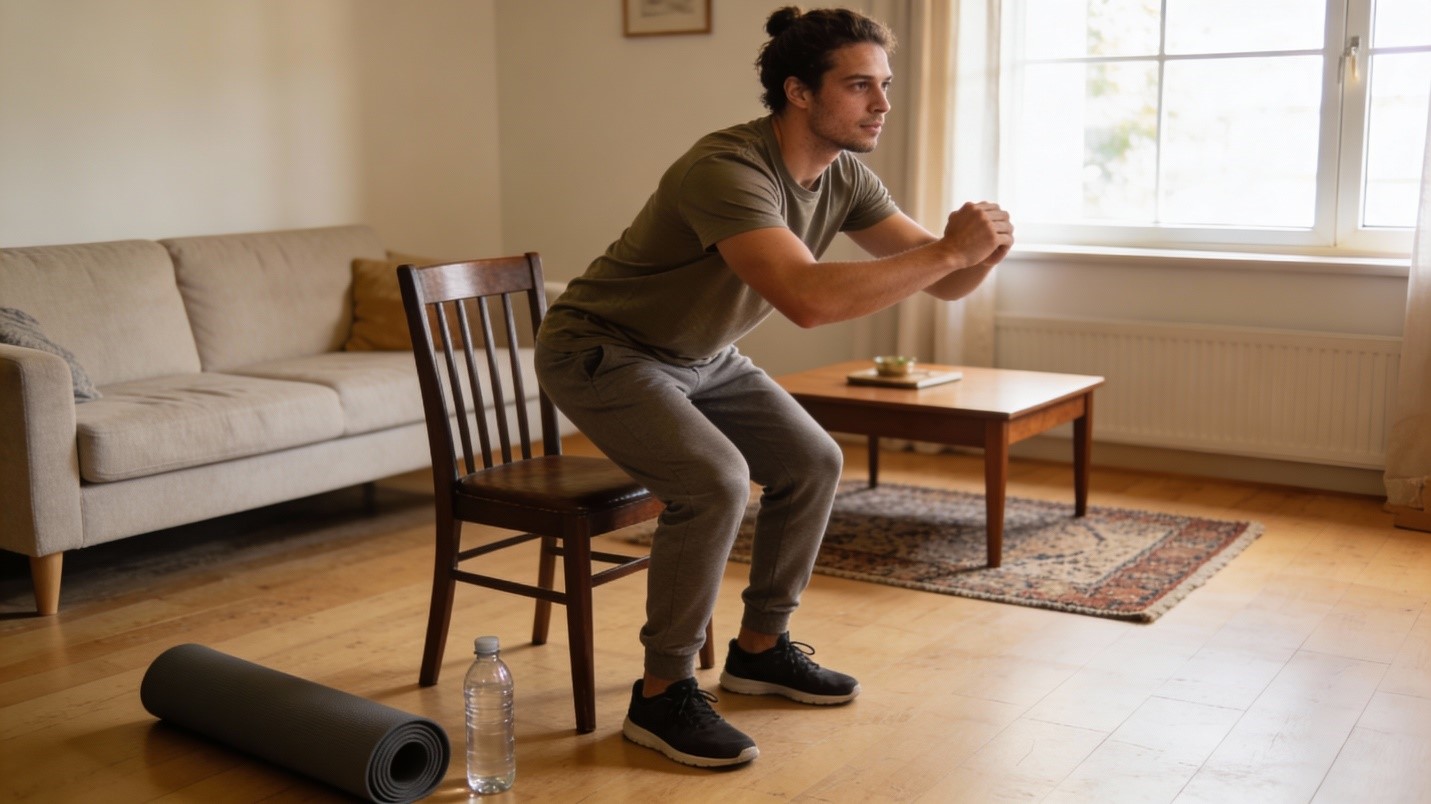
Slow bodyweight squat — 4 sets x 12–15 reps: Pause 2 seconds at the bottom. Keep heels on the floor. Maintain tension throughout the movement, not just at the end of the range.
Pike push-up — 3 sets x 8 reps: Form an inverted V with your body, hands on the floor shoulder-width apart. Lower the top of your head toward the floor, then press back up. Targets the shoulders in a way standard push-ups don’t.
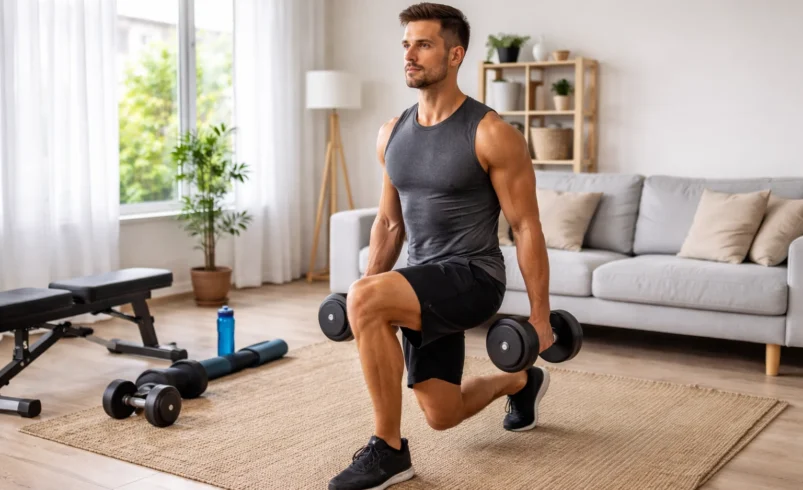
Reverse lunge — 3 sets x 10 reps per leg: Step one foot backward and lower the back knee toward the floor. Push back up through the front heel. Keep your torso upright throughout.
Dead bug — 3 sets x 8 reps per side: Lie on your back, arms extended toward the ceiling, knees bent at 90 degrees above your hips. Slowly extend one arm overhead and the opposite leg toward the floor simultaneously, then return. This builds core stability without compressing the spine.
Workout B — Pull And Posterior Chain Focus
Warm-up (5 minutes): Same as Workout A.
Table or chair rows — 4 sets x 8–10 reps: Sit under a sturdy table, grip the edge, and pull your chest up toward it. This is a horizontal row — one of the most important movement patterns for back strength and posture. Adjust the difficulty by changing your body angle.
Glute bridge — 4 sets x 15 reps: Lie on your back, feet flat, knees bent. Drive your hips toward the ceiling, squeeze your glutes at the top, and lower slowly. Progress to single-leg glute bridge when this becomes too easy.
Superman hold — 3 sets x 10 reps (3-second hold at top): Lie face down, arms extended overhead. Lift your arms, chest, and legs simultaneously. Hold at the top, then lower with control. Targets spinal erectors and posterior shoulder.
Step-up (sturdy chair or low step) — 3 sets x 10 reps per leg: Drive through the heel of the foot on the step. Don’t push off the back foot. This is more demanding than it looks when done with controlled tempo.
Wall sit — 3 sets x 30 seconds: Slide your back down a wall until your thighs are parallel to the floor. Hold. This creates meaningful time-under-tension in the quads without any external load.
How To Keep Getting Stronger Over Time
The biggest challenge with bodyweight training is progressive overload, systematically making exercises more demanding as you adapt. Without it, your muscles plateau. Here’s the toolkit:
Slow the tempo: A push-up with a 3-second lowering phase is significantly harder than one done at normal speed. Tempo manipulation is one of the most underused progression tools in bodyweight training.
Reduce rest: Keeping rest periods to 45–60 seconds instead of 90 makes the same session more demanding without changing a single exercise.
Increase reps: Progress from 8 reps to 12 to 15 before moving to a harder exercise variation.
Move to harder variations: The push-up progression is the clearest example. Apply the same logic to squats (add a pause, work toward pistol squat progressions) and rows (change your body angle to increase load).
For a comprehensive breakdown of the fundamental bodyweight movement patterns and how to execute them correctly, the beginner bodyweight fitness routine covers technique in useful detail.
What To Pair With This Routine
Protein intake matters here just as much as in a gym-based programme. Without it, you’re providing the training signal but not the raw material to rebuild. Target 0.7–0.9g per pound of bodyweight daily. Eggs, canned fish, Greek yogurt, and legumes are all practical, affordable sources.
Sleep is the other non-negotiable. Growth hormone release peaks during deep sleep — consistently sleeping less than seven hours measurably impairs recovery and muscle adaptation. This doesn’t change because you’re training at home.
For a daily home training structure that combines muscle-building work with broader fitness habits, the daily at-home fitness routine for beginners building muscle provides a complementary programme that works well alongside this routine.
When To Consider Adding Equipment
Most beginners can make consistent progress with bodyweight-only training for 3–6 months before the progression options start limiting results. At that point, a pair of adjustable dumbbells or resistance bands opens up significantly more load options, especially for pulling and lower body work.
You don’t need a full home gym to extend this programme. A set of resistance bands and a door-mounted pull-up bar are enough to dramatically expand your options before any larger equipment purchase makes sense. The key is not to rush the addition but master what you have first.
Frequently Asked Questions
Will bodyweight training actually build muscle, or just improve fitness generally? Both, and the distinction matters less than people think at the beginning. Research on untrained populations shows clear muscle growth from bodyweight resistance training, particularly in the upper body. Beginners are in a state of rapid adaptation, muscles, nervous system, and connective tissue all improve simultaneously.
How long should each session take? Plan for 40–50 minutes including warm-up and rest periods. The working portion itself is about 30–35 minutes.
What if I can only do wall push-ups right now? Start there. Moving from wall push-ups to incline push-ups typically takes 3–4 weeks of twice-weekly training. Nobody stays at the starting level for long if they keep showing up.
Do I need a pull-up bar? Not to start. The table row modification handles horizontal pulling. A pull-up bar becomes valuable once you’re ready for vertical pulling, but it’s a later addition, not a requirement.
In six weeks, most of these exercises will feel noticeably easier than they do today. Not because the routine gets simpler, but because you’ll be stronger. That’s the whole point of starting where you are.