What Is the Mind-Muscle Connection? (And Does It Actually Work?)
- July 28, 2026
- 0
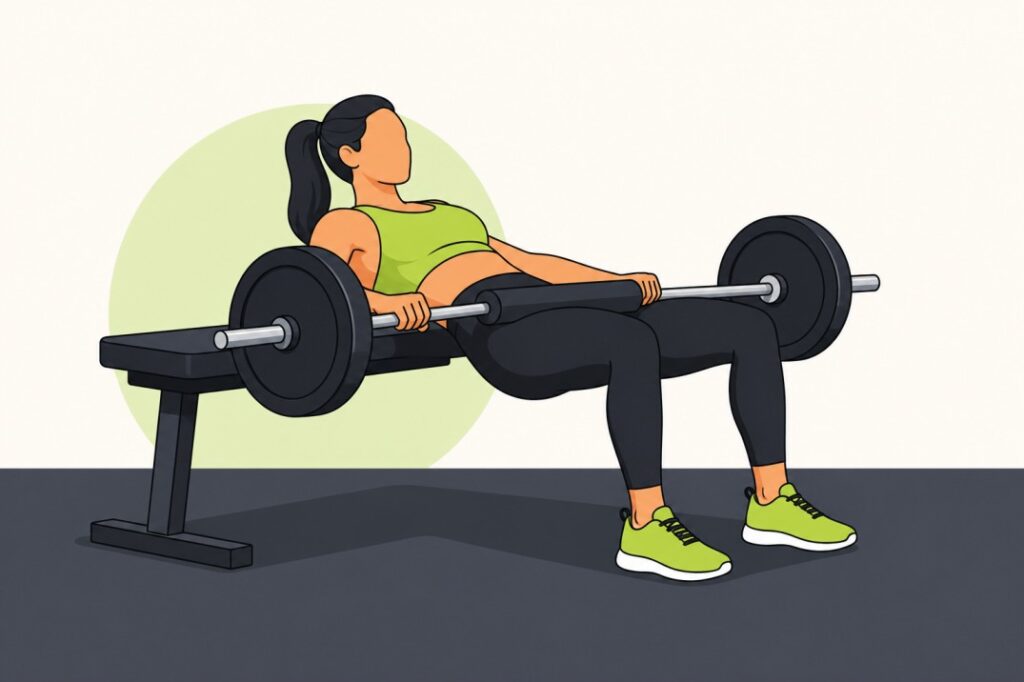
Try this the next time you train legs. Do a set of hip thrusts thinking only about pushing your feet into the floor. Then do another set, same
Try this the next time you train legs. Do a set of hip thrusts thinking only about pushing your feet into the floor. Then do another set, same

Try this the next time you train legs. Do a set of hip thrusts thinking only about pushing your feet into the floor. Then do another set, same weight, same reps, but squeeze your glutes on purpose through the whole movement. Lifters tested this way under EMG sensors showed glute activity jump from around 6 percent of max contraction to 38 percent. Same exercise. Same load. Same range of motion. The only thing that changed was where their attention was pointed.
That’s the mind-muscle connection, and it’s why the argument over whether it actually works keeps resurfacing in gyms. Bodybuilders have sworn by it for decades. Plenty of lifters write it off as gym folklore. The research lands somewhere between those two camps, and it’s worth knowing exactly where.
Exercise scientists call this attentional focus, and there are two versions of it. Internal focus means paying attention to the muscle itself: how it feels to contract, stretch, and do the work. External focus means paying attention to something outside your body, like the bar path, the weight stack, or where the movement finishes.
“Mind-muscle connection” is bodybuilding shorthand for the internal version specifically: deliberately feeling a target muscle work instead of just moving a weight from point A to point B.
This isn’t the same thing as the biological process that actually builds muscle tissue. Attentional focus affects neural drive and which motor units fire during a set. The repair and rebuilding that happens afterward, the muscle growth mechanics behind hypertrophy, is a separate topic. Focus is one input into that system. It isn’t the system itself.
The clearest case for the mind-muscle connection comes from strength coaches Brad Schoenfeld and Bret Contreras. In a piece of attentional focus research, they laid out a simple chain: internal focus raises activation in a target muscle, higher activation reflects more mechanical tension on that muscle, and more tension over time should mean more growth in the muscle you’re targeting.
EMG evidence backs up the first link in that chain fairly consistently. Bench press studies show lifters told to focus on their chest and triceps activate those muscles more than lifters given no cue at all.
But the effect isn’t fixed. A seated row study found that back-focused cues raised lat activation on the first few reps of a set, but by the final reps, fatigue erased the difference.
Not every muscle cooperates either. A hamstring EMG study on leg curls found no meaningful benefit from internal focus in two of the three hamstring muscles tested. This isn’t a switch that flips the same way for every muscle and every lift. It depends on the muscle, the exercise, and how tired you already are.
Here’s where a lot of gym advice runs ahead of the science. Nearly all of this research measures muscle activity with surface EMG, which reads electrical signal. It doesn’t measure the mechanical tension a muscle experiences, and it doesn’t measure the tissue that muscle will eventually build. Even EMG monitoring research on wearable sensors points out how much interpretation goes into reading that signal correctly.
Higher EMG readings are a decent stand-in for effort and recruitment. They aren’t proof of extra growth. Growth still comes down to training load, total volume, and progressive overload applied consistently over weeks and months. The mind-muscle connection might tilt the odds in your favor on certain lifts. It doesn’t replace those fundamentals.
Outside of bodybuilding, attentional focus research tells a different story. For tasks that demand coordination, balance, or maximum force, a heavy squat, a sprint, a max-effort deadlift, an external focus usually wins out. Thinking hard about your quads mid-squat at 90 percent of your max can actually get in the way of a movement pattern your nervous system already knows how to run.
That’s the practical split. The internal focus that helps you feel your chest on a cable fly can work against you on a heavy compound lift, where coordination and output matter more than isolating a single muscle. Knowing the difference between lifts built for skill and load versus lifts built to isolate a muscle, covered in our piece on compound vs isolation training, is the first step to knowing which mode to use.
| Training Goal | Better Focus | Why |
| Heavy squat, deadlift, bench near your max | External: the bar, the floor, the finish position | Coordination and force output matter more than isolating one muscle |
| Isolation work: curls, leg extensions, cable flys | Internal: the target muscle contracting | EMG studies show more activation in the target muscle with internal cues |
| Compound hypertrophy work: rows, presses at moderate loads | Internal early in the set, external once fatigue hits | The internal-focus benefit fades on the later, more fatigued reps |
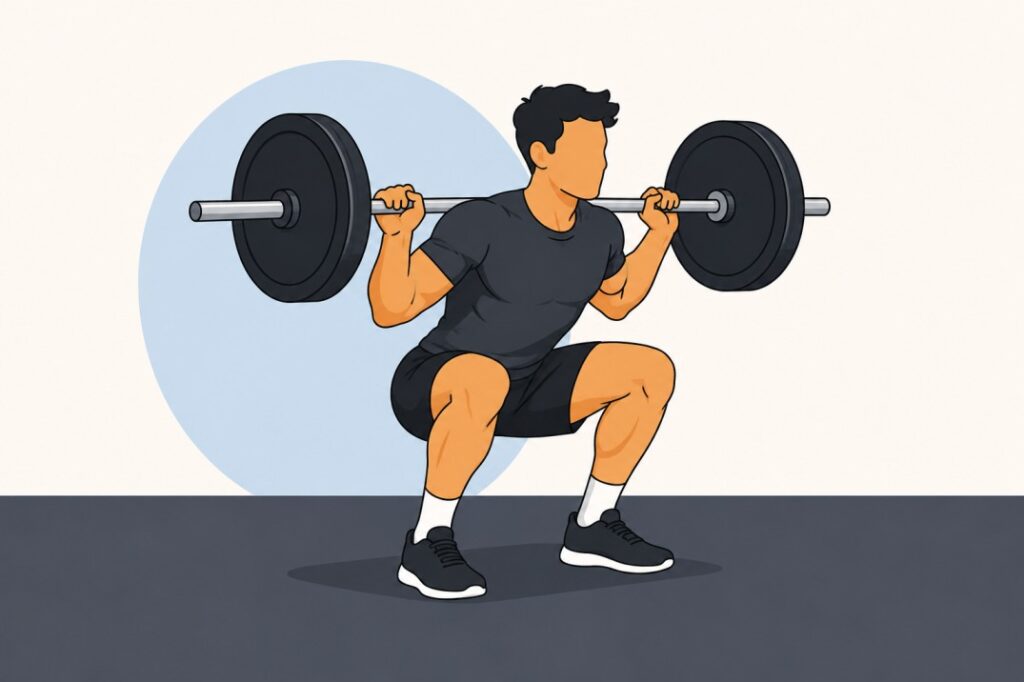
If you want to get better at this for hypertrophy work, a few practical changes matter more than just telling yourself to concentrate harder.
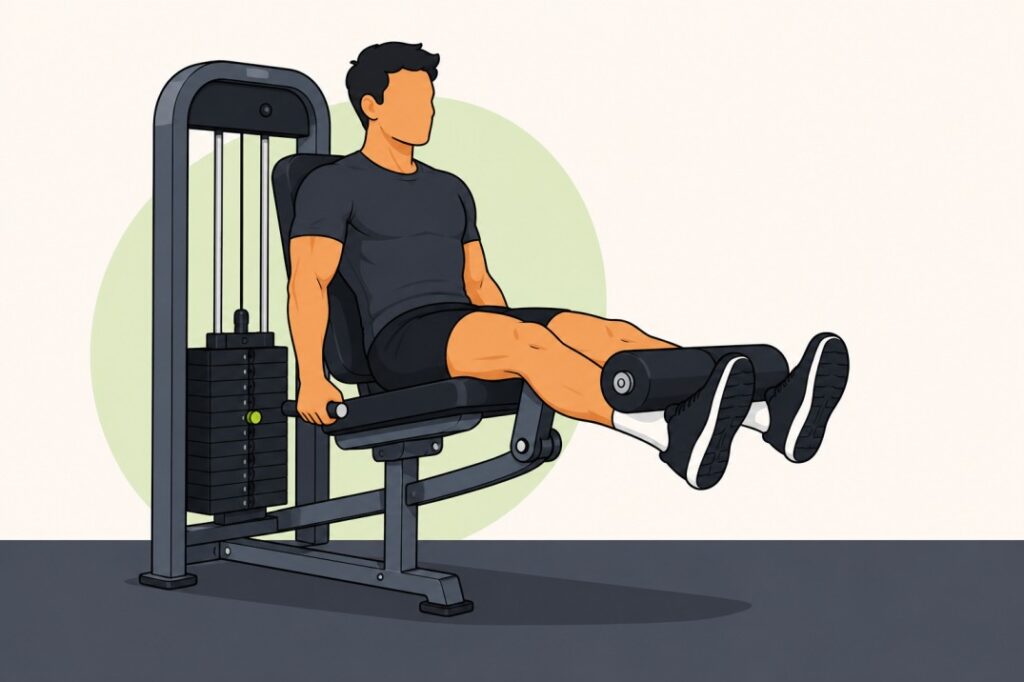
Here’s a simple way to apply all of this without overthinking every rep. On your heaviest compound lifts, especially anything near your top working weight, point your attention outward, at the bar, the floor, or just finishing the rep. On isolation and accessory work, where the whole point is fatiguing one muscle, bring your attention inward and actually feel that muscle move through its full range.
A curl is an easy place to practice this: feel the biceps shorten on every rep instead of swinging the weight up. A leg curl is where you feel the hamstrings do the work instead of letting the calves or lower back cheat the movement. Getting your sets and reps dialed in matters here too, since focus alone won’t fix a program that’s underbuilt. If you’re still working out your base program, a full-body routine gives you the frequency and exercise selection to put all of this into practice.

Not myth, not magic. Where you point your attention changes how much a muscle activates during a set, sometimes by a lot. What’s still genuinely unclear is how much of that activation gap turns into extra muscle over months of training, once you account for the load, volume, and consistency that do most of the actual work.
The simplest approach holds up best: go external when the goal is moving maximum weight safely, go internal when the goal is isolating and fatiguing one muscle on accessory work. Treat it as one tool inside a program built on real programming, not a replacement for one.
Schoenfeld, B. J., & Contreras, B. (2016). Attentional Focus for Maximizing Muscle Development: The Mind-Muscle Connection. Strength and Conditioning Journal, 38(1), 27-29.
Mind-Muscle Connection: Limited Effect of Verbal Instructions on Muscle Activity in a Seated Row Exercise. PubMed, 2020.
Ay Gul, A., & Yildiz, M. (2025). Muscular Activity of Hamstrings Under Attentional Focus Instructions: An Electromyography Based Study. Translational Exercise Biomedicine, 2(4), 326-334.
Monitoring Neuromuscular Activity During Exercise: A New Approach to Assessing Attentional Focus. PMC, National Library of Medicine.