How to Start Working Out When You Have No Fitness Experience
- October 13, 2026
- 1
If you’re wondering how to start working out, begin with a short session you can manage today, with a comfortable walk, a few simple strength exercises, and enough
If you’re wondering how to start working out, begin with a short session you can manage today, with a comfortable walk, a few simple strength exercises, and enough
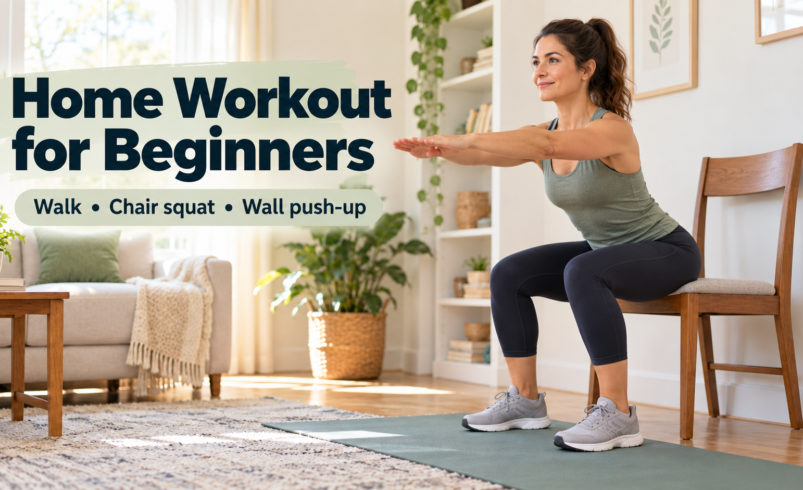
If you’re wondering how to start working out, begin with a short session you can manage today, with a comfortable walk, a few simple strength exercises, and enough rest to keep your movements controlled. Then choose when you’ll repeat it.
Good stamina, exercise know-how, and equipment can all wait. Your early sessions give you a chance to learn what feels manageable and build from there.
This guide shows how to begin exercising by choosing a starting point, trying your first workout, and planning a realistic first week, with room to adjust.
Your fitness baseline is what you can comfortably do right now. It makes starting exercise for beginners simpler to plan.
Start with three questions.
For example, if a short walk feels comfortable but floor exercises are unfamiliar, walking and supported standing movements may be a sensible place to begin. Leave the max push-up test and the run to exhaustion for later.
The CDC’s advice on getting started with physical activity recommends choosing activities and settings you enjoy, starting slowly, and gradually increasing time or difficulty.
If you have a health condition, an injury, or symptoms that affect exercise, ask a healthcare professional about appropriate activities and adjustments. Your starting plan should reflect your abilities and health.
“Get fitter” names what you want but leaves today’s action unclear. Try a specific commitment, like this one.
“After lunch on Monday, Wednesday, and Friday, I’ll take a comfortable 10-minute walk.”
Treat ten minutes as an example only. If five minutes is more manageable, start there. If lunchtime never works, choose another window.
Add a second goal only if it fits, such as practising a few strength movements twice this week. For now, track whether you completed the planned activity and how it felt. This gives you useful information for your next session.
Treat your first workout routine as a practice session. You’re learning the movements and finding an appropriate amount of effort.
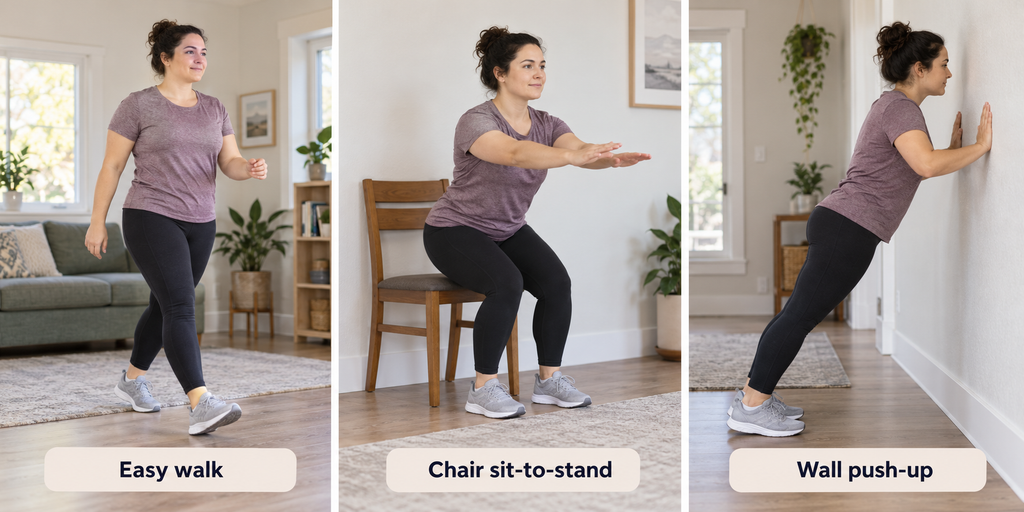
Start with around five minutes of easy walking or marching in place, moving at a comfortable pace. Add a few gentle shoulder rolls and practise the movements below slowly before counting repetitions.
If you need a longer, gentler preparation, take it. Avoid rushing to match someone else’s pace.
After warming up, try the following illustrative starting session. Do fewer repetitions if needed.
| Exercise | Starting example | How to do it |
| Chair sit-to-stand | One set of 5–8 repetitions | Use a stable, non-wheeled chair against a wall. Place your feet flat, lean slightly forward, and stand. Sit back down slowly. Use your hands for support if needed. |
| Wall push-up | One set of 5–8 repetitions | Place your hands against a wall around chest height. Step back slightly, bend your elbows to bring your chest towards the wall, then push away. Keep your body aligned and move slowly. |
A repetition is one complete movement. A set is a group of repetitions.
These two exercises introduce useful movements, though a long-term strength programme needs more variety. For a broader selection, see our beginner bodyweight workout.
Rest between exercises until your breathing feels settled and you can move with control. Around a minute is a starting option, but take longer when needed.
Finish with a few minutes of easy walking as a cool-down. Stop if a movement causes pain or you feel unwell.
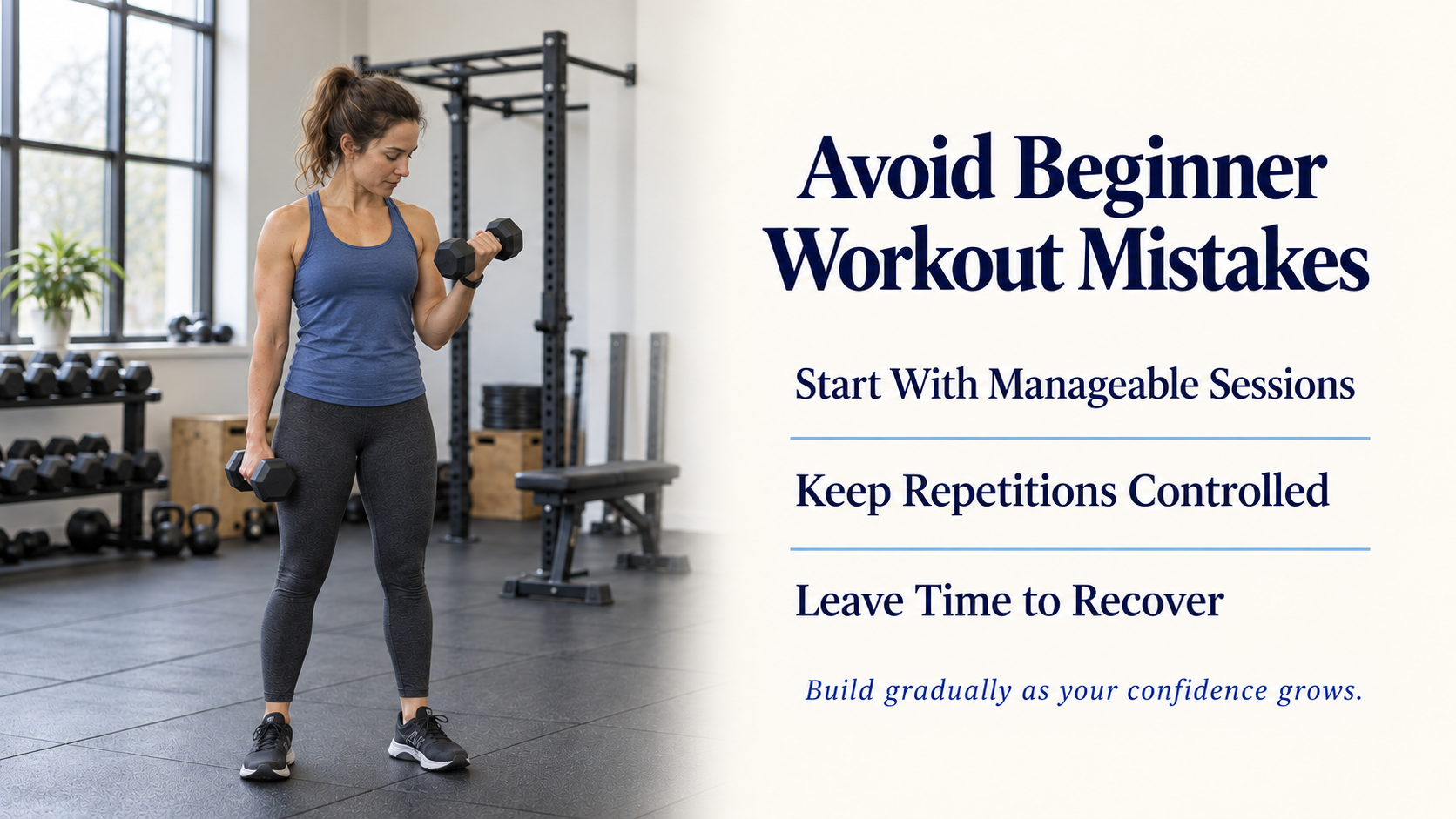
Your first sessions should give you room to learn. Choose an effort that lets you control each movement, breathe steadily, and finish without feeling overwhelmed.
For walking and other aerobic activities, the talk test offers a useful guide. At moderate intensity, you can talk but cannot comfortably sing. If you can say only a few words before pausing for breath, the activity is vigorous. These are the CDC’s guidelines for judging exercise intensity.
You can begin below moderate intensity while getting comfortable. Increase your walking pace gradually when the current effort feels manageable.
For strength exercises, focus on controlled repetitions. If you start rushing, holding your breath, or struggling to maintain your position, end the set and rest. The talk test suits aerobic activity, so judge strength by control.
Leave soreness and exhaustion out of the plan. Stop exercising if you feel pain, chest discomfort, or dizziness, or if you feel unwell. Get medical advice for concerning or recurring symptoms instead of pushing through them.
Learning how to start working out includes deciding when to repeat your sessions. A written schedule removes the need to make that decision every day.
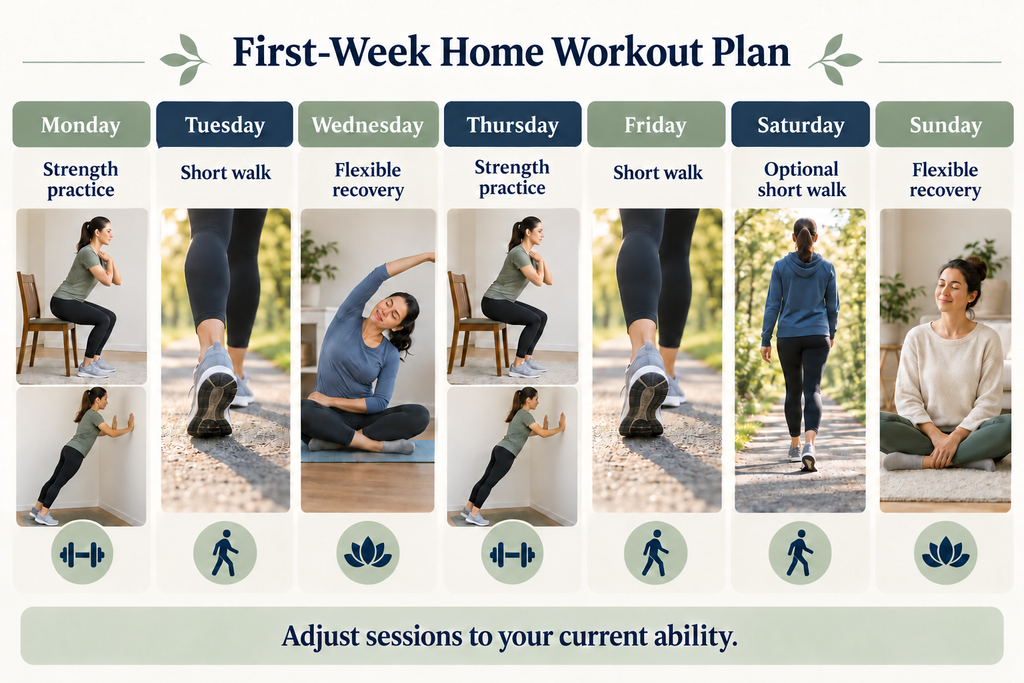
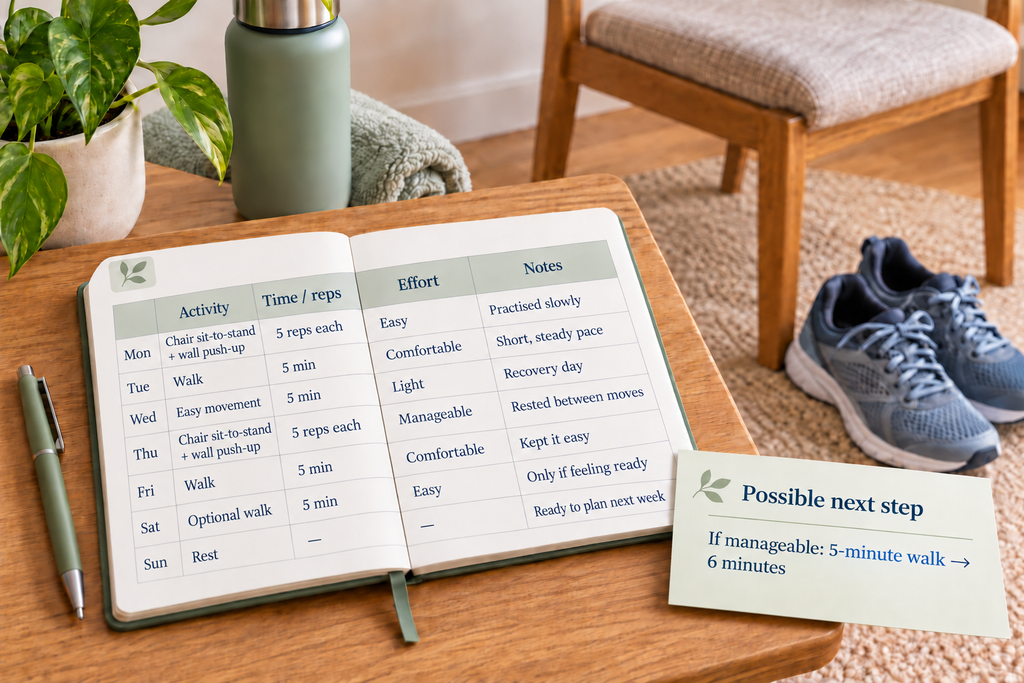
The following week is an illustrative starting plan, so shorten the sessions, change the days, or swap in suitable alternatives according to your abilities.
| Day | Suggested activity | Practical guidance |
| Monday | Short strength-practice session | Warm up, practise the chair sit-to-stand and wall push-up, then finish with easy walking. |
| Tuesday | Comfortable walk | Try 5–10 minutes, or a shorter duration you can manage. |
| Wednesday | Rest or easy everyday movement | Keep the day flexible according to how you feel. |
| Thursday | Repeat strength practice | Use the same manageable exercises and repetitions. |
| Friday | Comfortable walk | Repeat Tuesday’s duration if it suited you. |
| Saturday | Optional short walk | Choose a convenient time and route. |
| Sunday | Rest and review | Note what worked and schedule the next week. |
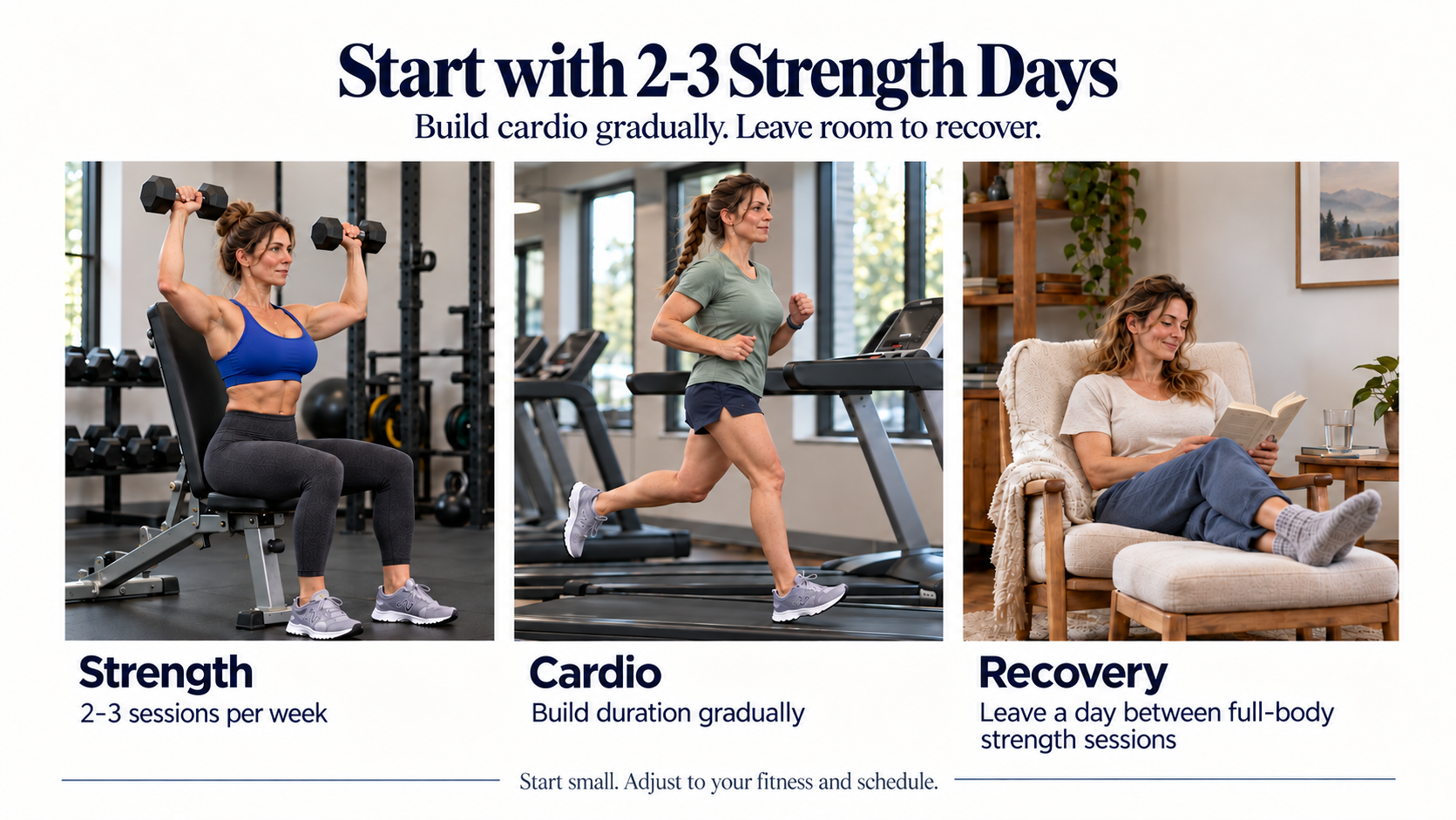
The strength-practice days are separated to allow recovery. Easy movement between them is optional, and a rest day can still include ordinary activity.
If you prefer exercising at home, our beginner home workout guide offers more ideas for organising short sessions.
For adults, the longer-term recommendation is at least 150 minutes of moderate-intensity aerobic activity each week (or 75 minutes of vigorous activity), alongside muscle-strengthening activity on at least two days covering all major muscle groups. Activity can be spread across the week in smaller chunks.
This introductory schedule is a stepping stone towards those targets. Its brief practice sessions that only tell you how to start working out but do not yet provide a complete strength programme, and comfortable walking may be below moderate intensity.
Start with an amount you can manage, then gradually develop both your activity time and exercise selection.
Before adding more exercise, ask whether you can repeat this session with controlled movements, manageable effort, and enough recovery for the next one.
If the answer is yes across several sessions, try one small change.
Each is optional, and the current workload is fine to keep while it still feels challenging.
Change one element at a time so you can judge its effect. For example, extend the walk while keeping the strength session unchanged. If the extra work leaves you struggling to recover, return to the previous amount.
Gradual progression follows the CDC’s recommendation to build activity time or difficulty slowly. Let your own response set the pace, and drop any arbitrary deadline.
Once you understand how to start working out, make the next session easy to begin. Choose its time, place, and activity beforehand.
If you plan to walk after work, leave your shoes somewhere convenient. For home sessions, clear the space and keep your exercise instructions nearby. The CDC recommends scheduling activity and choosing activities and settings you enjoy.
Keep a simple record covering these.
Have a shorter option for busy days, such as a five-minute walk instead of ten. If you miss a session, resume when practical. Avoid doubling the next workout to compensate. Exercise adherence improves when the plan fits your life, so try a different time or shorter duration when sessions repeatedly fall through.
Adding too much at once. Increasing walking time, repetitions, and training frequency together makes it harder to judge what you can tolerate. Adjust one element and see how you respond.
Copying someone else’s difficulty. A workout labelled “beginner’s guide on how to start working out” may still be demanding for you. Choose a manageable variation and take the rest intervals you need.
Treating soreness as proof of success. A useful session can leave you with no muscle soreness at all. Record improvements in control, comfort, or capacity instead.
Expecting immediate physical changes. Early progress may mean completing your planned walks or performing an exercise more confidently. Avoid using appearance as your only measure.
Yes, but adapt the activity to your current ability. You might begin with a few minutes of comfortable walking or supported movements. Reduce duration or repetitions when needed. Seek individual guidance if a health condition, injury, or symptoms affect what you can do.
No gym membership is required to begin. Walking and bodyweight exercises such as wall push-ups can provide accessible starting options. Choose a safe space and stable support where needed. Equipment or coaching can become useful later as your goals develop.
Comfortable everyday movement suits most days, and demanding workouts can wait. Leave recovery time between strength sessions working the same muscles, and adjust training frequency when you feel tired or sore. Walking and strength training place different demands on your body.
Shorten it or use an easier variation. If your movements become uncontrolled, stop the set and rest. If you experience pain or feel unwell, stop the session. Use what you learned to adjust the next workout and lighten the load.
Knowing how to start working out becomes useful when you choose an action you can take. Pick a suitable activity, decide on a manageable duration, and schedule it.
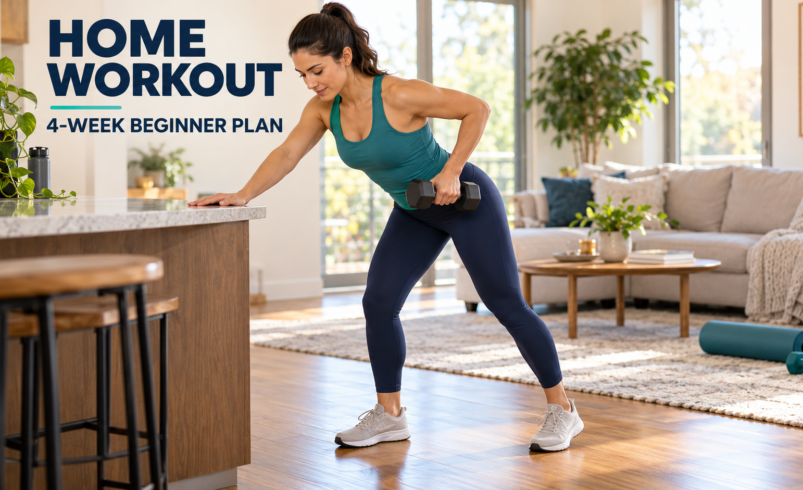
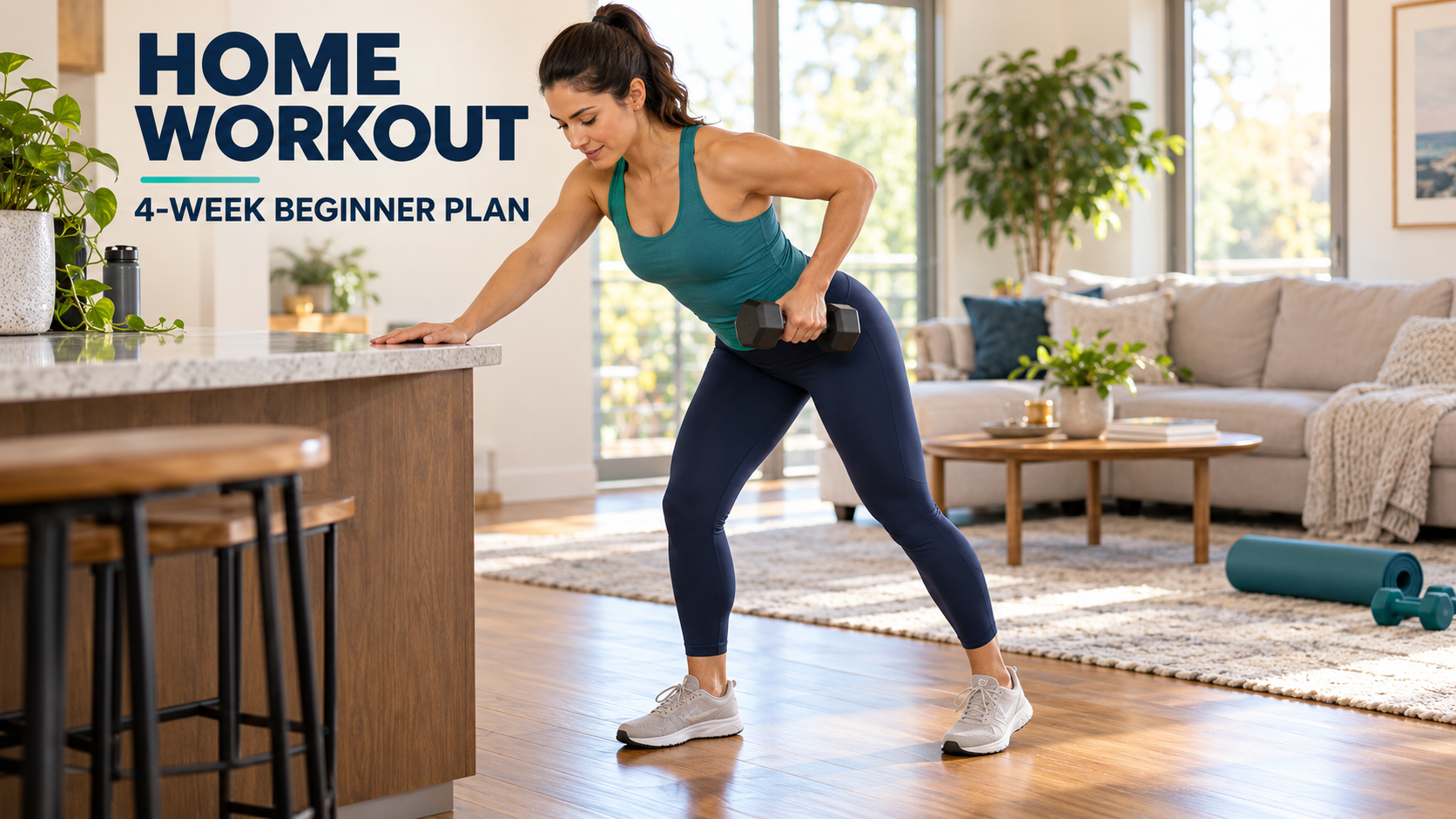
Afterwards, note what felt comfortable and what needs adjusting. Use that information to plan your next session. Begin with what you can do today, then build towards a four-week starter plan.


1 Comment
[…] If you are unsure whether this starting workload suits you, begin with FitRoutineLab’s guide to how to start working out. […]